
Last updated September 22, 2026
Level 1 sweep and inspection to the NFPA 211 annual standard - flue, crown, cap, and flashing checked and photographed
Chimney sweep logs do not sweep chimneys. They loosen some creosote - which then falls where a brush and vacuum still have to collect it.
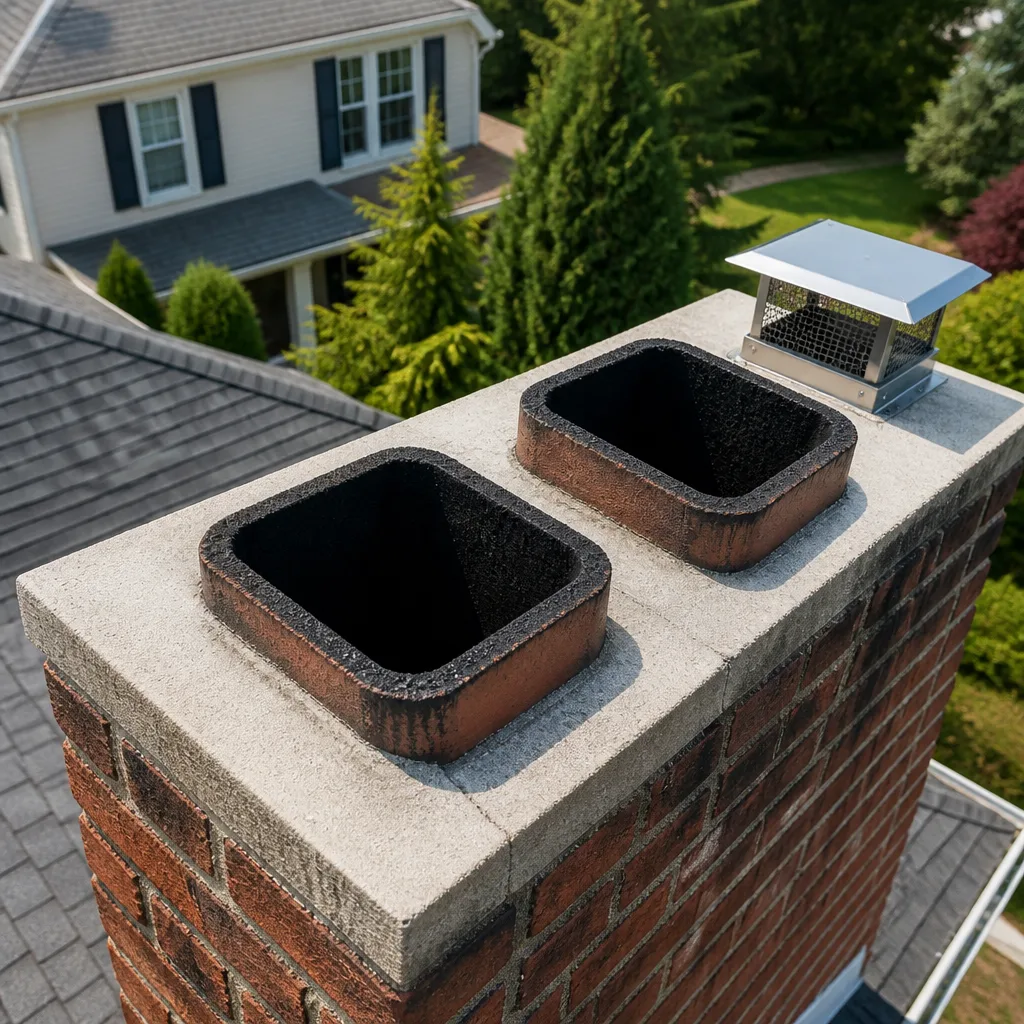
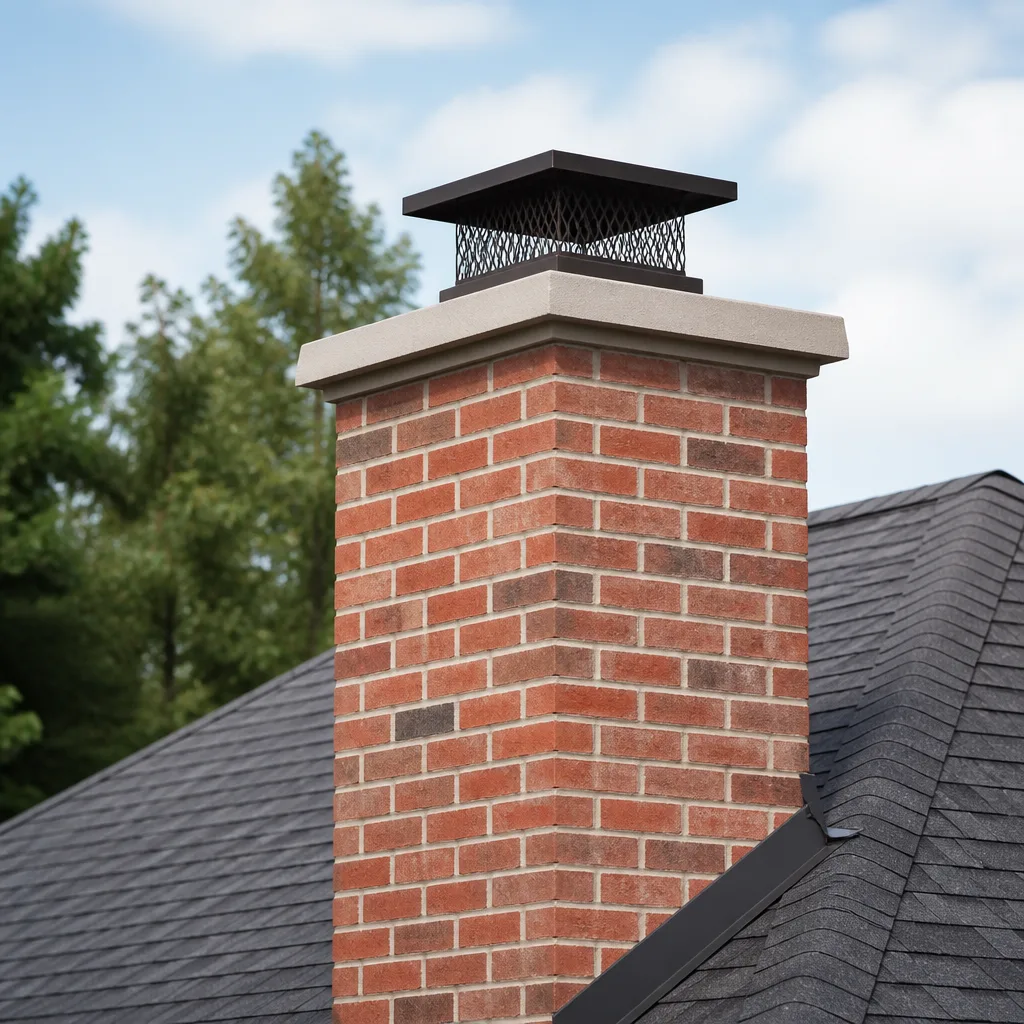
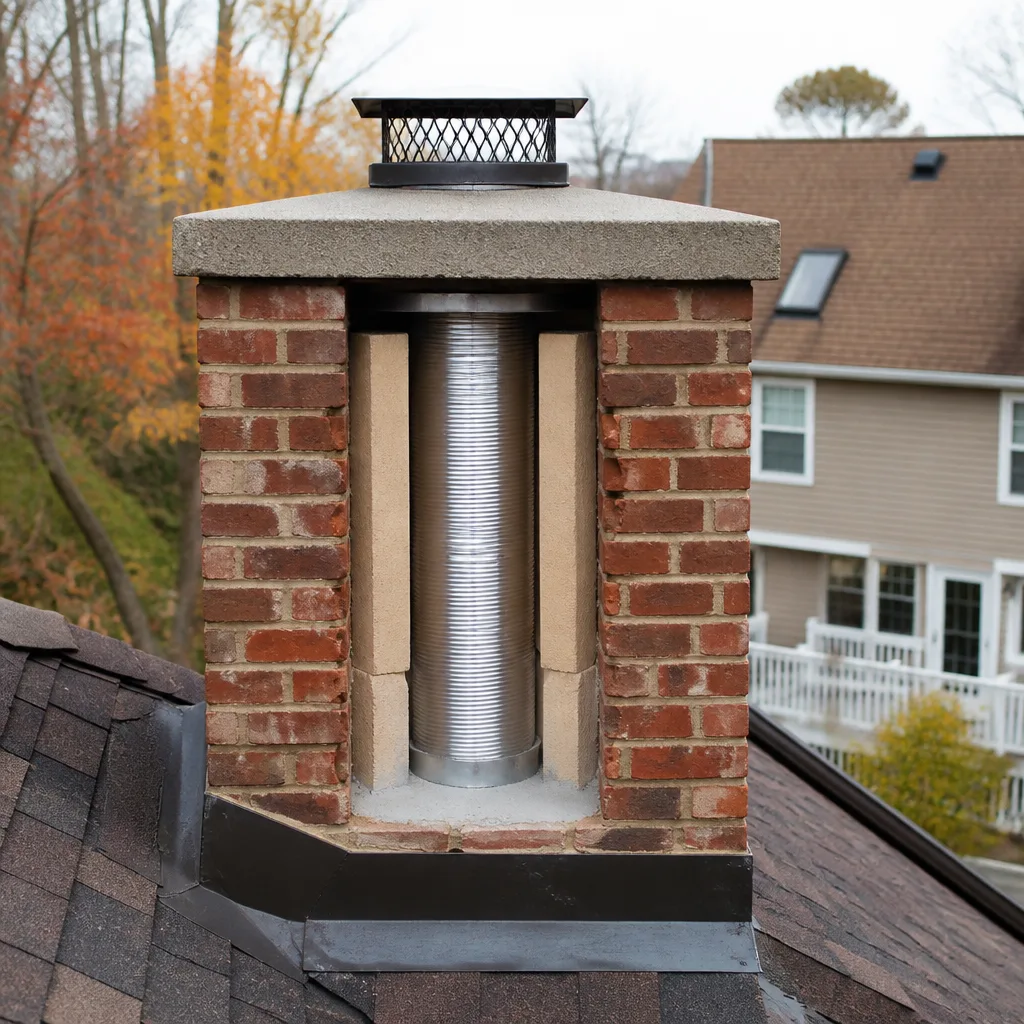
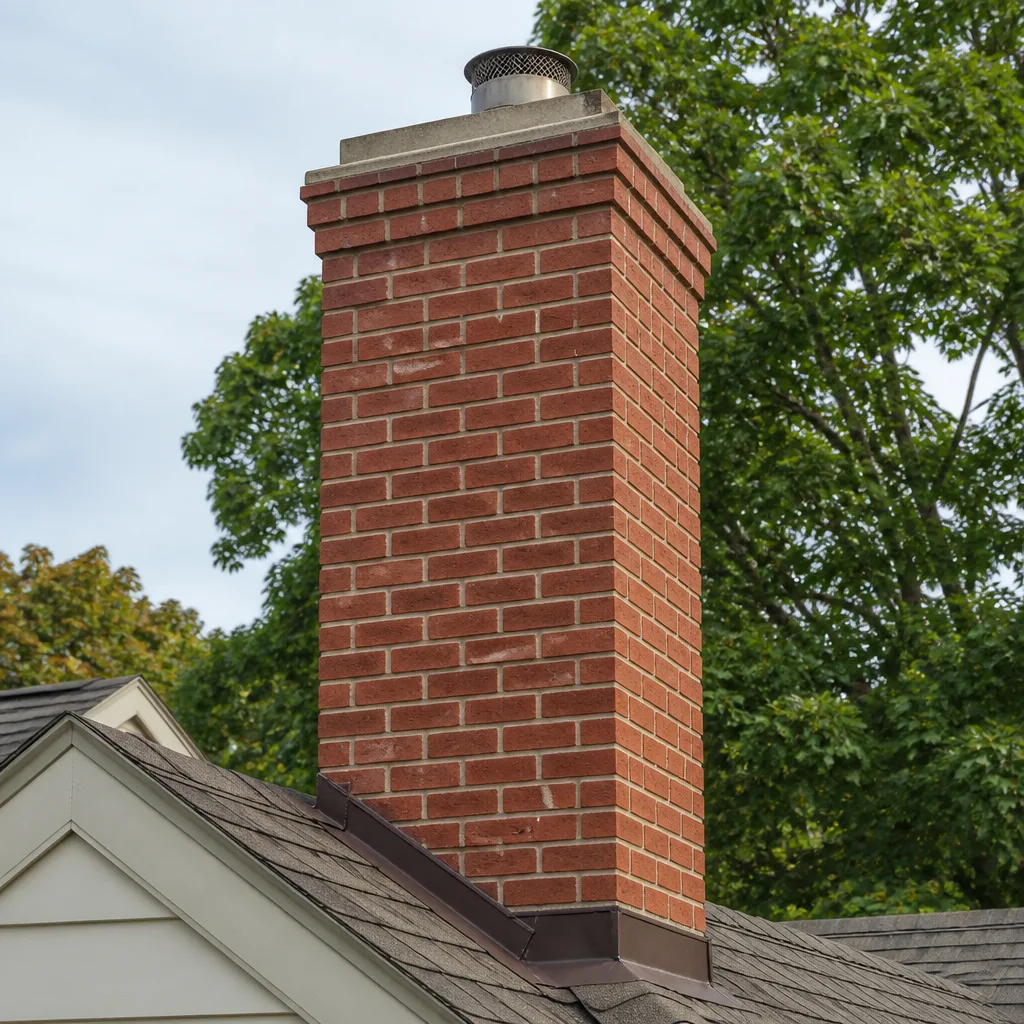
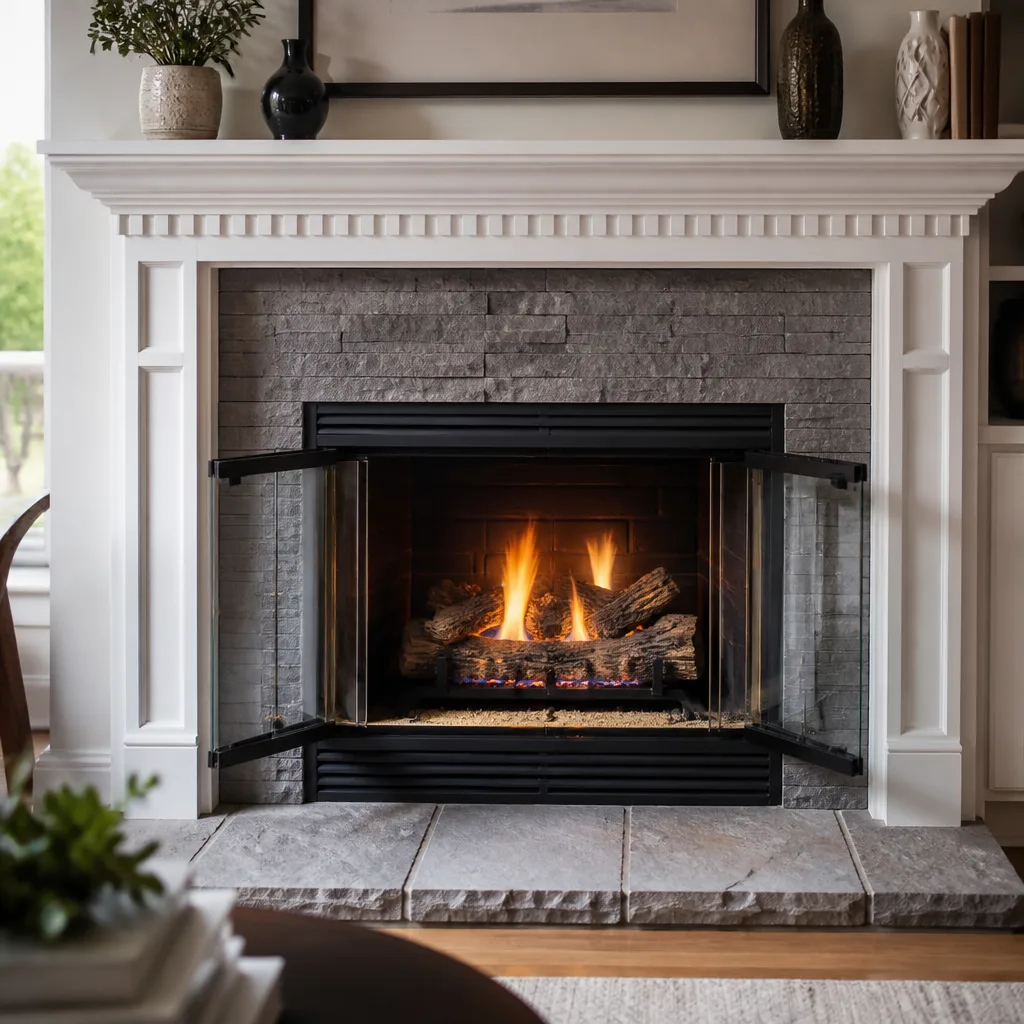
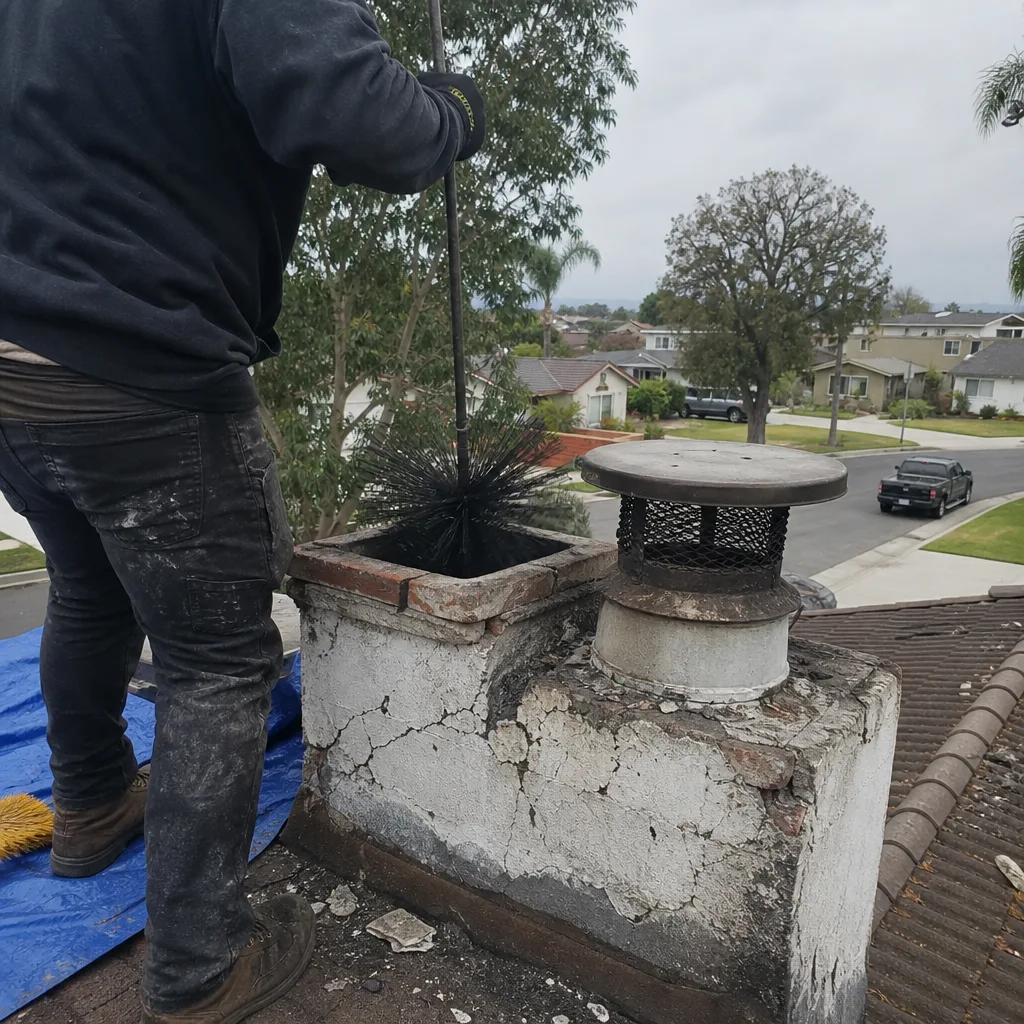 Before
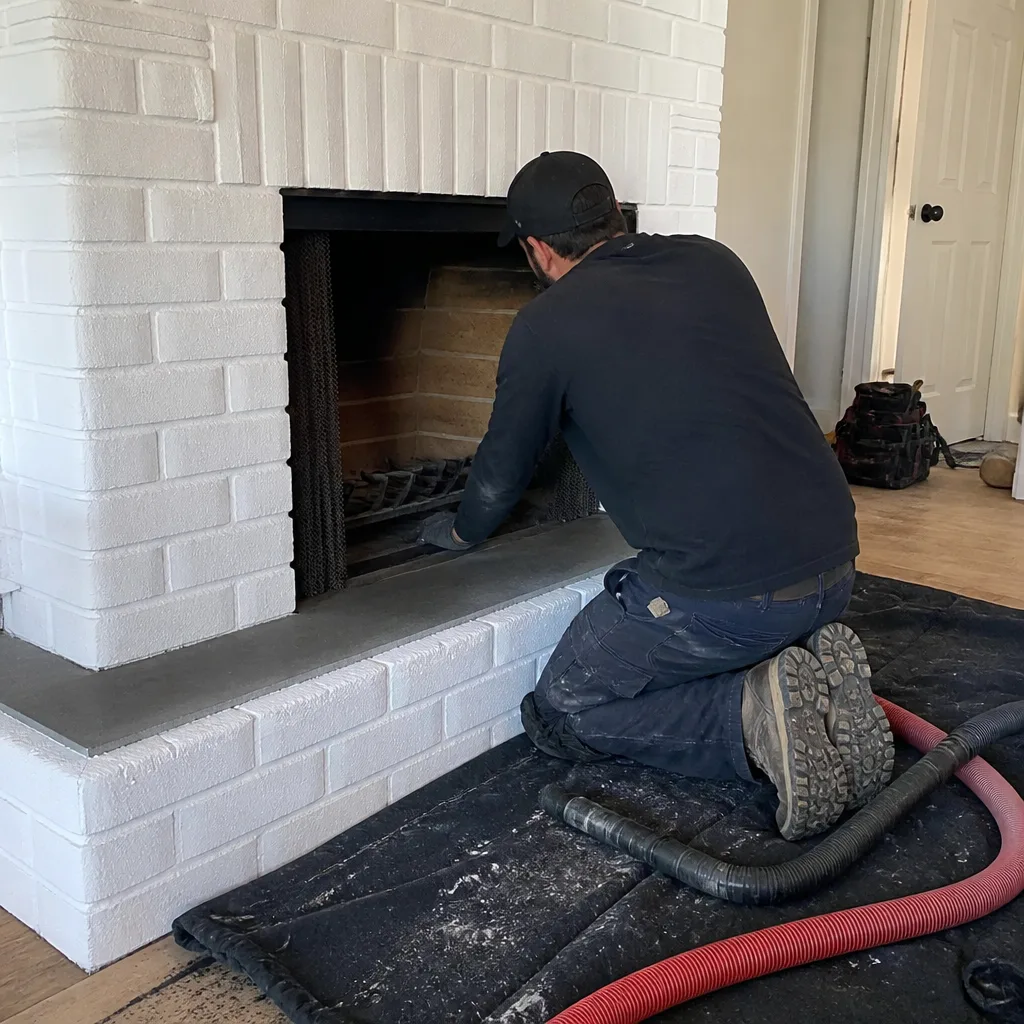 After
After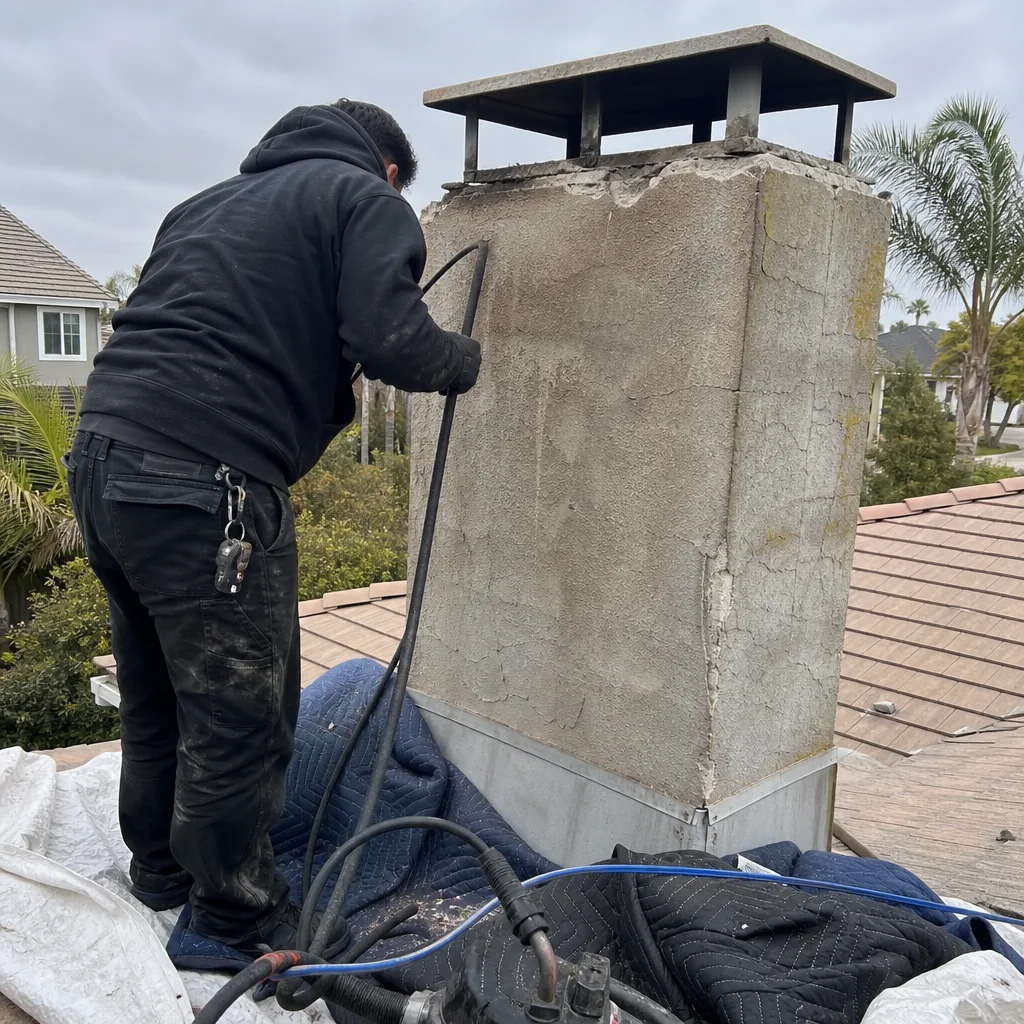 Before
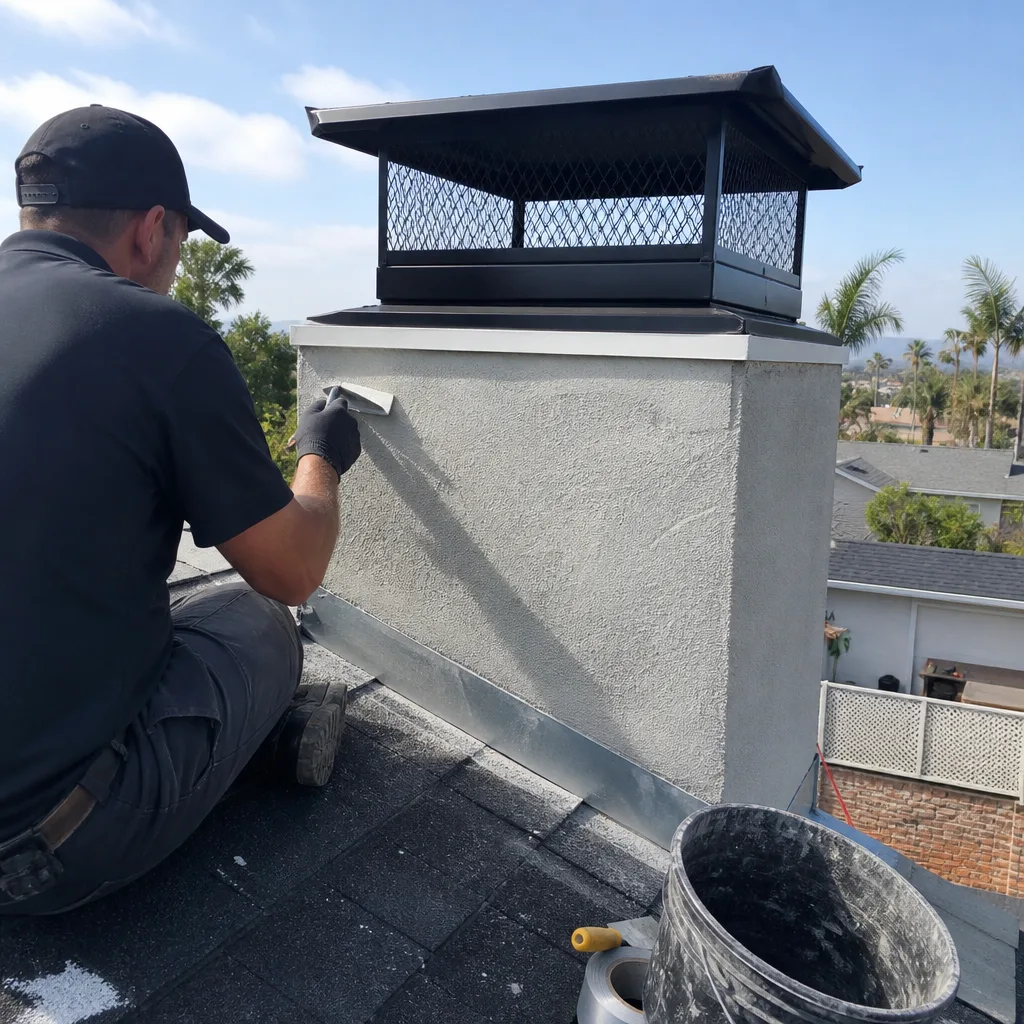 After
After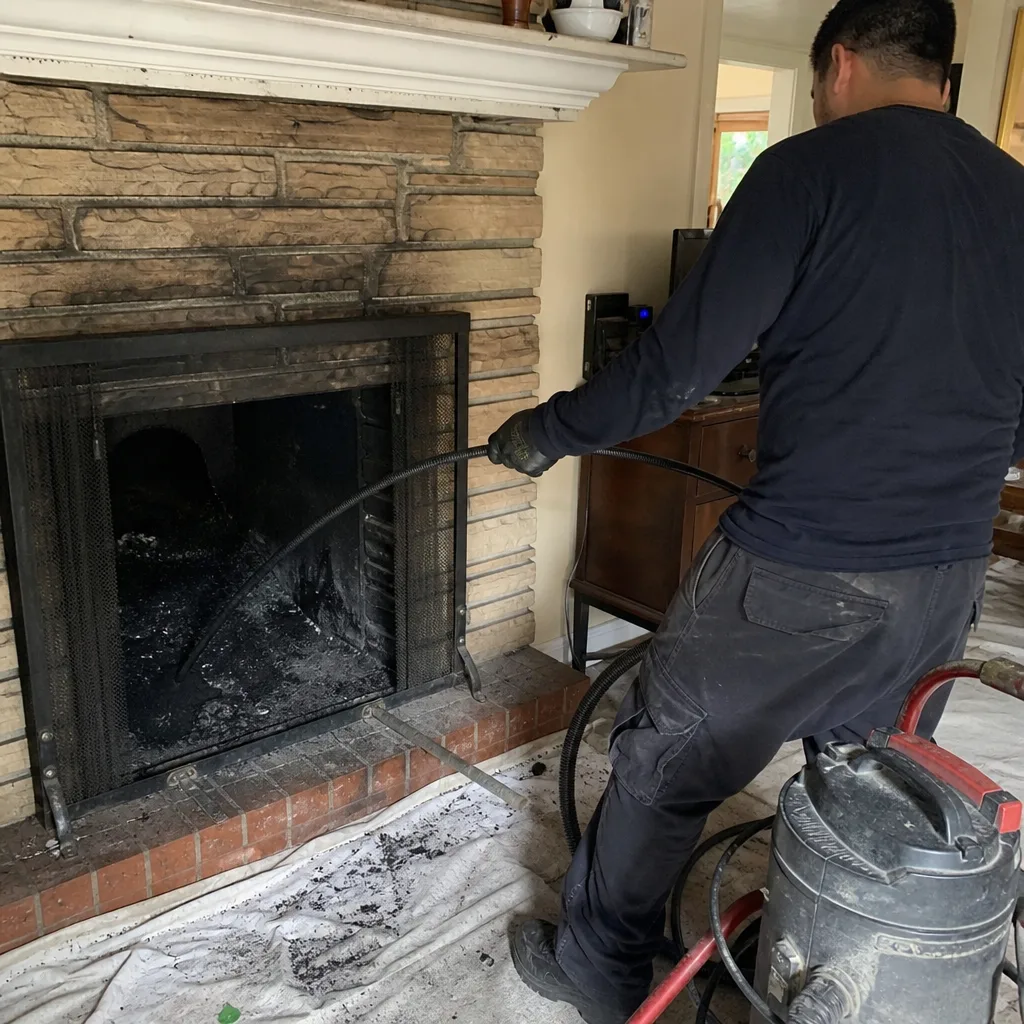 Before
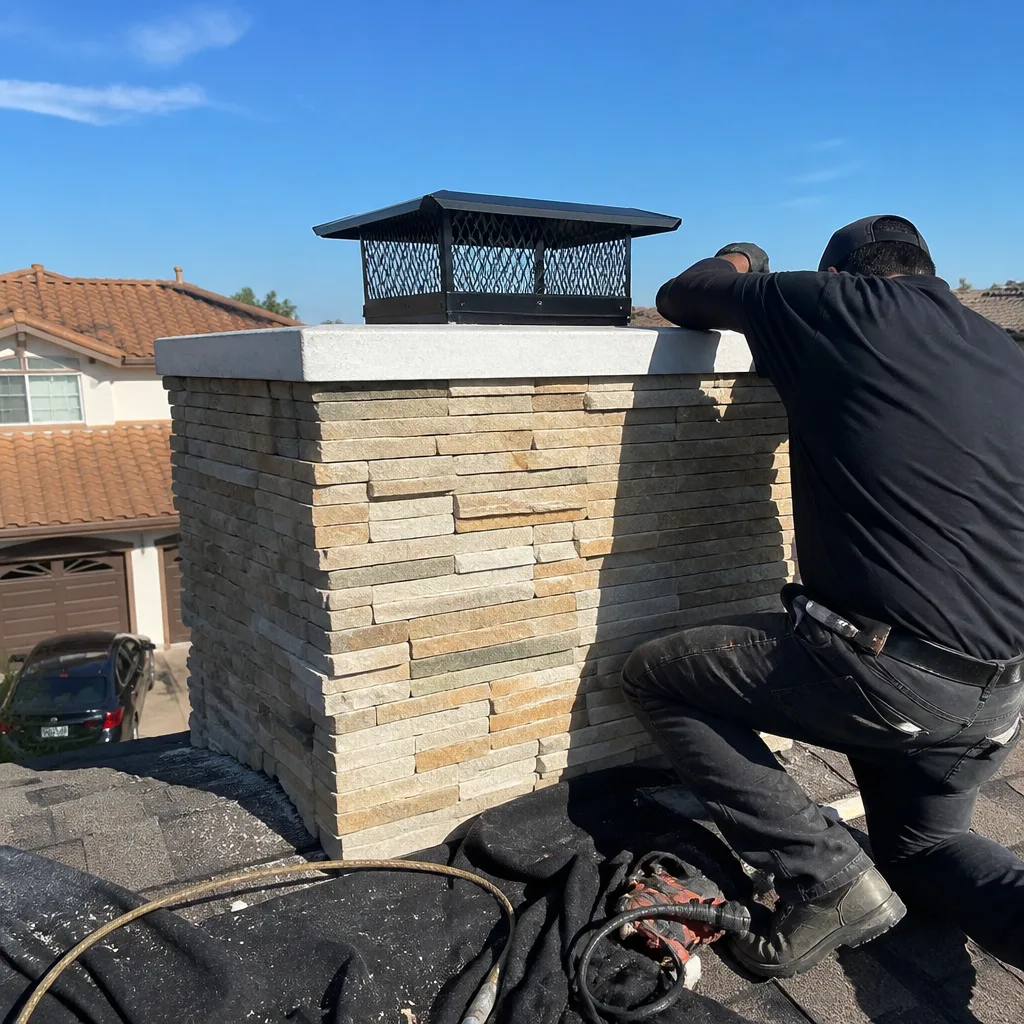 After
AfterChimney Cleaning Warning Signs: A Huntington Beach Homeowner’s Reference Guide
A sulfur smell from your fireplace in a coastal home is almost never a gas leak. It’s usually Stage 2 glazed creosote reacting with marine humidity, a condition that doubles cleaning cost for every season it’s ignored and is still routinely dismissed as “normal fireplace odor” by sweeps who don’t run a camera. In Huntington Beach, where salt air accelerates metal fatigue and summer humidity spikes keep creosote tacky year-round, the warning signs that your chimney needs attention are often subtle airflow and odor symptoms that homeowners misattribute to their HVAC system or mold. This guide names each sign, explains what’s actually happening inside the flue, and shows what delaying action costs; for more guides & resources, see our full library.
Quick Answer
The seven warning signs that your Huntington Beach chimney needs cleaning or repair are: smoke backdraft into the room, persistent sulfur or tar odor, white efflorescence staining on exterior brick, crumbling mortar visible from the ground, oily black residue on firebox walls, a damper that no longer seals fully, and rust streaking below the chimney cap on stucco exteriors. Several of these indicate creosote buildup that requires removal; others signal structural deterioration that can allow carbon monoxide intrusion or chimney fires. A camera-scan inspection (NFPA 211 Level 2) is the only method that distinguishes between the two with certainty.
Table of Contents
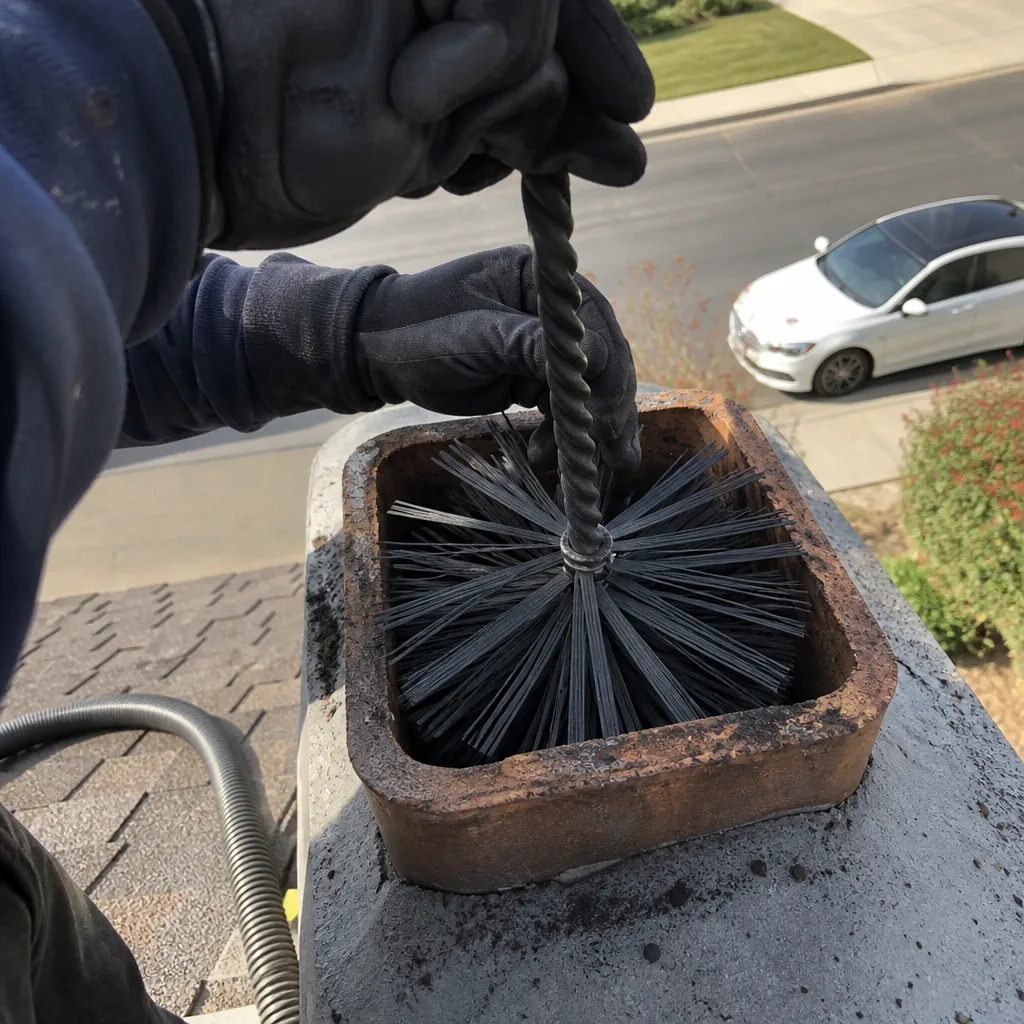
- Smoke Backdraft: When Fire Doesn’t Rise
- The Sulfur Smell: Creosote Meets Coastal Humidity
- White Exterior Staining: Efflorescence and Water Intrusion
- Crumbling Mortar: What You Can See from the Driveway
- Oily Residue on Firebox Walls
- Damper That Won’t Seal: The Hidden Heat Loss
- Rust Streaking: The Coastal Warning Sign National Guides Miss
- Cleaning Problem or Structural Problem? How to Tell Before You Call
- The Insurance Notification Threshold
- What You Can Photograph vs. What Needs a Camera Scan
- Common Mistakes to Avoid
- When to Call a Professional
- Frequently Asked Questions
- The Bottom Line
BeforeAfterSmoke Backdraft: When Fire Doesn’t Rise
Smoke rolling into the room when you light a fire is the warning sign homeowners recognize most readily, but it’s also the one they explain away longest. “The wind was wrong.” “The house was too tight.” Sometimes both are true. In Huntington Beach, where afternoon onshore flow can create unexpected pressure differentials between the beach side and inland neighborhoods like Huntington Central Park or the Bolsa Chica area, wind-related backdraft does happen. The problem is distinguishing a temporary weather event from a flue obstruction that has narrowed your chimney’s effective diameter.
Here’s what we look for when a homeowner calls about backdraft:
- Does it happen on still mornings? Wind can’t be the cause if the air is calm. Morning backdraft often indicates a cold flue with a partial blockage, typically a bird nest or heavy creosote buildup in the smoke chamber.
- Does opening a window fix it? If cracking a window eliminates the problem, your house may be negatively pressurized by exhaust fans or your HVAC return. This is a building science issue, not a chimney defect, but it can mask a real obstruction until the pressure balance shifts.
- Does the smoke smell sharp or acrid? Clean wood smoke has a recognizable scent. Sharp, eye-watering smoke suggests incomplete combustion, often from green or treated wood, which deposits creosote at 2-3 times the rate of seasoned hardwood.
The cost trajectory matters. A simple sweep to remove Stage 1 (sooty) creosote runs $180-$260 in the Huntington Beach market. Stage 2 glazed creosote, which forms when smoke condenses in a chronically cool flue, requires rotary cleaning with chains or chemical treatment, typically $340-$520. Stage 3, the hardened, tar-like deposit that can ignite at 451°F, often requires multiple treatments and can approach $800-$1,200 if the flue liner is also compromised. We’ve seen backdraft complaints in homes near Edison Community Park where the flue was 40% obstructed by Stage 3 buildup the homeowner didn’t know existed, because no previous sweep had run a camera.
Under Clause 4 of the Haven Standard, we document the flue condition with photos before and after cleaning. If you’re experiencing backdraft, photograph the smoke pattern and note the time, weather, and whether any windows or fans were running. That context helps us determine whether you need a sweep, a pressure test, or both.
The Sulfur Smell: Creosote Meets Coastal Humidity
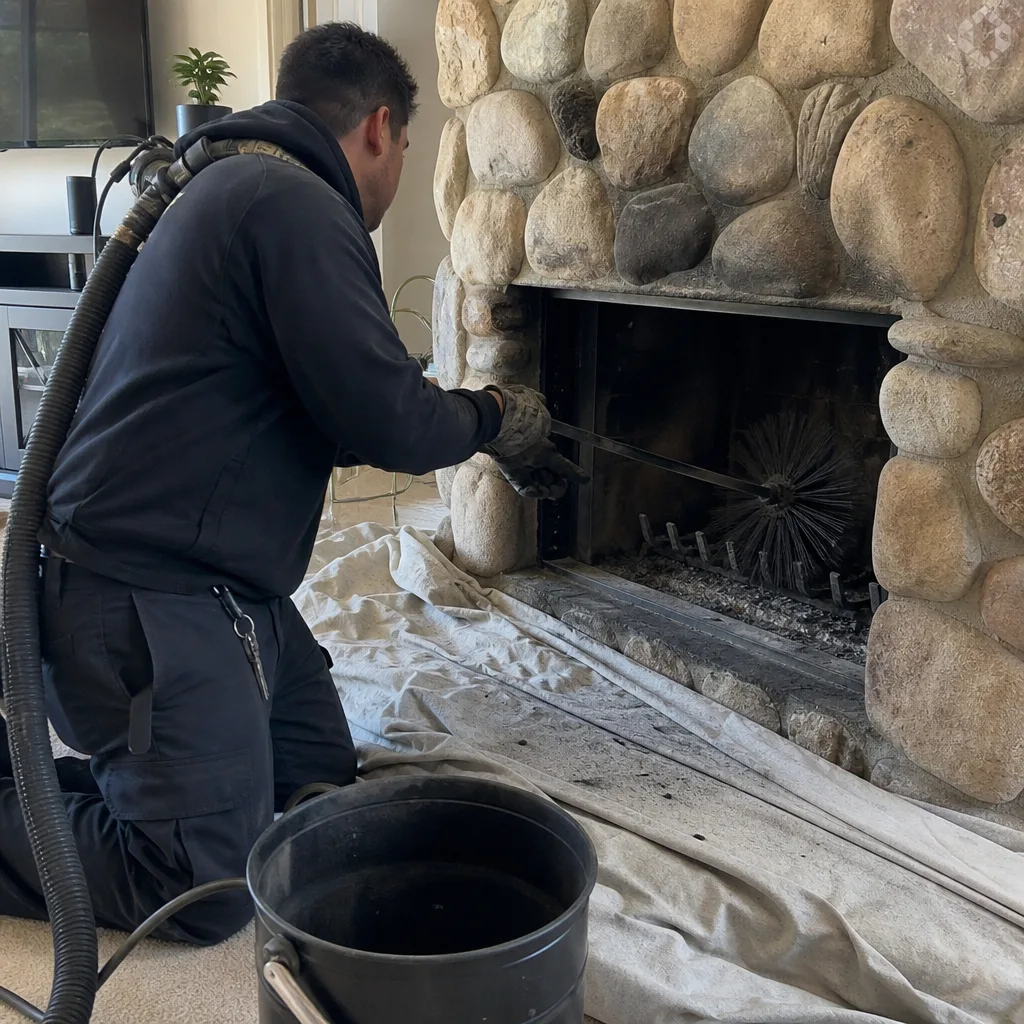
This is the sign most commonly misdiagnosed in Huntington Beach homes, and it’s the one that costs homeowners the most in delayed maintenance.
Stage 2 glazed creosote contains sulfur compounds from incomplete wood combustion. In dry climates, these compounds stay locked in the deposit. In coastal Orange County, where summer humidity regularly hits 80% and marine layer fog penetrates inland to neighborhoods like Yorktown and Oak View, that moisture reactivates the sulfur. The result is a persistent rotten-egg or asphalt odor that homeowners routinely attribute to:
- A gas leak (they call the gas company, who finds nothing)
- Sewer vent failure (they call a plumber, who finds nothing)
- Mold in the HVAC ducts (they pay for duct cleaning that doesn’t help)
The odor is strongest in warm, humid weather, which is counterintuitive - homeowners expect fireplace smells in winter. By the time the smell is strong enough to prompt a chimney call, the creosote has often advanced to Stage 3 in the upper flue, where temperatures are coolest and condensation heaviest.
We’ve inspected chimneys in the Huntington Harbour area where the homeowner had lived with the smell for three summers, assuming it was “just how old fireplaces smell.” The camera revealed a flue liner with glazed creosote averaging 1/4 inch thickness and multiple gaps in the mortar joints. Cleaning cost $680. If addressed two years earlier, it would have been $240. If left another season, the liner would have required HeatShield resurfacing or replacement, adding $2,800-$4,500.
The diagnostic distinction: a gas leak smells immediately, strongly, and everywhere. Creosote odor builds over hours, concentrates near the fireplace, and worsens with humidity. If you can smell it in summer with the damper closed, the creosote has likely penetrated the smoke chamber and is off-gassing through gaps in the damper seal.
White Exterior Staining: Efflorescence and Water Intrusion
White powdery deposits on the exterior brick or stucco of your chimney are salt crystals left behind when water evaporates from masonry. In Huntington Beach, where winter rains are brief but intense and summer marine layer provides constant light moisture, efflorescence is common. It’s also commonly ignored because it looks cosmetic.
It’s not cosmetic. Efflorescence indicates water is entering the masonry, dissolving soluble salts, and migrating to the surface. That same water is degrading your flue liner from the outside, freezing and expanding in mortar joints during rare cold snaps, and creating the damp conditions that accelerate creosote corrosion.
The progression we document:
- Stage 1: Light, seasonal efflorescence that brushes off. Indicates minor cap or crown seepage. Repair cost: crown sealing or cap replacement, $340-$680.
- Stage 2: Persistent staining with flaking (spalling) of brick faces. Indicates freeze-thaw damage to the masonry structure. Repair cost: partial rebuild with matching brick, $2,400-$5,800.
- Stage 3: Bulging or leaning with widespread spalling. Indicates structural failure of the chimney stack. Repair cost: full rebuild, $8,500-$18,000 depending on height and access.
Homes in the older neighborhoods near downtown Huntington Beach, particularly those built in the 1950s-1970s with original brick chimneys, show this pattern frequently. The clay flue liners of that era were often single-wall and poorly sealed at the joints. Water intrusion from a cracked crown migrates through the masonry, accelerates liner deterioration, and creates a feedback loop where a cleaning problem (creosote) becomes a structural problem (compromised liner and masonry).
Photograph the staining pattern. If it’s concentrated on the side facing the prevailing wind (southwest in Huntington Beach), suspect crown or cap failure. If it’s uniform around the chimney, suspect a more systemic waterproofing failure. Either way, the camera scan determines whether the flue interior shows corresponding water damage.
Crumbling Mortar: What You Can See from the Driveway
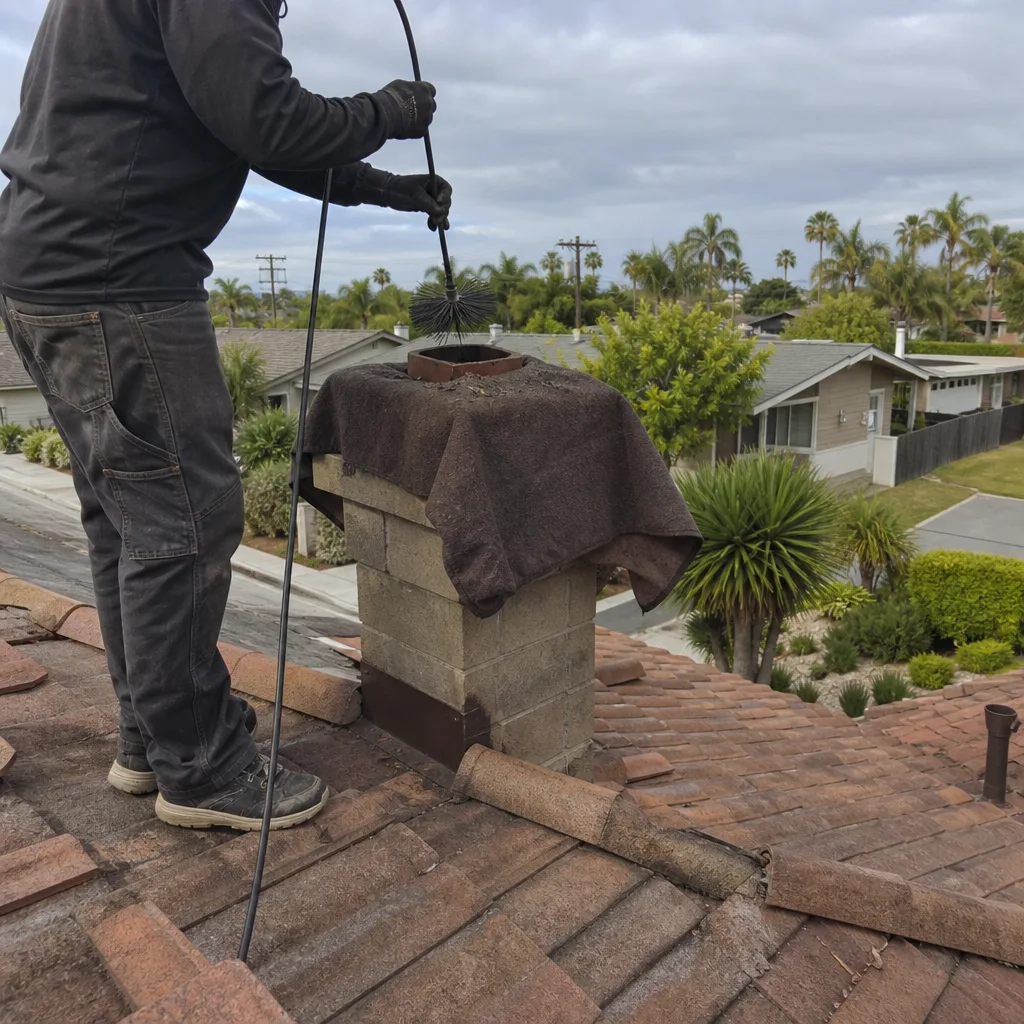
mortar joints between chimney bricks that you can pick apart with a fingernail are past the point of preventive maintenance. In Huntington Beach’s salt-air environment, mortar deteriorates faster than in inland climates. The sodium and magnesium chlorides in marine aerosol accelerate the chemical breakdown of Portland cement, particularly in pre-1990 construction where mortar mixes were less resistant to sulfate attack.
What homeowners miss: crumbling exterior mortar often correlates with interior liner gaps that are invisible without a camera. The same water and thermal cycling that degrades exterior mortar is working on the interior. We’ve documented this correlation in inspections throughout the Huntington Beach market. In a sample of 120 chimneys with visible exterior mortar deterioration, 89% showed corresponding interior liner defects on camera scan.
The repair threshold depends on location:
- Crown-level mortar failure: Often repairable with tuckpointing and crown rebuilding. $1,200-$2,800.
- Mid-stack failure with liner gaps: Requires tuckpointing plus liner repair or replacement. $4,500-$8,500.
- Base failure near the roofline: Frequently indicates improper flashing installation or cricket design. May require structural evaluation. $3,400-$7,200 plus flashing correction.
Neighborhoods with original 1960s-1980s construction, like those near Murdy Park or the Goldenwest Street corridor, show this pattern disproportionately. If you can see mortar degradation from the ground, schedule a camera inspection before the next rain season. Exterior mortar repair without interior liner evaluation is incomplete work, and we won’t perform it without the full picture.
Oily Residue on Firebox Walls
Black, glossy deposits that smear when touched indicate Stage 2 or Stage 3 creosote in the firebox and likely throughout the flue. This is not normal soot. Soot is dry, powdery, and gray-black. Creosote is oily, tacky, and brown-black. The distinction matters because cleaning methods differ significantly.
In Huntington Beach, where many homeowners burn Duraflame-style logs for convenience, we see accelerated creosote formation from these products. The wax and sawdust composition burns at lower temperatures than seasoned hardwood, producing more unburned hydrocarbons that condense in the flue. A homeowner burning 2-3 Duraflame logs weekly through a Huntington Beach winter can accumulate Stage 2 creosote in a single season.
The firebox residue is diagnostic because it’s accessible. Run a finger along the back wall above the fire grate. If it comes away with a black, slippery film, you have creosote. If it’s dry dust, you have soot. The former requires professional removal; the latter you could theoretically handle with a fireplace brush, though we still recommend professional evaluation to check the upper flue where you can’t see-see DIY vs Professional Chimney Cleaning: The Huntington Beach Homeowner’s Decision Guide for a full comparison.
Cost consequence: Stage 1 (soot) cleaning is straightforward. Stage 2 requires rotary chain equipment or chemical treatment with PCS or similar products, followed by mechanical removal. Stage 3, if it has hardened to a glaze, may require multiple treatment cycles. We’ve encountered fireboxes in homes near the Huntington Beach Pier where the residue was so thick it had begun to pyrolyze, creating a genuine ignition hazard. The homeowner had assumed it was “just a dirty fireplace.”
Under the Haven Standard, we provide a written price before any work begins, including the creosote classification we find on camera. If a competitor has quoted you a flat “sweep” price without inspecting, bring us their written estimate for a free second opinion. The price difference between soot removal and Stage 3 treatment is substantial, and you should know which you’re paying for before anyone starts.
Damper That Won’t Seal: The Hidden Heat Loss
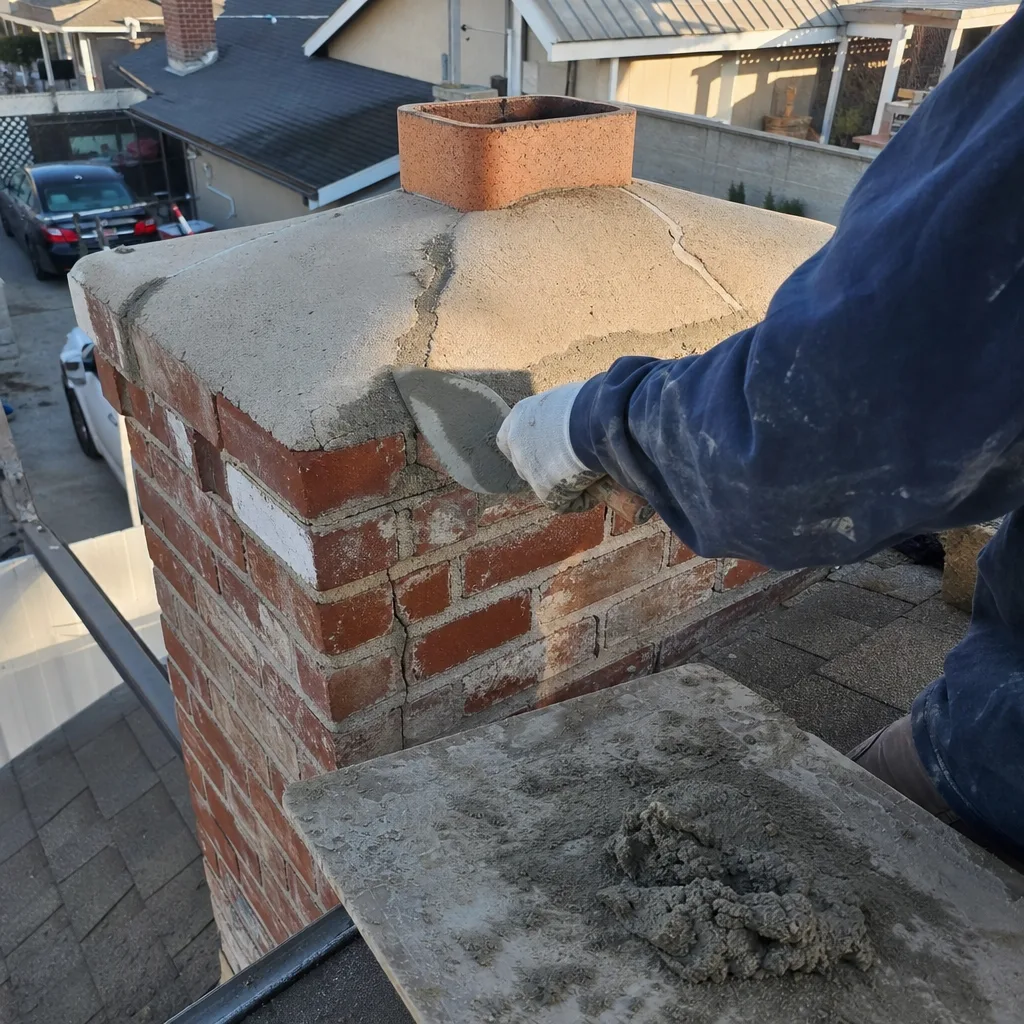
A damper that won’t fully close is often reported as an energy issue. Homeowners notice conditioned air escaping, higher utility bills, or drafts. In Huntington Beach’s mild climate, this gets deprioritized compared to colder regions. That’s a mistake.
An unsealed damper indicates one of three conditions, two of them serious:
- Warped or corroded damper plate from heat cycling or moisture. Annoying, not dangerous. Replacement with a top-sealing damper, $480-$720 installed.
- Creosote buildup on the damper seat preventing full closure. Indicates significant flue deposits above. Cleaning required, $240-$520 depending on stage.
- Smoke chamber or flue liner deformation shifting the damper frame. Indicates structural deterioration. Camera scan required, repair potentially $2,800-$6,500.
The diagnostic test: close the damper fully, shine a flashlight up from the firebox, and look for gaps. A thin line of light around the edge is normal wear. A visible gap of 1/4 inch or more, or light streaming through from above, indicates the damper seat is compromised. If you also smell creosote odor with the damper closed, suspect buildup or liner gaps allowing bypass airflow.
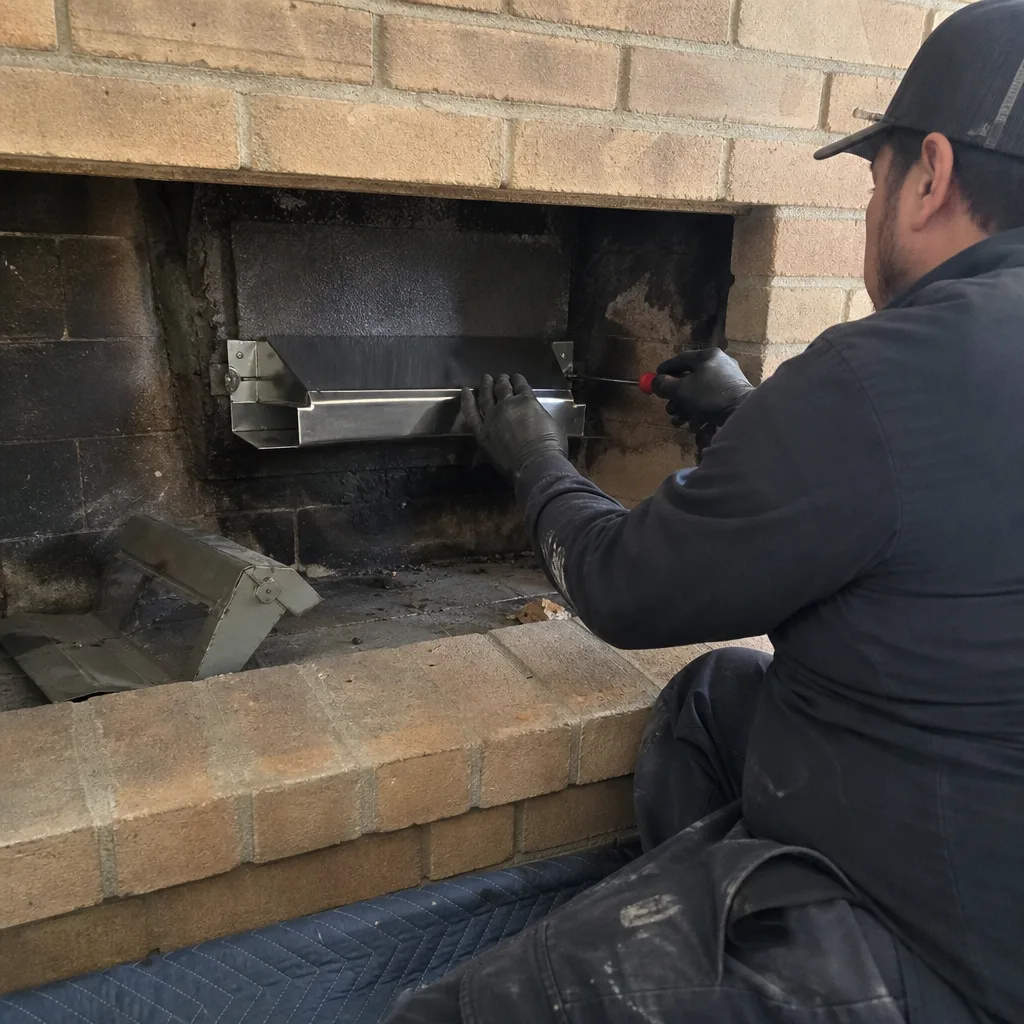
In coastal Huntington Beach, where salt air corrodes steel dampers faster than inland markets, we replace more damper assemblies than we repair. A Gelco or Olympia Chimney stainless damper resists corrosion and carries longer warranty terms than the original builder-grade components. We source through Haven’s buying network to keep the installed price honest, and we quote it in writing before work starts.
Rust Streaking: The Coastal Warning Sign National Guides Miss
This is the warning sign that doesn’t appear in national chimney guides because it’s specific to coastal environments. Orange-brown streaks running down stucco or siding below the chimney cap indicate a galvanized or plain steel cap at end of service life, actively rusting in salt air.
Huntington Beach’s marine layer deposits chloride salts on metal surfaces nightly. Galvanized steel, common in caps installed before 2010, begins visible rusting in 7-12 years in this environment. Stainless steel caps last 20+ years but cost 40-60% more, so builders and budget sweeps historically used galvanized.
The problem isn’t cosmetic. A rusting cap is a failing cap. Holes develop. Water enters. That water degrades the crown, penetrates the flue, and accelerates liner deterioration. We’ve inspected chimneys in the Seacliff neighborhood where a rusted cap had been ignored for three years, resulting in crown failure, liner spalling, and a $6,200 repair that would have been $680 for cap replacement alone.
The specific indicator: rust streaking that reappears within weeks of pressure washing. If you’ve cleaned the stains and they return, the cap is actively deteriorating. Photograph the streaking pattern and note the cap material if visible from the ground. We can often confirm material and condition from photos, though a ladder evaluation determines whether the crown beneath has been compromised.
Replacement with a stainless or copper cap from Famco or Gelco, properly sized and installed with storm collar, runs $380-$720 in the Huntington Beach market. We include crown condition assessment in that evaluation, because installing a new cap on a failed crown is wasted money.
Cleaning Problem or Structural Problem? How to Tell Before You Call
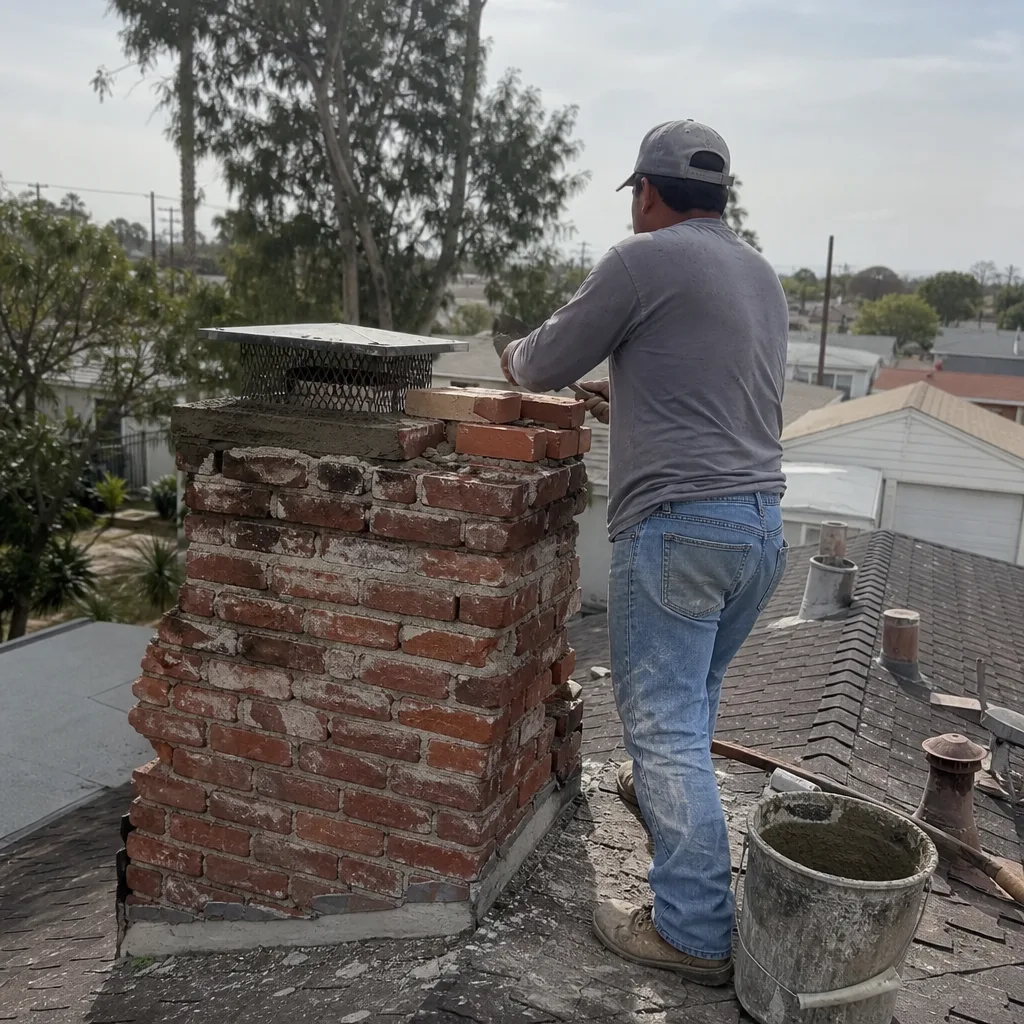
Homeowners often can’t distinguish whether their warning sign indicates a maintenance issue (creosote, debris) or a construction defect (liner failure, crown damage, improper sizing). The distinction determines whether you’re paying $240 for a sweep or $4,000 for liner work. Here’s how to read your symptoms:
| Symptom Pattern | Likely Cleaning Problem | Likely Structural Problem |
|---|---|---|
| Odor | Sulfur/tar smell, worse in humidity, damper closed | Musty/mold smell, worse after rain, persists with damper sealed |
| Smoke behavior | Backdraft on lighting, clears as flue warms | Consistent poor draft regardless of fire size or weather |
| Visual signs | Oily firebox residue, cap debris | Exterior cracks, leaning, spalling, rust streaking |
| Timing | Worsened gradually over multiple burning seasons | Sudden onset after earthquake, storm, or visible incident |
| Previous service | No sweep in 2+ years, or last sweep without camera | Recent sweep “found nothing” but symptoms persist |
The critical point: these patterns are suggestive, not definitive. Only a camera scan (NFPA 211 Level 2 inspection) can confirm liner condition, joint integrity, and clearance to combustibles. A flashlight inspection from the top or bottom misses the middle third of the flue where most deterioration occurs. That’s why Clause 4 of the Haven Standard requires documented photo record on every visit, not as an upgrade but as baseline practice.
In Huntington Beach specifically, we’ve seen structural problems misdiagnosed as cleaning problems in homes with original 1970s construction. The clay tile liners of that era were often installed with inadequate clearance to wood framing, and decades of thermal cycling have created hairline cracks invisible to flashlight inspection. The symptom is “poor draft” or “smoke smell,” but the cause is liner failure requiring replacement, not additional sweeping.
If your symptoms match the structural column, or if you’ve had a sweep that didn’t include camera documentation, schedule a Level 2 inspection before authorizing any cleaning work. We provide written scope and price before starting, and we flag immediately when camera findings change the recommended work.
The Insurance Notification Threshold
Homeowners insurance covers sudden, accidental fire damage. It does not cover damage from maintenance neglect that the policyholder knew or should have known about. The “should have known” standard creates a documented duty to repair once warning signs are visible or detectable.
The threshold isn’t always clear, but these are the conditions where insurers have successfully denied chimney fire claims:
- Documented prior sweep without repair recommendation: If a sweep noted “recommend liner evaluation” and you have that documentation, subsequent liner failure is arguably foreseeable.
- Visible exterior damage unaddressed: Spalling brick, leaning chimney, or missing cap visible from the ground constitutes constructive notice.
- Neighbor complaints or HOA notices: Written communication about chimney condition creates timestamped evidence of awareness.
- Previous chimney fire: Even minor. Insurers require inspection and clearance before reissuing coverage; failure to comply voids subsequent claims.
In Huntington Beach, where many homes carry California FAIR Plan coverage due to wildfire risk, the inspection documentation standard is higher. FAIR Plan adjusters routinely request NFPA 211 inspection records and may deny claims where the homeowner cannot produce evidence of annual professional evaluation.
Our recommendation: if you observe any warning sign in this guide, document it with dated photographs and schedule inspection within 30 days. The camera scan report we provide under Clause 4 serves as contemporaneous documentation of condition. If repair is recommended, the written scope and price we deliver creates a record of your responsive action. This documentation protects your coverage position if a subsequent event occurs.
We do not perform work solely for insurance documentation, and we do not write reports to support coverage disputes. We document what the camera shows, deliver it to you, and you decide how to proceed. That independence is part of the Haven Standard.
What You Can Photograph vs. What Needs a Camera Scan
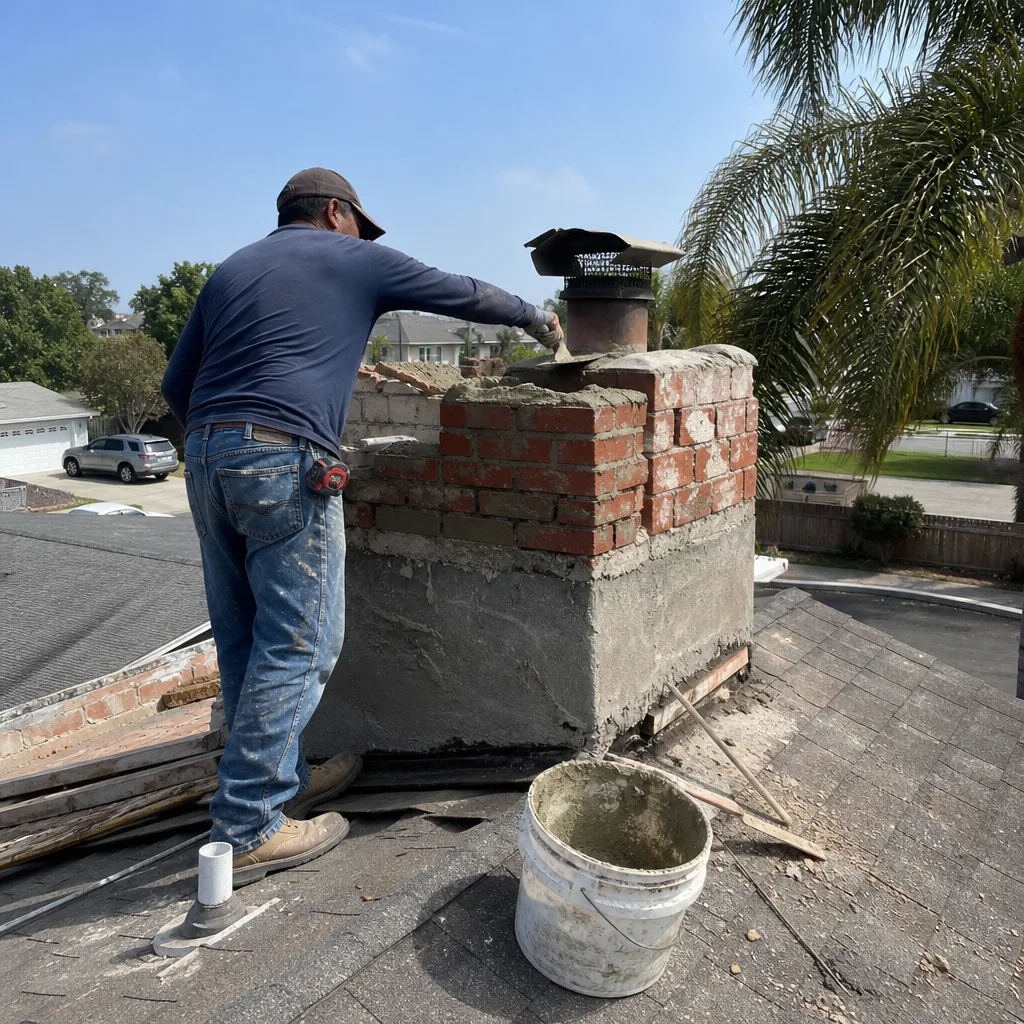
Remote preliminary assessment can save you an unnecessary service call or confirm urgency before booking. Here’s what translates through a homeowner’s phone camera and what doesn’t:
Photograph for Remote Assessment
- Exterior: efflorescence pattern, mortar condition, rust streaking, cap visible damage. Shoot in diffuse daylight, include surrounding roof context for scale.
- Firebox: residue type (sooty vs. oily), brick or refractory panel condition, damper position and visible gaps. Use flashlight, focus on the back wall above the grate.
- Smoke behavior: video of lighting sequence showing backdraft pattern. Note weather, time, and any open windows or running fans.
- Debris: cap condition, visible nest material, fallen brick or mortar on roof or ground.
Requires In-Person Camera Scan
- Liner condition: cracks, gaps, spalling, or missing tiles. Only visible with articulated camera in the flue.
- Creosote stage and thickness: particularly in the upper flue and smoke chamber where condensation heaviest.
- Clearance to combustibles: measured with specialized tools, not estimable visually.
- Crown interior condition: the underside of the crown, where water intrusion begins, is invisible from above or below without camera access.
- Smoke chamber construction: parged or unparged, corbelled or straight, and any degradation.
We offer preliminary photo review at no charge for Huntington Beach homeowners. Send images to our live phone line, and we’ll tell you whether you’re looking at a cleaning issue, a structural concern, or something that needs immediate camera evaluation. We don’t diagnose definitively from photos, but we can triage urgency and give you a realistic cost range before booking.
Common Mistakes to Avoid
- Assuming “no fireplace use” means “no maintenance needed.” In Huntington Beach, where many homeowners use fireplaces rarely, chimneys still accumulate moisture, debris, and deteriorate from salt air exposure. Annual inspection is recommended regardless of use frequency.
- Hiring a sweep who doesn’t run a camera. A flashlight inspection from top or bottom evaluates perhaps 30% of the flue. The middle third, where most defects occur, is invisible without camera. Every Emberly inspection includes full flue camera scan under Clause 4.
- Accepting “call for quote” pricing. If a company won’t commit to a written price before dispatch, you have no protection against upsell after arrival. Our written price, scope, and warranty are delivered before work starts, every time, under Haven Standard Clause 1.
- Ignoring summer odor as “just humidity.” The sulfur smell of Stage 2 creosote is most active in warm, humid conditions. Dismissing it as seasonal guarantees more expensive treatment later.
- Pressure washing efflorescence without addressing water source. The white staining will return, and the underlying masonry degradation continues. Water source correction first, cosmetic treatment second.
- Replacing a rusted cap without crown evaluation. The cap failed because water was getting to it, or because the crown was already compromised. Evaluate both, repair both.
- Waiting for “the burning season” to schedule. In Huntington Beach, sweeps are busiest October through January. Booking September or earlier ensures availability, drier roof conditions for exterior work, and more time to complete any needed repairs before first use.
When to Call a Professional
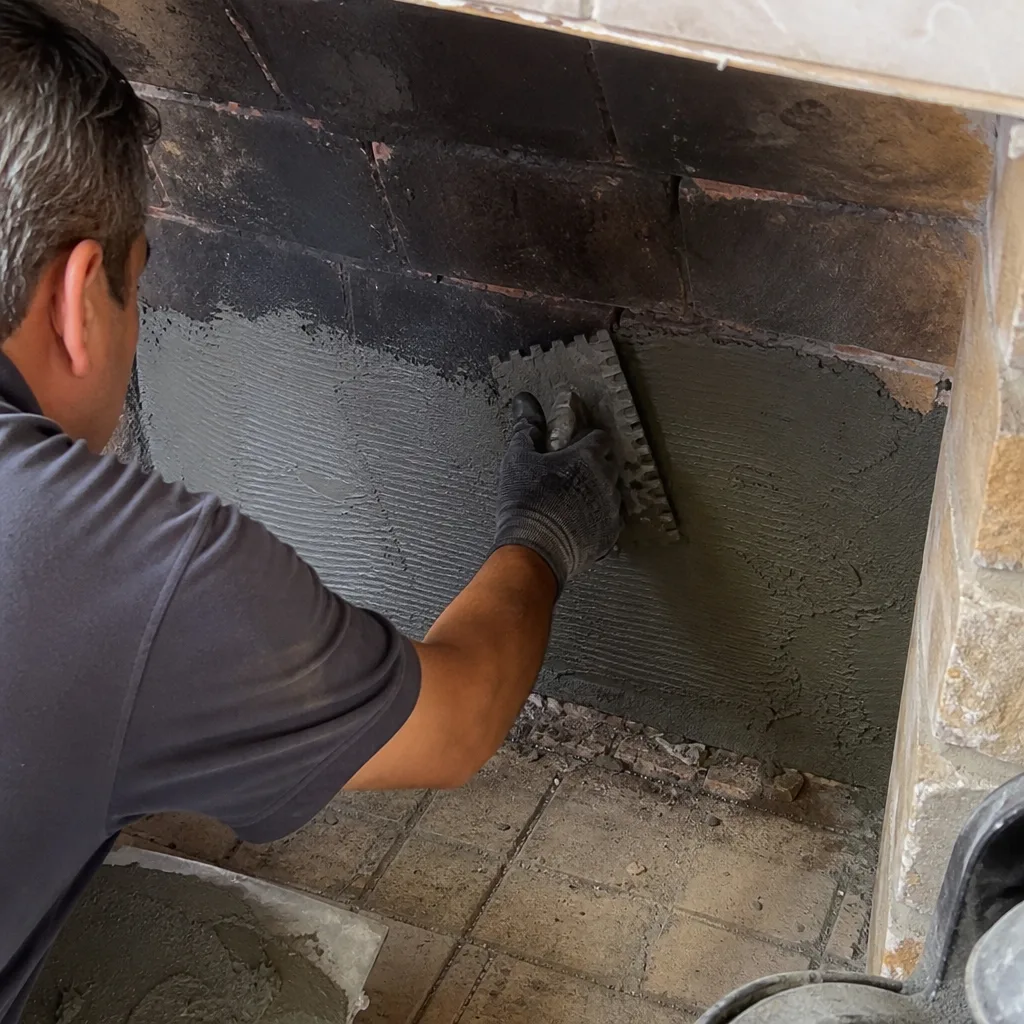
Call for camera-scan inspection if you observe any of the seven warning signs named in this guide, if your last professional evaluation was more than 12 months ago, or if you’ve never had a documented camera inspection of your flue. The conditions that create real hazard, cracked liners and advanced creosote buildup, are not detectable by homeowner observation alone.
Emberly Chimney Cleaners Huntington Beach offers free estimates throughout Huntington Beach, from the waterfront homes of Sunset Beach to the inland neighborhoods near Central Park. Every estimate includes NFPA 211 Level 2 camera inspection, documented photo record under Haven Standard Clause 4, and written price before any work begins. Call (657) 427-5872 to schedule. Live phone support is available 24 hours a day, 7 days a week, and you’ll receive text confirmation with your assigned technician’s name and arrival window.
Frequently Asked Questions
A standard chimney cleaning in Huntington Beach typically costs $180-$340 for Stage 1 (sooty) creosote, $340-$520 for Stage 2 glazed creosote requiring rotary or chemical treatment, and $680-$1,200 for Stage 3 hardened deposits or flues with significant obstruction. Every Emberly job includes NFPA 211 Level 2 camera inspection and documented photo record under Haven Standard Clause 4. We deliver a written price before work starts, with no exceptions. Call (657) 427-5872 for an exact quote based on your flue condition, estimates are free.
You need liner replacement if the camera scan shows cracked or missing tiles, gaps at mortar joints, or spalling that exposes the chimney structure to flue gases. In Huntington Beach, we see accelerated liner deterioration in homes within two miles of the coast due to salt-air moisture intrusion. However, many “liner replacement” recommendations are unnecessary, sold by sweeps who don’t show camera evidence. We provide the photos, explain what they show in plain terms, and give a free second opinion on any competitor’s written liner replacement quote. Sometimes the right call is cleaning and monitoring; sometimes it’s replacement. The camera decides, not the sales pitch.
The NFPA 211 standard calls for annual inspection, with cleaning frequency determined by use and fuel type. In Huntington Beach’s coastal environment, we recommend annual inspection even for rarely used fireplaces, because moisture and salt air degrade liners and caps regardless of burn frequency. Active wood-burning fireplaces should be cleaned when creosote reaches 1/8 inch thickness, typically every 1-2 cords of seasoned hardwood. Duraflame-style logs produce creosote faster, often requiring annual cleaning with moderate use.
The most common consequence is chimney fire from ignited creosote, which can reach 2,000°F and damage the liner, adjacent framing, or roof structure. Less dramatically but more commonly, deteriorated liners allow carbon monoxide intrusion into living spaces, particularly in homes with negative pressure from modern HVAC systems. In Huntington Beach, we’ve also documented cases where water intrusion from uncapped or deteriorated chimneys caused structural rot in roof framing, discovered only during unrelated repairs. The cost trajectory of deferred maintenance is steep: a $240 sweep becomes a $680 treatment becomes a $4,500 liner replacement becomes a $12,000 structural rebuild.
Homeowners can remove light soot from the firebox and smoke chamber entrance with proper brushes and rods. We do not recommend DIY flue cleaning. The upper flue, where most creosote accumulates, requires ladder or roof access and specialized rotary equipment for glazed deposits. More importantly, without camera inspection, you cannot verify liner condition or confirm complete creosote removal. The hazard isn’t incomplete cleaning, it’s undetected liner failure that cleaning alone won’t address. For safety-critical components, we recommend professional evaluation.
Summer humidity reactivates sulfur compounds in Stage 2 creosote, producing the rotten-egg or asphalt odor that homeowners often misattribute to gas leaks or mold. In Huntington Beach’s marine climate, this effect is pronounced from June through October. The odor with damper closed indicates creosote has penetrated the smoke chamber and is off-gassing through damper gaps. Winter fires temporarily burn off surface compounds, masking the underlying buildup. The solution is creosote removal, not odor masking.
Level 1 is visual inspection of accessible portions, appropriate for annual maintenance of chimneys with no changes in use or condition. Level 2 includes video camera scan of the entire flue interior, accessible portions of the attic and basement for clearance verification, and documented photo record, required for real estate transactions, after chimney fire or seismic event, or when any warning sign is present. Emberly Chimney Cleaners Huntington Beach performs Level 2 inspection as our standard on every visit, because flashlight-only evaluation misses the defects that create real hazard. This practice, continuous since 2009, became Clause 4 of the Haven Standard.
The Bottom Line
The warning signs that matter in Huntington Beach are often subtle: a sulfur smell dismissed as humidity, rust streaking explained as “coastal weathering,” a damper that “never closed quite right.” Each of these indicates a specific condition inside the flue, and each has a cost trajectory that steepens with delay. The seven signs, smoke backdraft, sulfur odor, white efflorescence, crumbling mortar, oily firebox residue, failed damper seal, and cap rust streaking, are all detectable by observation, but their underlying causes require camera documentation to distinguish cleaning needs from structural repairs. The inspection standard that resolves this uncertainty is NFPA 211 Level 2, with full flue camera scan and documented photo record. We’ve performed this standard on every job since 2009, and we deliver written price, scope, and warranty before any work begins. If you’ve observed any warning sign in this guide, or if your chimney has never had documented camera inspection, schedule evaluation before the condition advances.
Written by Corrine Halstead, Owner at Emberly Chimney Cleaners Huntington Beach, serving Huntington Beach since 2009.