
Last updated September 22, 2026
Level 1 sweep and inspection to the NFPA 211 annual standard - flue, crown, cap, and flashing checked and photographed
Chimney sweep logs do not sweep chimneys. They loosen some creosote - which then falls where a brush and vacuum still have to collect it.
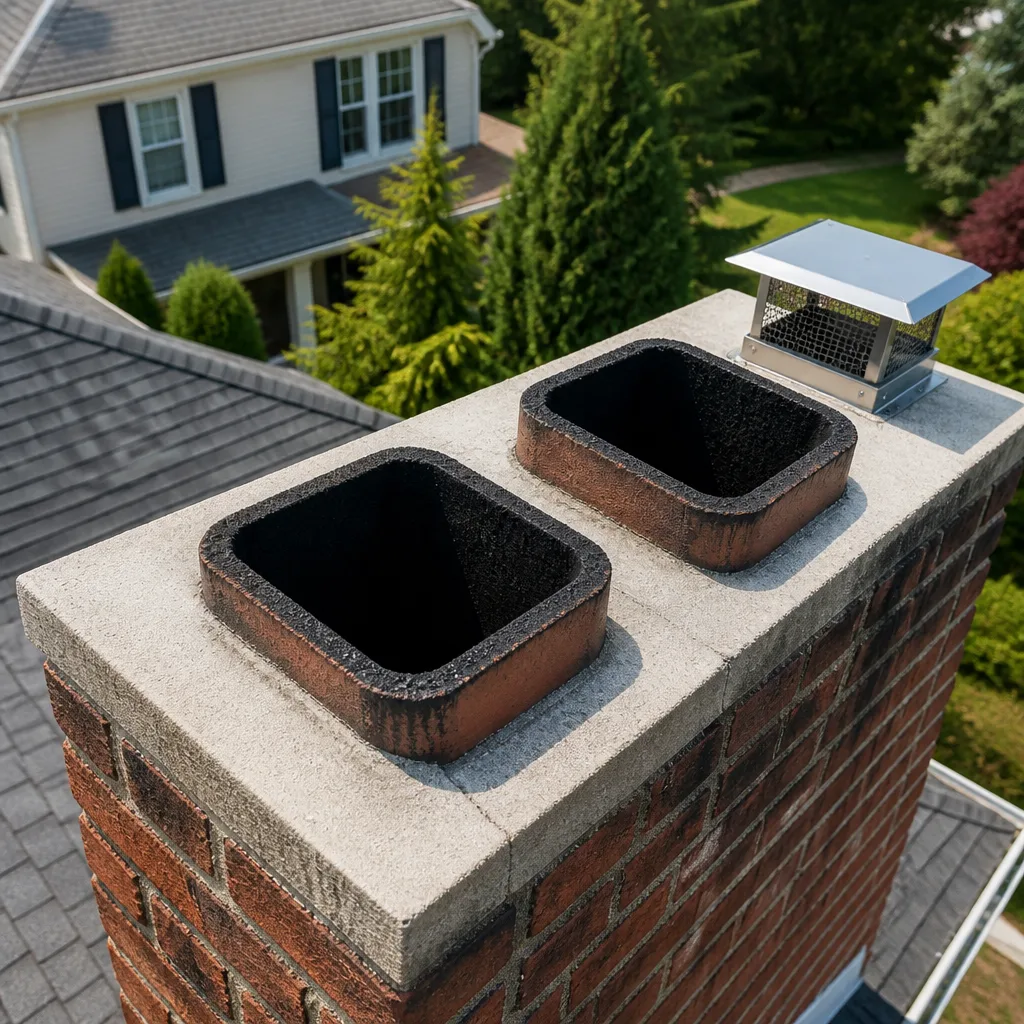
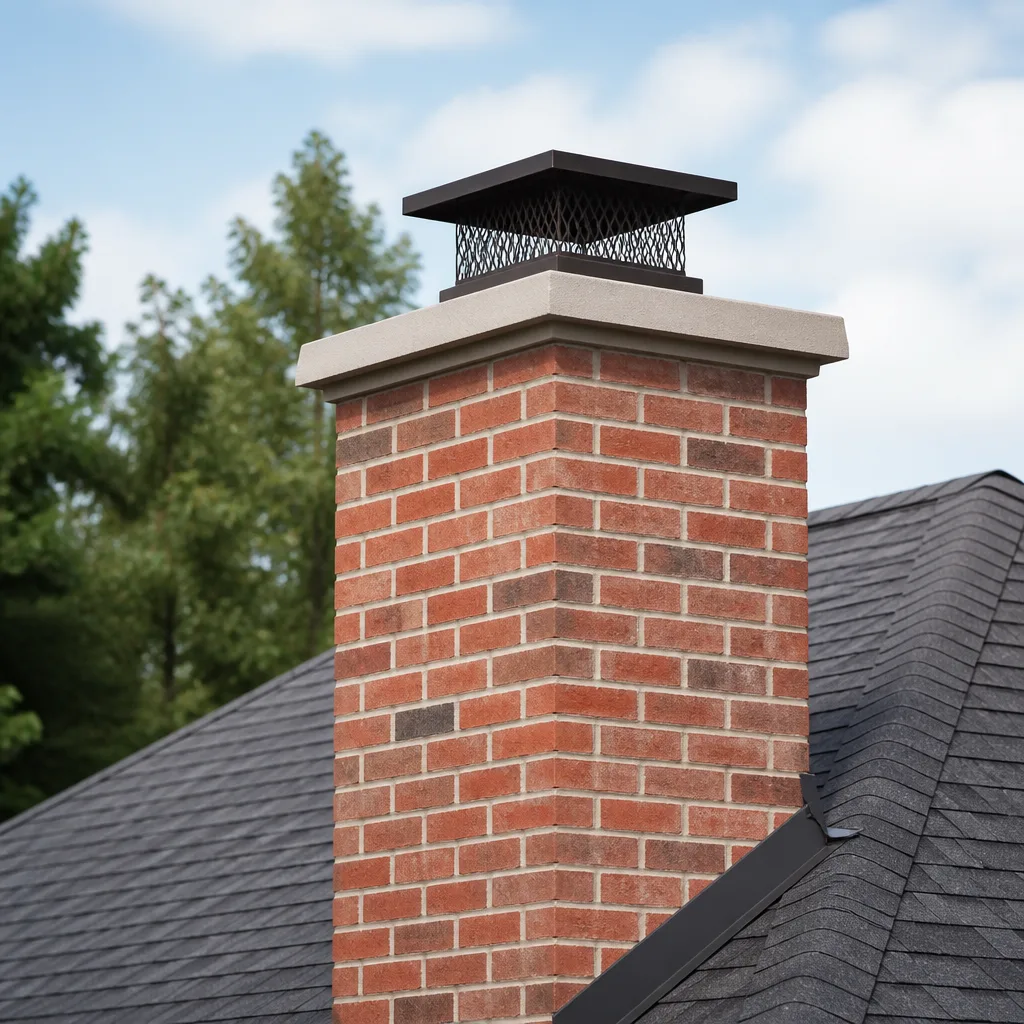
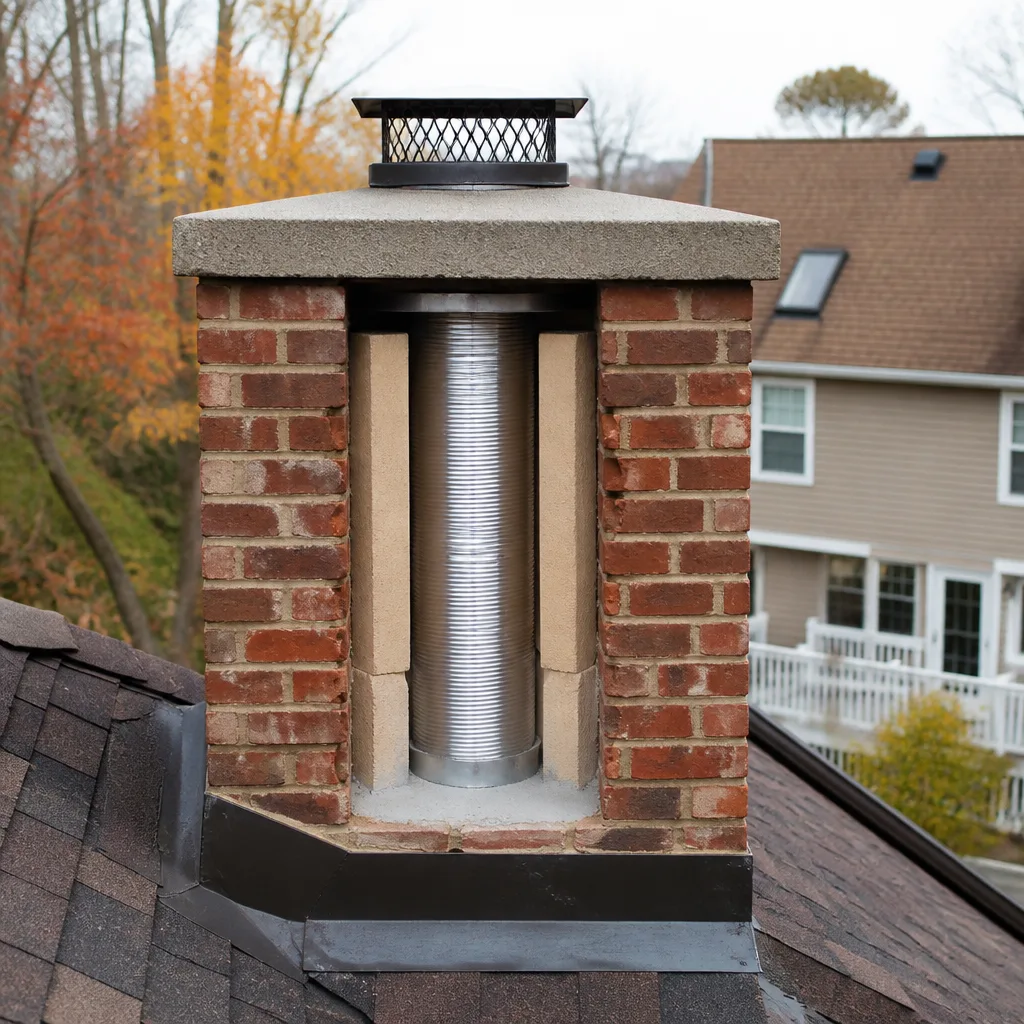
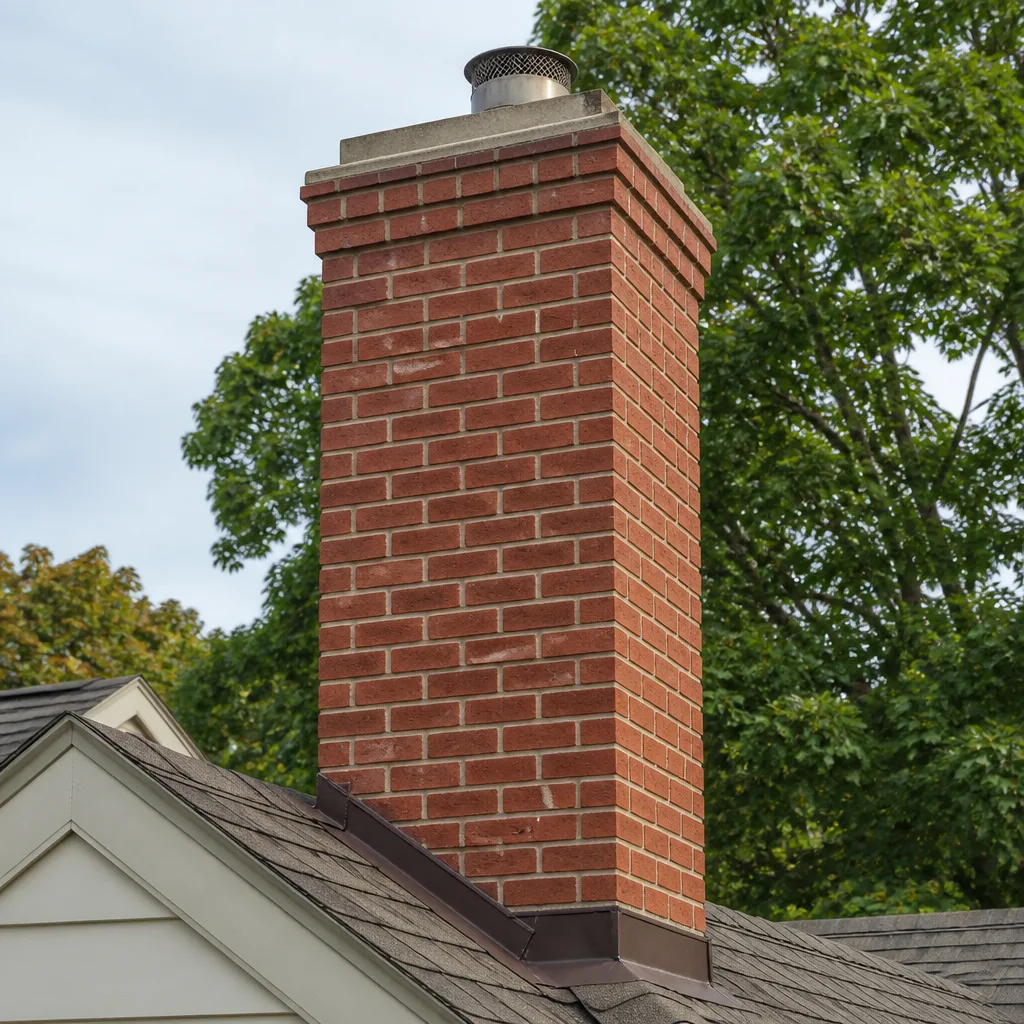
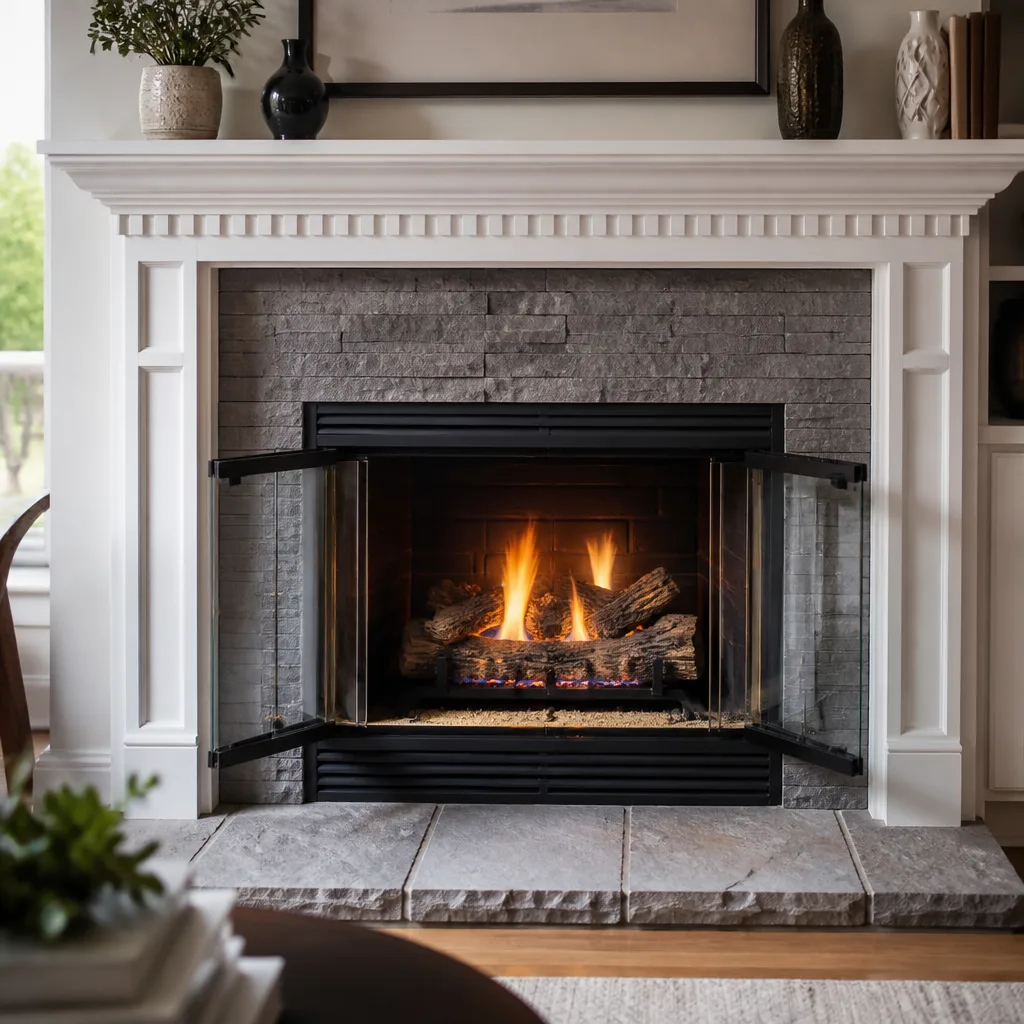
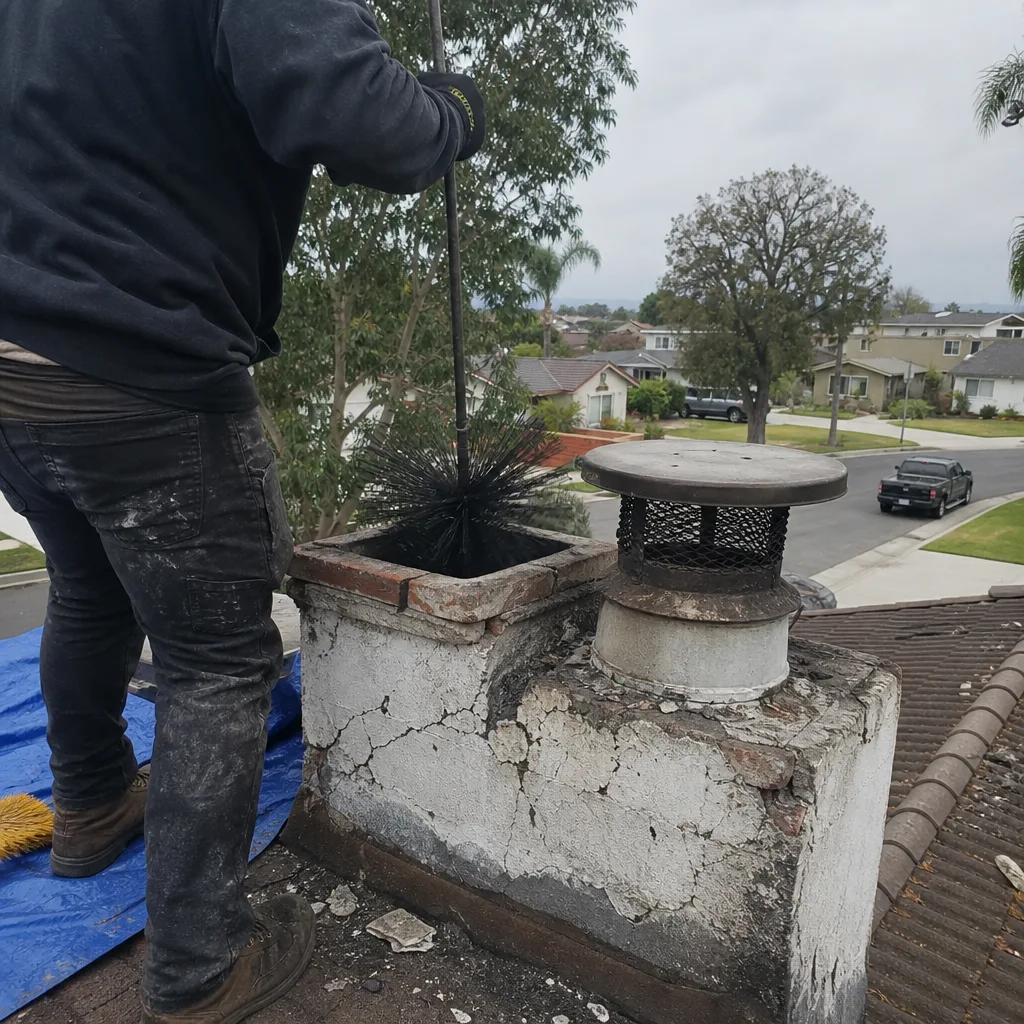 Before
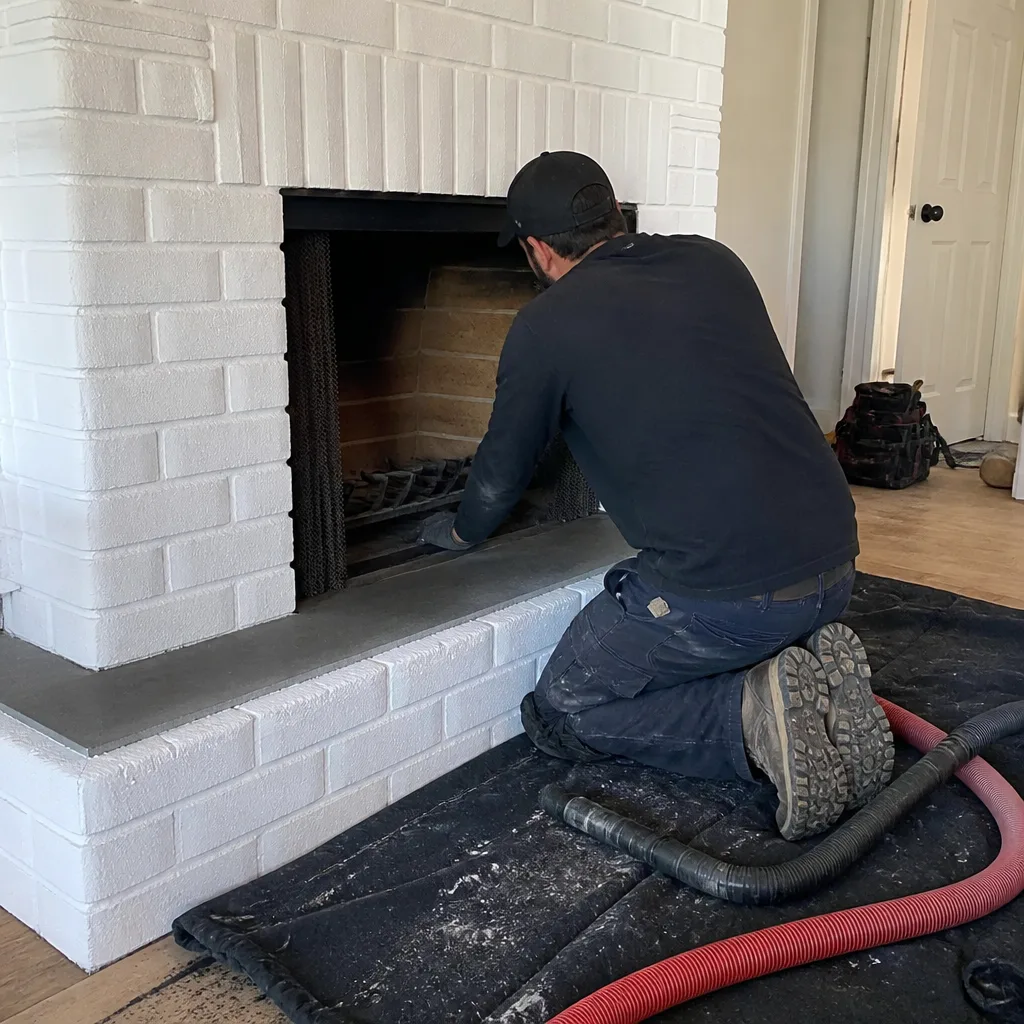 After
After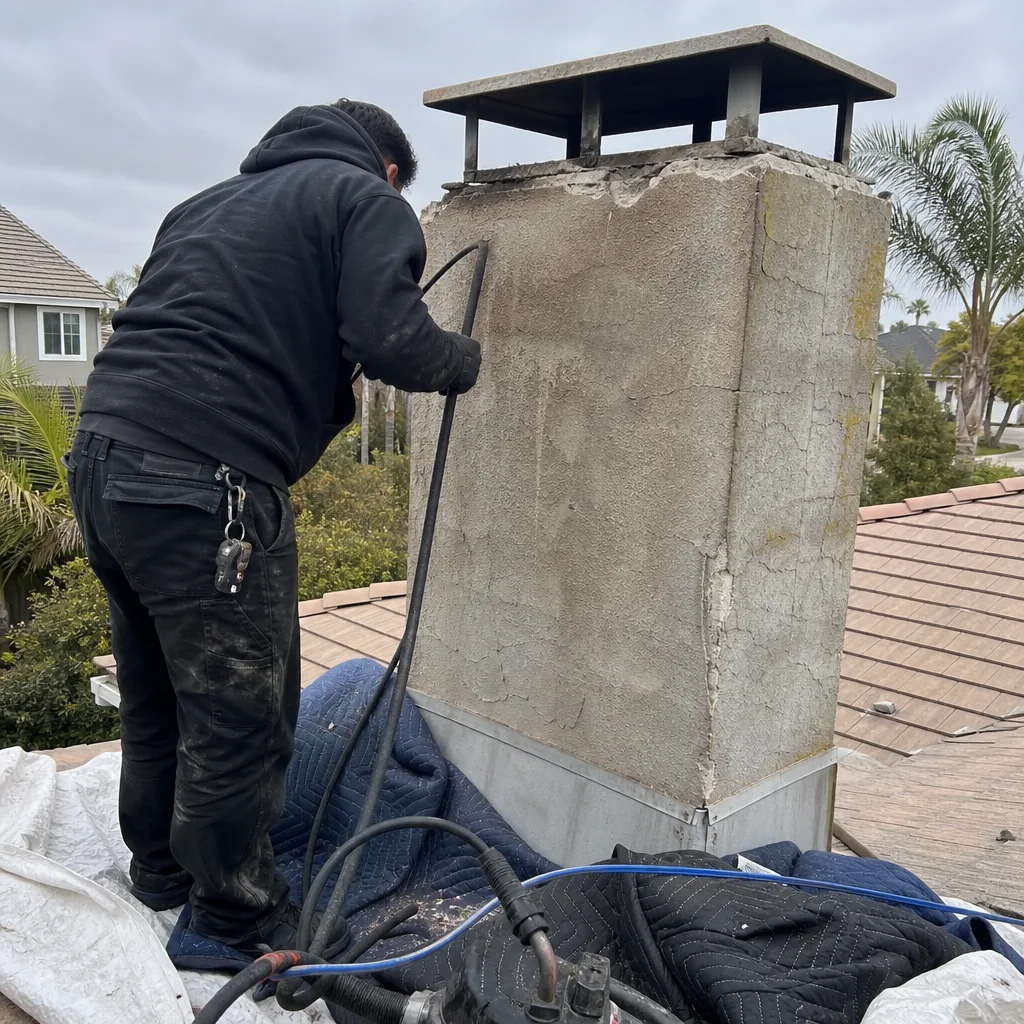 Before
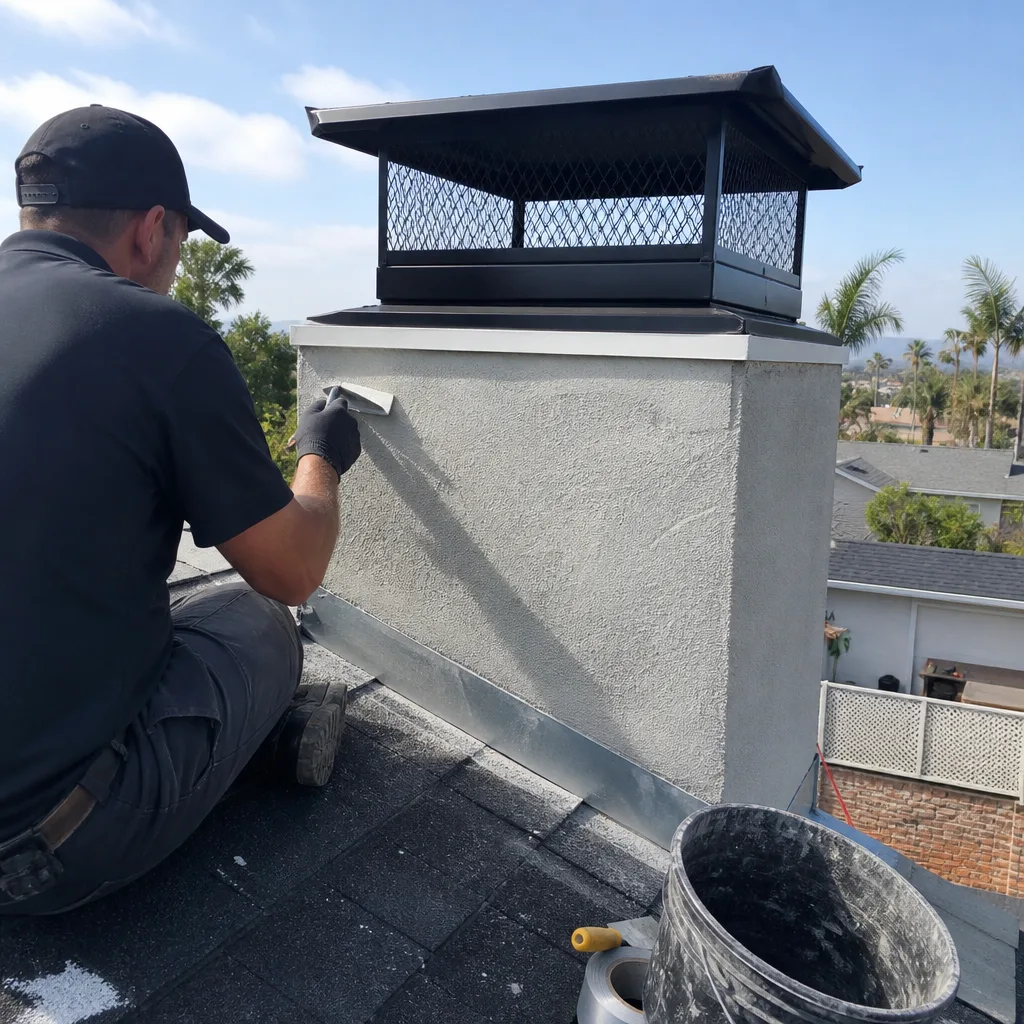 After
After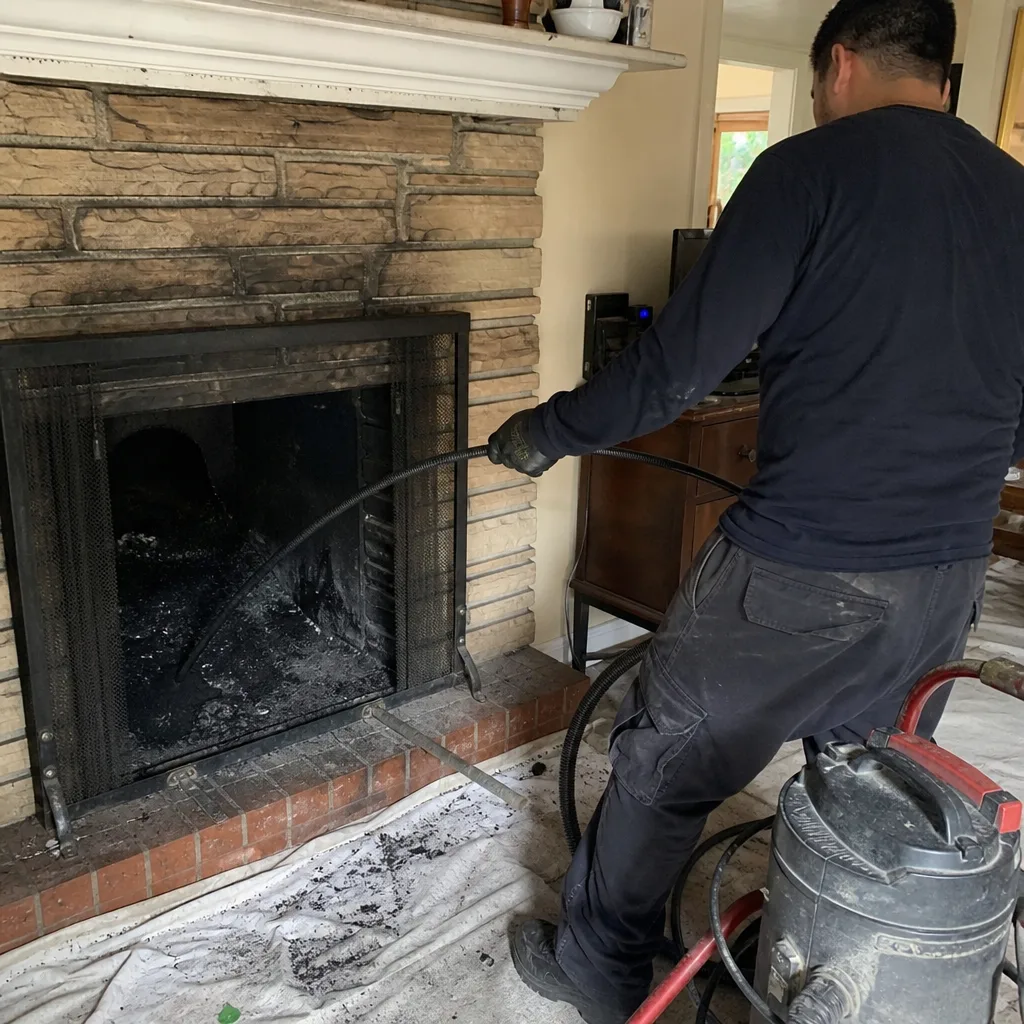 Before
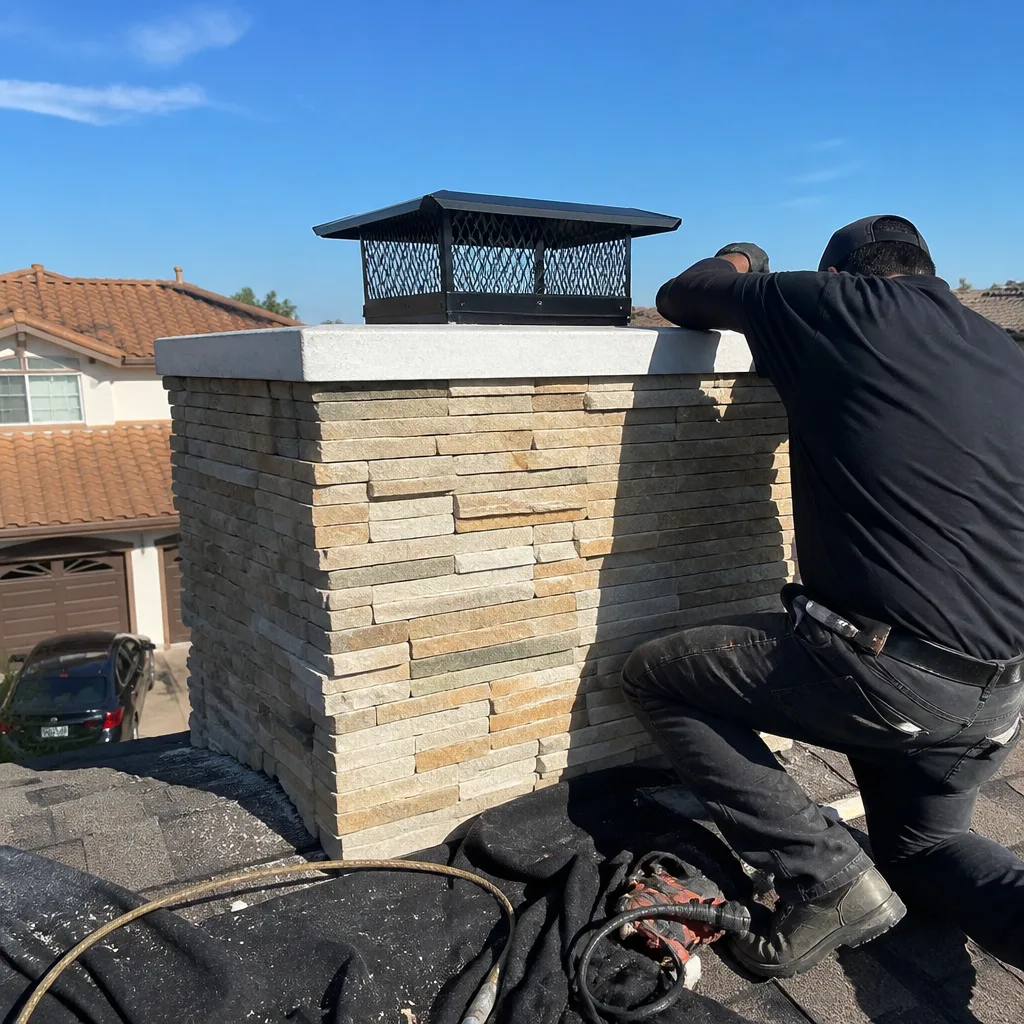 After
AfterDIY vs Professional Chimney Cleaning: The Huntington Beach Homeowner’s Decision Guide
The rotary cleaning systems sold at Home Depot are genuinely effective at removing Stage 1 powdery creosote. The problem is that you cannot confirm Stage 1 without looking, and looking requires a camera, which costs more to rent for one day than most professional cleanings cost to book. In Huntington Beach, where our mild winters mean most homeowners burn fewer than 20 fires per season, the temptation to skip the professional sweep is real. This guide draws the exact line between when a $60 brush kit is reasonable and when it is a liability gamble you cannot afford, and you can explore more guides & resources for maintaining your home safely.
Quick Answer
DIY chimney cleaning in Huntington Beach is reasonable only when three conditions are met: your flue is unlined masonry, your last professional camera inspection was within 24 months with a clean record, and you’ve burned fewer than 15 fires since that inspection. In all other cases, the hidden conditions that create fire and carbon monoxide hazards require a camera-scan inspection that no brush kit provides. A documented professional cleaning with photo record typically costs less than renting inspection equipment for a single day.
Table of Contents
- The Three Conditions That Make DIY Reasonable
- What DIY Cannot Detect (And What It Costs If You Miss It)
- The Actual Cost Comparison: DIY vs. Professional in Huntington Beach
- California Liability: What Happens After a DIY Cleaning Goes Wrong
- The Hybrid Option: DIY Brush + Camera-Only Inspection
- DIY Tools: What Works, What Doesn’t, and What’s Dangerous
- Huntington Beach Specifics: Climate, Codes, and Common Flue Types
- Common Mistakes to Avoid
- When to Call a Professional
- Frequently Asked Questions
BeforeAfterThe Three Conditions That Make DIY Reasonable
We’ve completed more than 38,000 chimney inspections since 2009, and we’ve seen maybe 200 flues where a homeowner brush cleaning was genuinely appropriate. Those 200 shared three traits. Miss one, and you’re gambling with conditions you cannot see.
Condition 1: Unlined masonry flue with no insert. If you have a stainless steel liner, a factory-built metal chimney, or a fireplace insert with its own venting system, the geometry is wrong for consumer brush kits. The bristle diameter and flex won’t match. Worse, you’re cleaning around components that may themselves be failing. Only an open, rectangular masonry flue with straight vertical walls is brush-kit-compatible.
Condition 2: Professional camera inspection within 24 months with documented clean condition. This is the one homeowners skip, and it’s the one that destroys them. A clean camera record from 2023 means you know the liner was intact, the mortar joints were tight, and no animal had nested behind the smoke shelf. Without that record, you’re cleaning blind. In our experience across Huntington Beach neighborhoods from Surf City to Huntington Harbour, a flue that looked fine five years ago has a 15-20% chance of showing new spalling, joint separation, or minor liner degradation.
Condition 3: Fewer than 15 fires since that inspection. Stage 1 creosote, the powdery stuff brush kits remove, builds slowly with clean-burning hardwood. But burn pine construction scraps, leave the damper half-closed, or run a smoldering fire for ambiance, and you can generate Stage 2 glazed creosote in a single season. Fifteen fires of seasoned hardwood with proper air supply is the threshold where we’ve consistently found Stage 1 only.
Meet all three? A $60 polypropylene brush, extension rods, drop cloth, and N95 mask is a defensible choice. Miss any one, and you’re cleaning a flue whose condition you do not know.
What DIY Cannot Detect (And What It Costs If You Miss It)
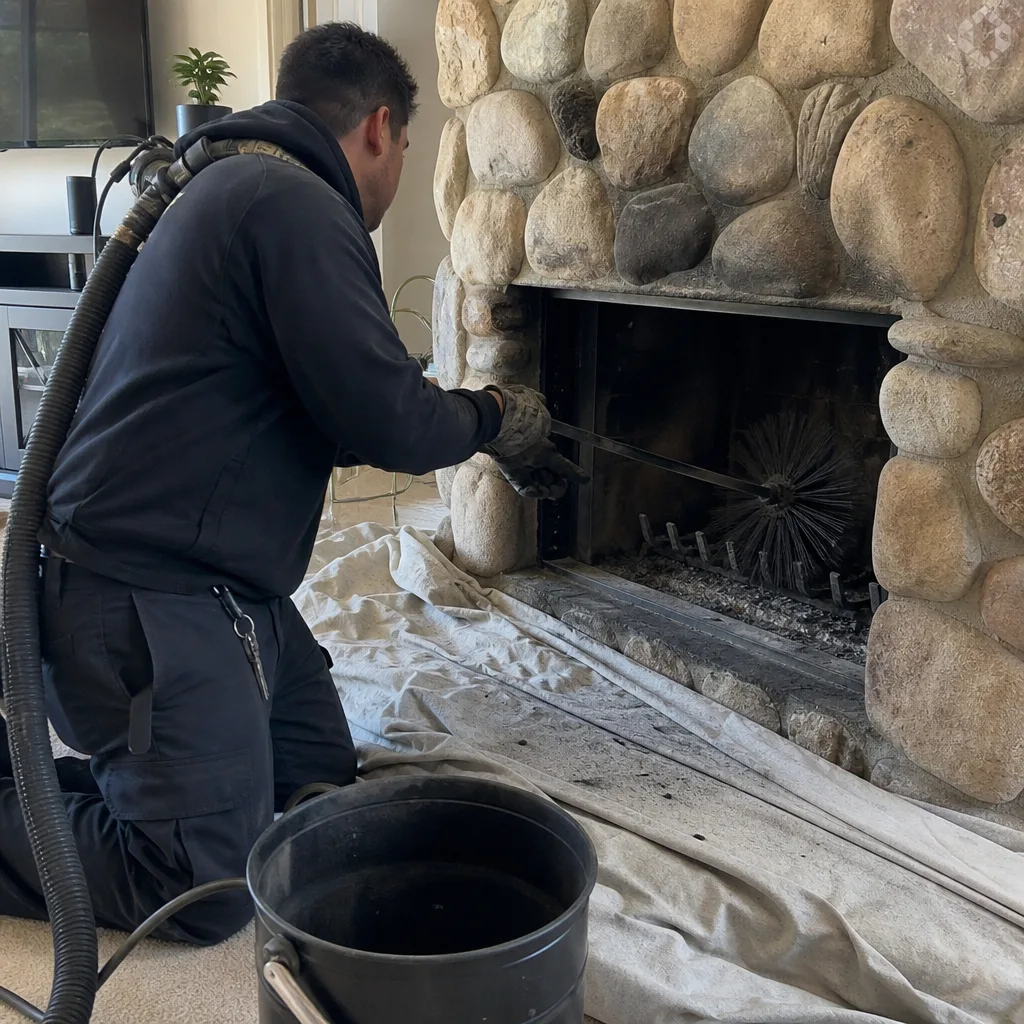
Brush kits remove surface creosote. They do not inspect. Here are four conditions we’ve found in Huntington Beach homes where the homeowner had just “cleaned” the flue themselves, each with a real cost attached.
Liner cracks and spalling. Clay flue liners crack from thermal shock, settlement, or lightning strike. A crack opens a path for combustion gases, sparks, or liquid creosote to reach the wooden framing inches away. The cost of missing it: a structure fire that averages $78,000 in damage in Orange County, or slow carbon monoxide leakage that produces headaches the homeowner attributes to seasonal illness. We find liner cracks in roughly 12% of Huntington Beach inspections on homes built 1965-1995.
Offset joint separation. Clay flue liners are stacked in sections with refractory mortar joints. Seismic activity, common in Southern California, can shift these joints. A separated joint creates a ledge where creosote accumulates and a gap where sparks escape. The brush rod passes right through; the camera stops and documents. Repair cost for a localized joint repair with HeatShield cerfractory foam: $800-$1,400. Cost of missing it: see above.
Animal obstruction behind a bend. Raccoons, squirrels, and the occasional opossum nest in unused flues, especially in Huntington Beach’s older neighborhoods near Central Park where mature trees overhang roofs. A nest behind a smoke shelf or in an offset flue blocks airflow, causing smoke backup and accelerated creosote buildup. The brush rod pushes past soft nesting material; the camera reveals it. Removal and sanitization: $400-$700. Cost of missing it: smoke damage to interior finishes, or carbon monoxide spillage into living space.
Stage 2 glazed creosote. This hard, tar-like deposit forms when wood burns incompletely. It cannot be brushed off. It requires chemical treatment with a powderized creosote modifier, followed by mechanical removal with a rotary chain system. Attempting to brush glazed creosote polishes it, making it harder and more flammable. In 2022 we inspected a home in the Huntington Beach Highlands where the homeowner had brushed annually for three years, never knowing he’d converted a manageable deposit into a glazed lining with 1,700°F ignition potential.
The camera is the only tool that separates these conditions from a clean flue. Rental inspection cameras run $150-$250 per day in Orange County. A documented professional cleaning with camera inspection from Chimney Cleaning & Sweep in Huntington Beach typically costs less.
The Actual Cost Comparison: DIY vs. Professional in Huntington Beach
Homeowners consistently underestimate the full cost of DIY and overstate the cost of professional service. For a detailed breakdown, see our Chimney Cleaning Cost Breakdown: The Huntington Beach Homeowner’s Reference for 2026. Here’s the actual math for a typical Huntington Beach single-story home with one fireplace.
| DIY Approach | Professional Approach |
|---|---|
| Polypropylene brush kit with rods: $55-$85 | NFPA 211 Level 2 inspection with camera scan: included |
| Heavy-duty drop cloths (2): $30 | Chimney sweep and debris removal: included |
| N95 respirator and safety glasses: $25 | Documented photo record: included (Haven Standard Clause 4) |
| Creosote disposal bags and transport: $15 | Written scope, written price, written warranty: included (Haven Standard Clause 1) |
| Equipment rental if brush kit inadequate: $0-$200 | 365-Day Done Right Promise: included |
| Your time: 3-4 hours (prep, execution, cleanup, disposal run) | Your time: 45 minutes (meeting the tech, reviewing findings) |
| Total out-of-pocket: $125-$355 | Typical range in Huntington Beach: $189-$329 |
The hidden cost is harder to price: no written record. In a real estate transaction, a documented professional inspection with photo record is standard due diligence. In an insurance claim, it’s evidence of maintenance. In a dispute with a previous owner or contractor, it’s documentation. DIY cleaning produces none of this.
We’ve also seen homeowners spend $200 on a brush kit, find the creosote harder than expected, then call us anyway. The $200 is sunk. The professional cleaning still costs the same. This is not rare; it accounts for perhaps 8% of our Huntington Beach bookings in fall months.
California Liability: What Happens After a DIY Cleaning Goes Wrong
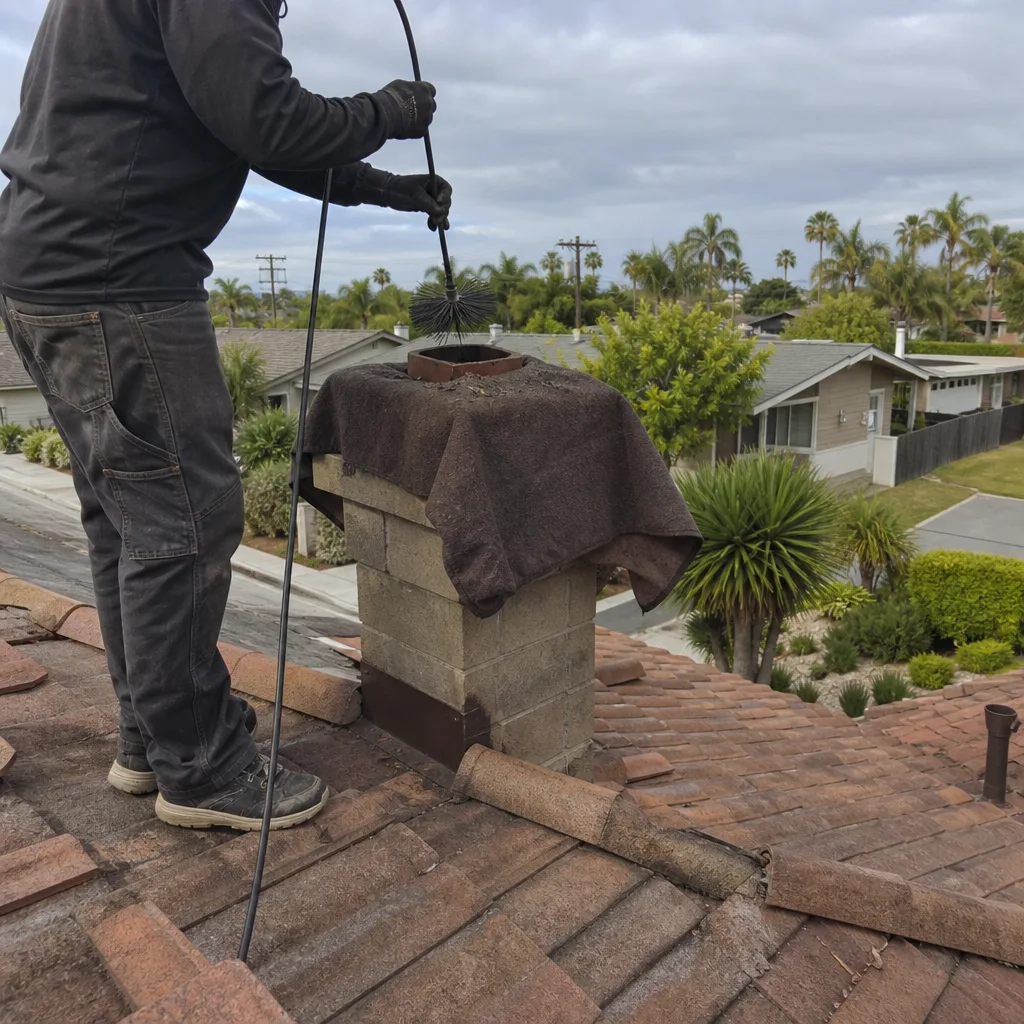
California follows a comparative negligence standard for residential fire claims, but insurance policies contain maintenance exclusions that shift the burden of proof to the homeowner. Here’s how that plays out in practice.
If a chimney fire follows a professional inspection and cleaning, the documentation chain is clear: dated invoice, scope of work, photo record, technician license number. The insurer’s subrogation team reviews whether the sweep company missed something. If the work was performed to NFPA 211 standard, coverage typically proceeds.
If a chimney fire follows DIY cleaning, the burden shifts immediately. The adjuster asks: When was the flue last inspected by a qualified professional? What was the liner condition? What creosote stage was documented? The homeowner has no answers. The insurer invokes the maintenance exclusion. The homeowner must then prove that the fire resulted from a defect unrelated to flue condition, a nearly impossible standard without prior documentation.
We’ve consulted on three Huntington Beach claims where DIY cleaning preceded a fire. In two, coverage was denied or reduced by 60%. In the third, the homeowner had retained a 2019 inspection report from another company, which partially supported the claim but revealed pre-existing liner damage the homeowner had never addressed.
The California Department of Insurance does not track chimney-specific claim denials, but fire claim attorneys in Orange County consistently cite lack of maintenance documentation as the primary coverage dispute in residential chimney fires. A written record from a Emberly Chimney Cleaners Huntington Beach home inspection is not a guarantee, but it is evidence that moves the burden back where it belongs.
The Hybrid Option: DIY Brush + Camera-Only Inspection
For the genuinely capable homeowner who meets all three conditions, there is a middle path that preserves safety and reduces cost. We offer it because it exists, not because it’s our preference.
Step 1: Perform your brush cleaning with proper PPE and disposal. Document the date, the brush type, and the approximate creosote volume removed.
Step 2: Within 14 days, schedule a camera-only inspection visit. This is not a full sweep; it’s a Level 2 inspection without cleaning, priced accordingly. The technician runs the camera, documents liner condition, and provides a written report with photos.
Step 3: If the camera reveals clean condition, you have a documented record for $120-$180 less than a full sweep-and-inspect. If it reveals conditions requiring cleaning or repair, the camera fee applies toward the full service.
This hybrid makes financial sense when all three conditions are met and the homeowner is genuinely competent with tools and heights. It fails when the homeowner discovers, mid-brush, that the creosote is glazed, the flue is offset, or a squirrel has died on the smoke shelf. At that point, the job has become a professional service anyway, and the DIY attempt has added risk without value.
In Huntington Beach, we book 10-15 hybrid inspections annually. Roughly 40% reveal conditions the homeowner was unaware of. The most common: minor liner spalling in 1970s tract homes near Yorktown Avenue, where thermal cycling from occasional use has stressed clay liners more than continuous use would have.
DIY Tools: What Works, What Doesn’t, and What’s Dangerous
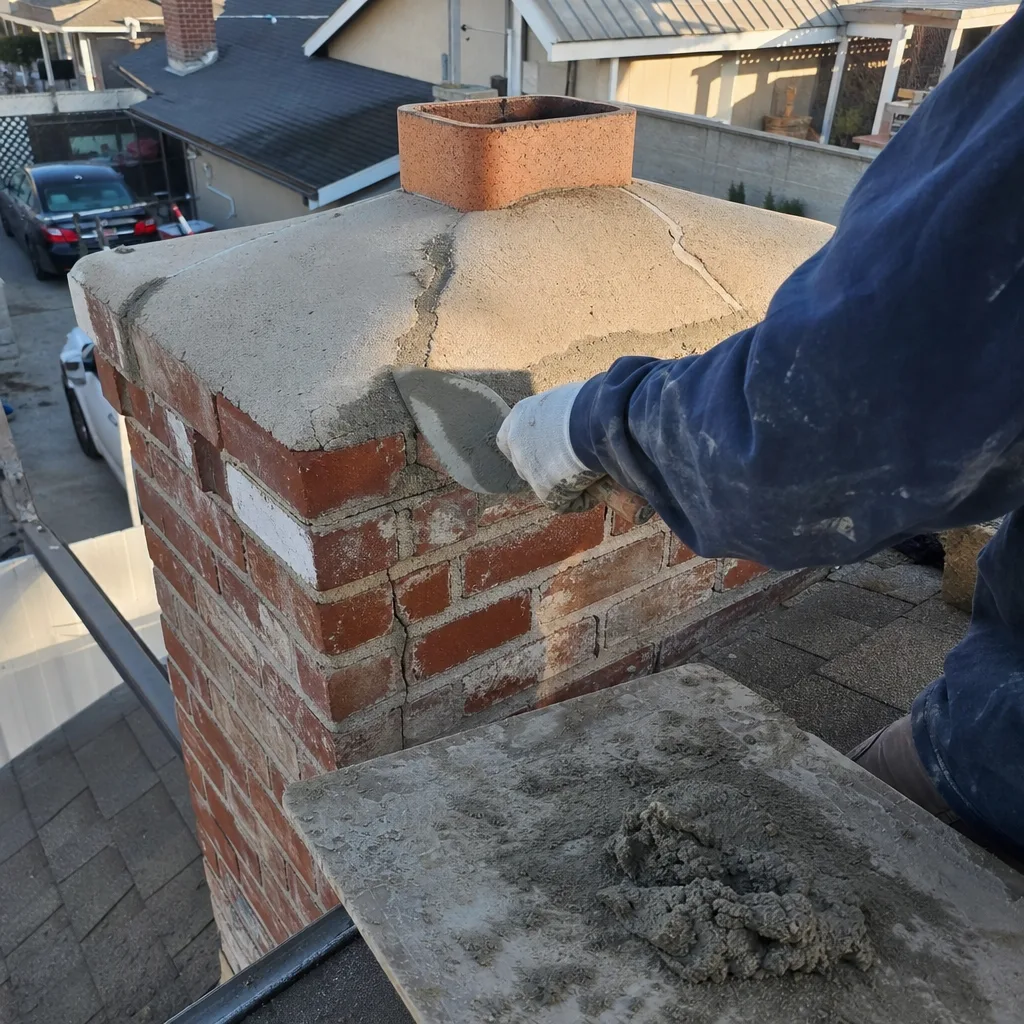
Not all brush kits are equal, and some tools marketed for chimney cleaning are actively hazardous in amateur hands.
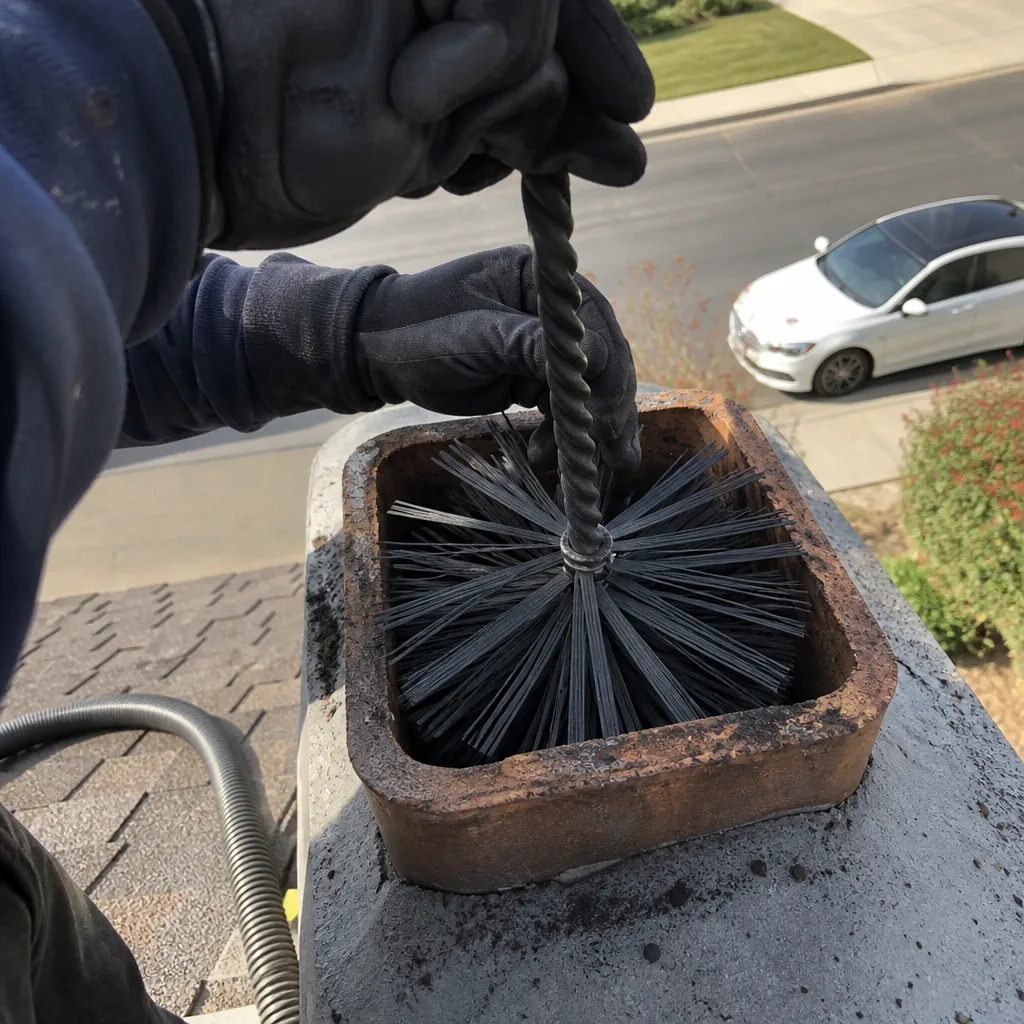
What works: Polypropylene bristle brushes in the correct flue diameter. These flex through minor imperfections and remove powdery Stage 1 creosote effectively. Extension rods of fiberglass or polypropylene, not metal, which can damage liner edges. A sturdy chimney rod handle that allows controlled rotation without excessive force.
What doesn’t work: Wire brushes on clay liners. The wire is harder than the clay; it scores the liner surface, creating nucleation points for future creosote buildup and weakening the liner structure. We’ve replaced liners in three Huntington Beach homes where wire brushing accelerated spalling. Flat wire whips on chains, marketed as “professional” tools on Amazon, are worse: they require controlled RPM that drill-mounted versions cannot provide, and they will destroy a clay liner in seconds.
What’s dangerous: Any work from the roof without proper fall protection. Huntington Beach’s municipal code references Cal/OSHA standards for residential roof work above 6 feet. A harness and anchor point cost more than a professional cleaning. The homeowner who climbs a 12/12 pitch to access a chimney cap is accepting a fall risk that no creosote savings justifies. In our view, this is where DIY ends: if you need a ladder beyond step-stool height to access the flue, call a professional.
Chemical treatments: Powderized creosote modifiers (sodium chloride or ammonium sulfate based) are sold as DIY options for Stage 2 creosote. They work slowly, over multiple fires, and require precise dosage. Over-application corrodes stainless steel liners and damages masonry. Under-application does nothing. We’ve never recommended DIY chemical treatment; the margin for error is too narrow and the consequence of error too severe.
Huntington Beach Specifics: Climate, Codes, and Common Flue Types
Huntington Beach’s climate creates a specific chimney use pattern that affects cleaning decisions. Our mild winters mean intermittent use: fires on December evenings, maybe January weekends, then nothing for weeks. This stop-start pattern is harder on flues than continuous use because each cold start creates thermal shock. Clay liners expand and contract; mortar joints stress. The homeowner who burns 15 fires over three months may stress the system more than a Minnesota homeowner who burns 60 fires over four continuous months.
The city’s building stock matters too. Homes built 1955-1975 in neighborhoods like Downtown Huntington Beach and Huntington Beach Highlands typically have unlined masonry flues or clay tile liners in poor condition. Homes built 1985-2005, especially in Seacliff and Pacific Sands, often have factory-built metal chimneys with stainless steel liners that require specialized cleaning tools. Post-2010 construction usually includes direct-vent gas fireplaces with no traditional flue at all.
Huntington Beach Municipal Code references the California Residential Code for chimney maintenance, which incorporates NFPA 211 by reference. The practical implication: no specific local sweeping frequency is mandated, but insurance policies and HOA covenants in gated communities often require annual inspection documentation. The Huntington Harbour HOA, for example, requires written chimney inspection records for all wood-burning units as a condition of fire insurance compliance.
Salt air is a minor factor. Within a mile of the coast, stainless steel caps and spark arrestors from quality manufacturers like Gelco and Famco show corrosion acceleration compared to inland installations. This doesn’t affect cleaning frequency but does affect component inspection: a cap that looks sound from the ground may be perforated at the mesh when viewed from above.
Common Mistakes to Avoid
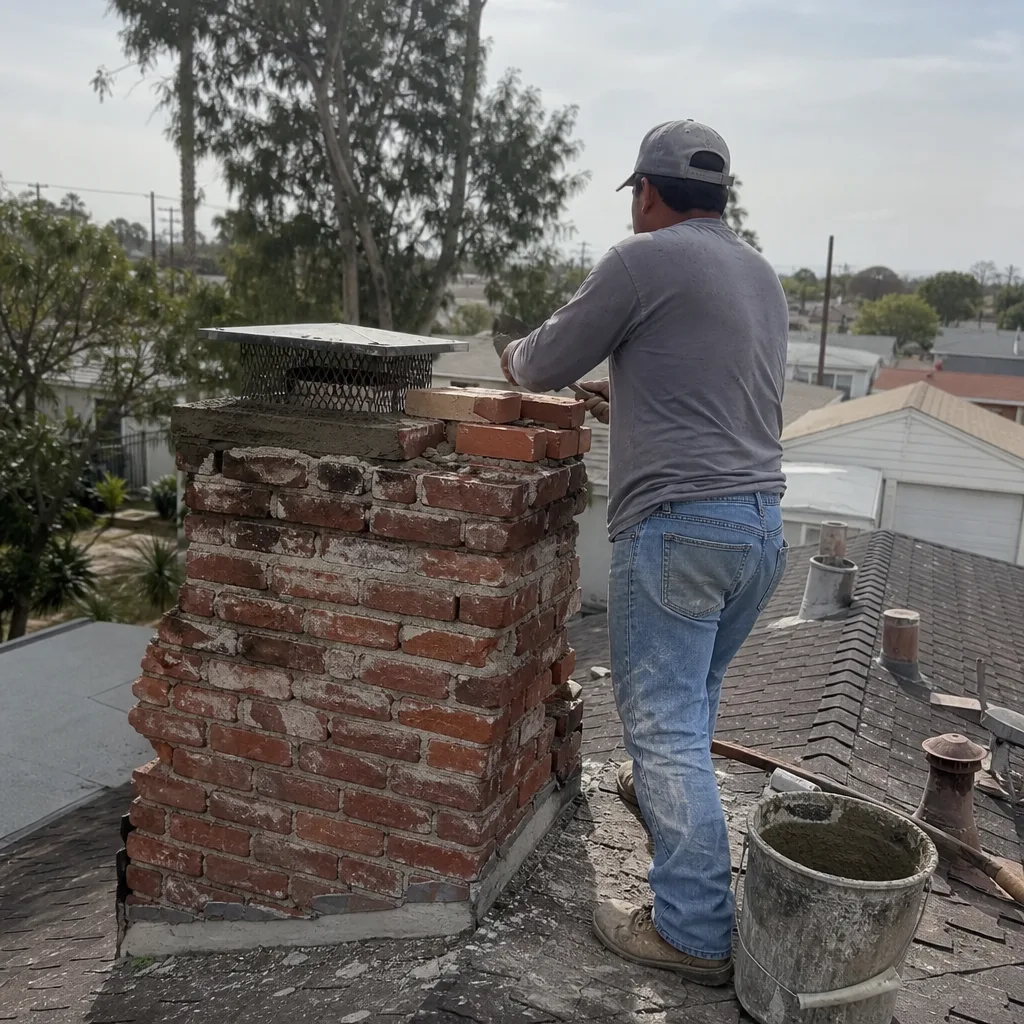
- Assuming no fire means no creosote. Even unused flues accumulate debris from wind, animal activity, and moisture-driven deterioration. We’ve found complete squirrel nests in flues the homeowner claimed had never been used.
- Brushing from the bottom only. Top-down brushing with proper rod control removes debris more completely and avoids pushing material onto the smoke shelf, where it obstructs airflow. Bottom-only brushing is the most common DIY error we correct.
- Using a shop vacuum for creosote removal. Standard shop vacuums lack HEPA filtration for fine particulate and have motors that can ignite residual creosote dust. Professional sweeps use specialized HEPA vacuums with spark-resistant construction.
- Ignoring the firebox and smoke chamber. The flue is only part of the system. The smoke chamber, the angled area above the firebox, accumulates creosote and requires hand cleaning. No brush kit reaches it properly.
- Skipping the cap inspection. A damaged or missing cap allows water, animals, and debris into a freshly cleaned flue. In Huntington Beach’s occasional Santa Ana wind events, a loose cap becomes a projectile hazard.
- Cleaning without checking the damper. A stuck or damaged damper controls airflow and prevents heat loss when the fireplace is not in use. Cleaning around a corroded damper without inspecting it misses a common failure point.
- Assuming all creosote is equal. Stage 1, 2, and 3 creosote require different removal methods. Misidentifying Stage 2 as Stage 1 and brushing it is like waxing a car with sandpaper: it makes the problem worse.
When to Call a Professional
Call when any of these apply: your flue has a liner insert or is factory-built metal; your last inspection exceeds 24 months or you have no camera record; you’ve burned more than 15 fires since last inspection; you’ve noticed smoke odor when the fireplace is not in use, visible staining on exterior masonry, or debris falling into the firebox; you’re preparing to list the home for sale; or your insurance or HOA requires documentation.
Emberly Chimney Cleaners Huntington Beach offers free estimates in Huntington Beach. Every estimate includes a written scope, written price, and written warranty before any work begins, under Haven Standard Clause 1. Our background-checked, uniformed technicians arrive with license information, a text notification when en route, and a camera system that documents every flue we inspect. Call (657) 427-5872 to schedule.
Frequently Asked Questions
A documented professional chimney sweep with NFPA 211 Level 2 camera inspection typically ranges from $189 to $329 for a single-story home with one fireplace in Huntington Beach. Two-story homes, multiple flues, or factory-built metal chimneys may fall outside this range. We deliver a written price before work starts, always, with no exceptions under Haven Standard Clause 1. Call (657) 427-5872 for an exact quote - estimates are free.
A legitimate liner recommendation comes with camera evidence you can see for yourself and a written explanation of the specific defect. At Emberly, nothing is recommended without photo documentation under Haven Standard Clause 4. Common legitimate reasons for liner replacement: visible cracks spanning multiple tiles, mortar loss exceeding 1/2 inch at joints, or spalling that exposes the chimney structure. If a company recommends liner work without showing you the camera image, get a second opinion. We provide free second opinions on any competitor’s written estimate.
NFPA 211 recommends annual inspection for all chimneys, with cleaning frequency determined by creosote accumulation, not calendar. In Huntington Beach’s climate, with typical use of 10-20 fires per season, most wood-burning flues require cleaning every 1-2 years. Gas fireplaces require inspection but rarely cleaning. Oil and pellet systems have their own schedules based on fuel quality and burn efficiency. The camera inspection determines whether cleaning is needed; we do not clean flues that don’t require it.
Skipped cleaning allows creosote to accumulate, increasing fire risk and reducing draft efficiency. Stage 1 creosote becomes Stage 2, which becomes Stage 3, a hardened fuel source that ignites at lower temperatures and burns with explosive intensity. Simultaneously, undetected liner damage, animal obstruction, or moisture intrusion progresses without symptoms until failure. The first sign of a problem may be smoke in the living room, carbon monoxide alarm activation, or a chimney fire. None of these announce themselves gradually. Call (657) 427-5872 to schedule before the burning season starts.
Yes, and this hybrid approach makes sense for a narrow set of homeowners who meet the three conditions outlined above. Schedule the camera inspection within 14 days of DIY cleaning so we can assess whether your removal was complete and whether underlying conditions exist. The inspection fee applies toward full service if needed. We do not judge DIY attempts; we document what we find and explain what it means.
A Level 1 inspection is a visual examination of readily accessible portions of the chimney exterior and interior, performed without special tools. A Level 2 inspection, required by NFPA 211 when the property changes hands, after a chimney fire, or when the fuel type or liner changes, includes a camera scan of the full flue length, inspection of accessible attics and crawl spaces, and written documentation. Emberly Chimney Cleaners Huntington Beach performs Level 2 as our default on every visit, a practice we established in 2009 that became Haven Standard Clause 4. The Fireplace Services in Huntington Beach page details our full inspection protocol.
The Bottom Line
DIY chimney cleaning in Huntington Beach is not universally foolish, nor is it universally safe. It is conditionally appropriate when your flue is unlined masonry, your last camera inspection was clean and recent, and your use has been light. In all other cases, the conditions that create real hazard, liner cracks to animal nests to glazed creosote, are invisible without a camera. The cost of professional service with documented photo record is typically less than equipment rental and provides evidence that protects your insurance coverage, your real estate value, and your family’s safety. The Haven Standard exists because we believe you should see what we see, know what it costs before we start, and have a record when we’re done. That’s been our practice since 2009, through 38,000 chimneys, and it’s not changing.
Written by Corrine Halstead, Owner at Emberly Chimney Cleaners Huntington Beach, serving Huntington Beach since 2009.