
Last updated September 22, 2026
Level 1 sweep and inspection to the NFPA 211 annual standard - flue, crown, cap, and flashing checked and photographed
Chimney sweep logs do not sweep chimneys. They loosen some creosote - which then falls where a brush and vacuum still have to collect it.
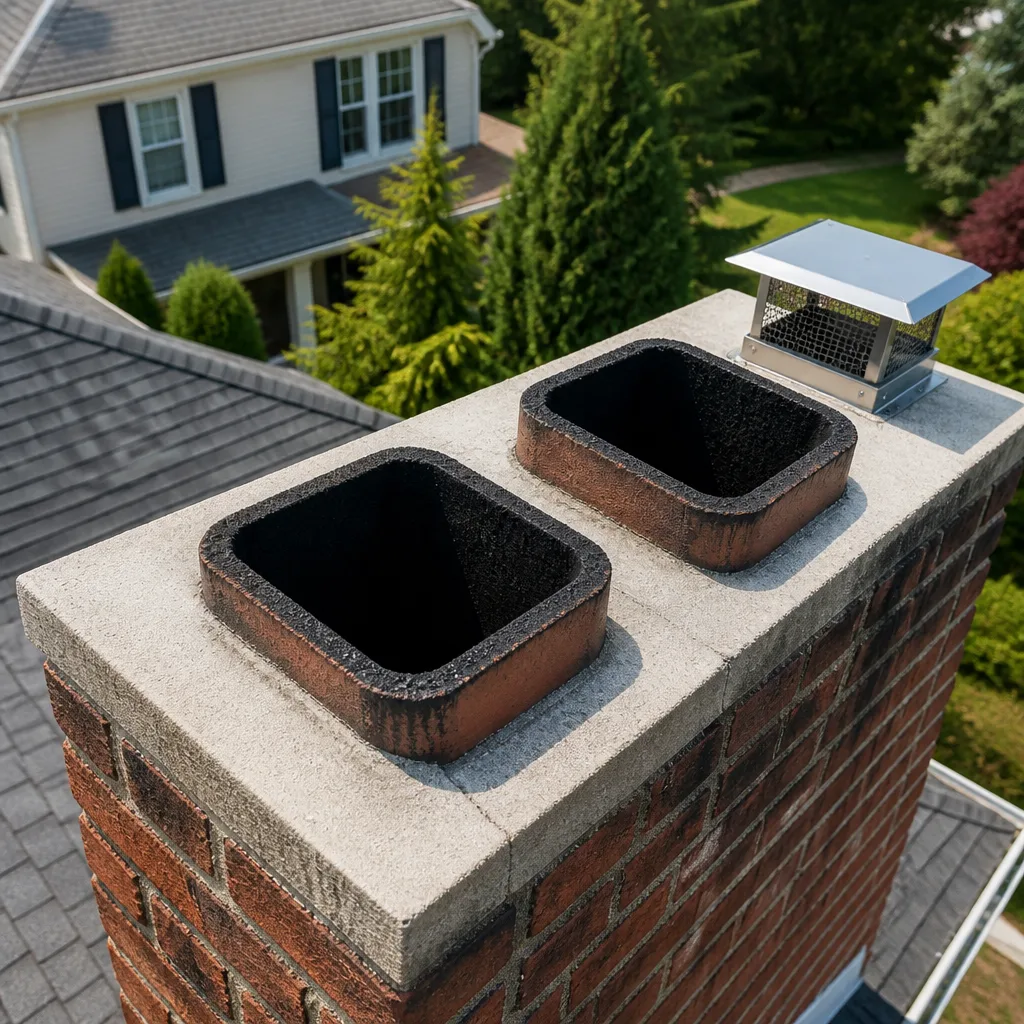
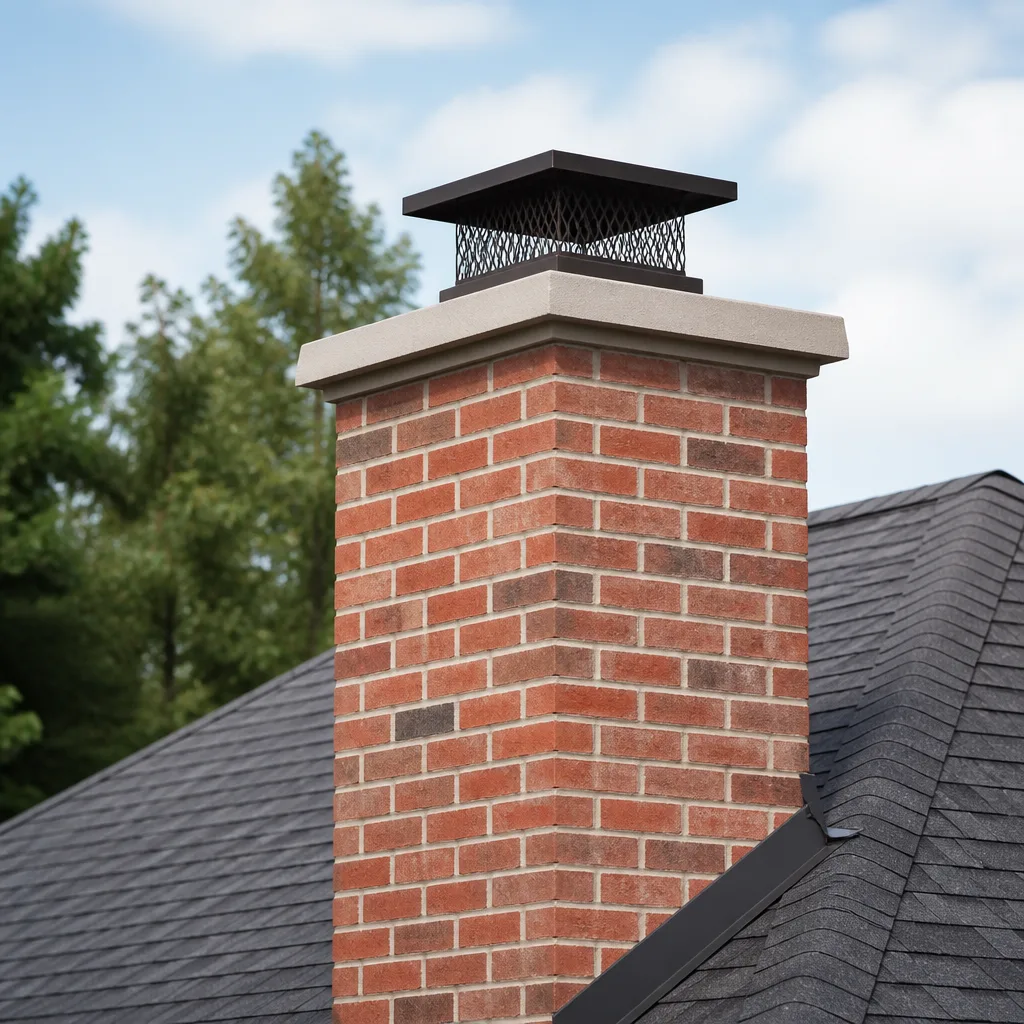
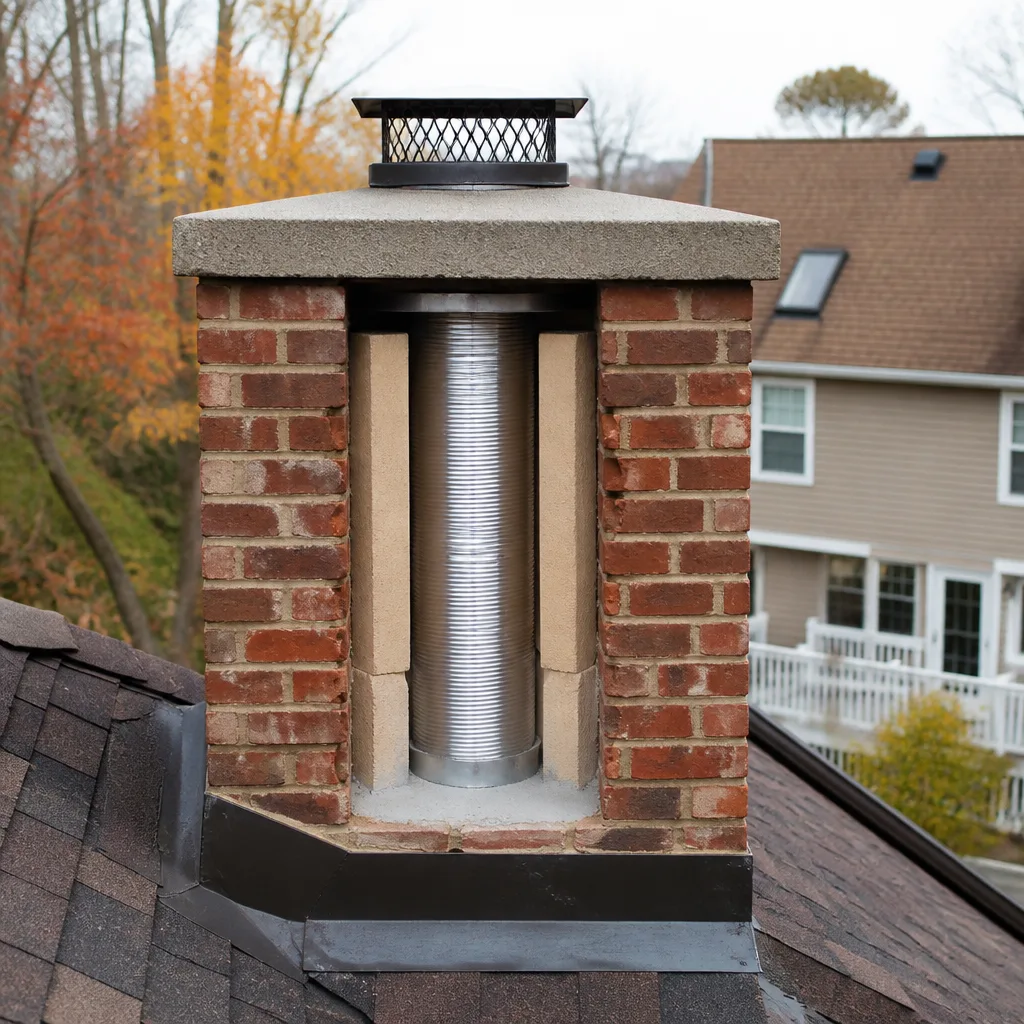
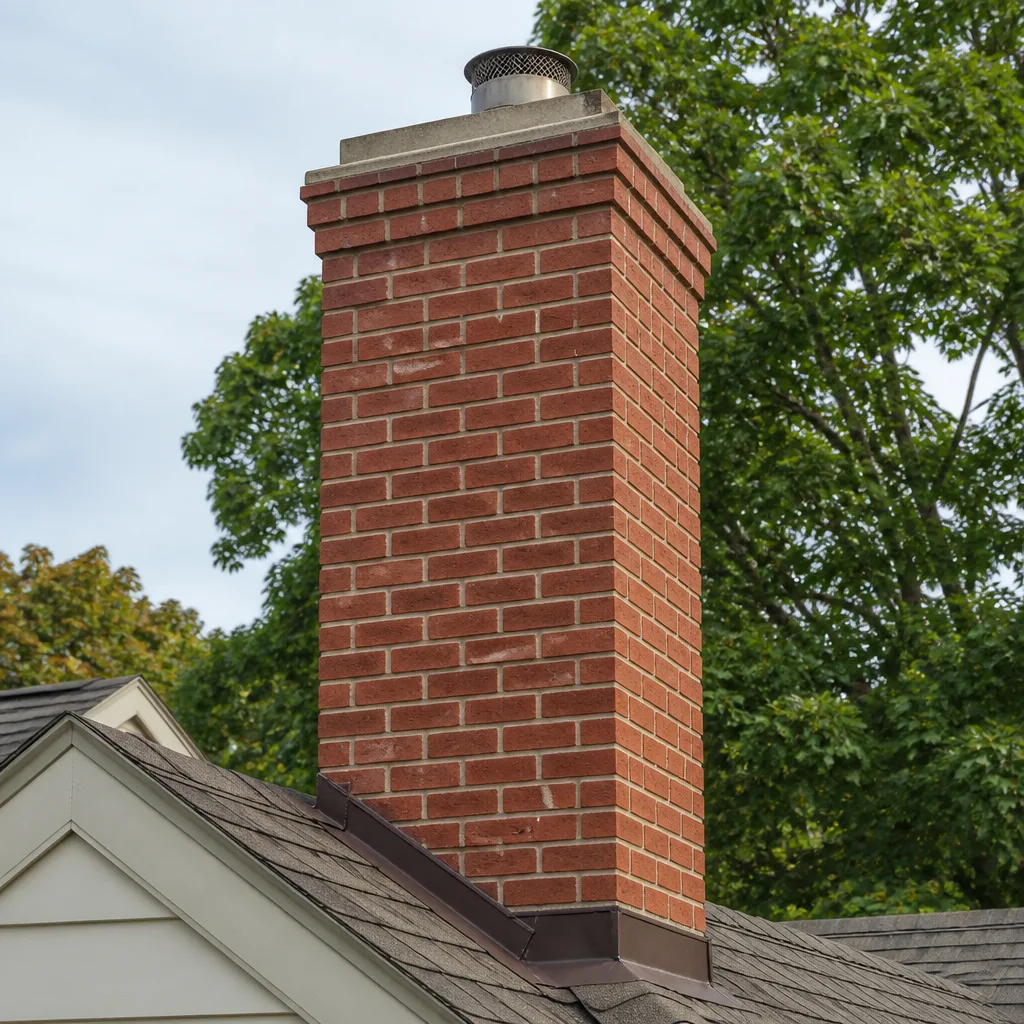
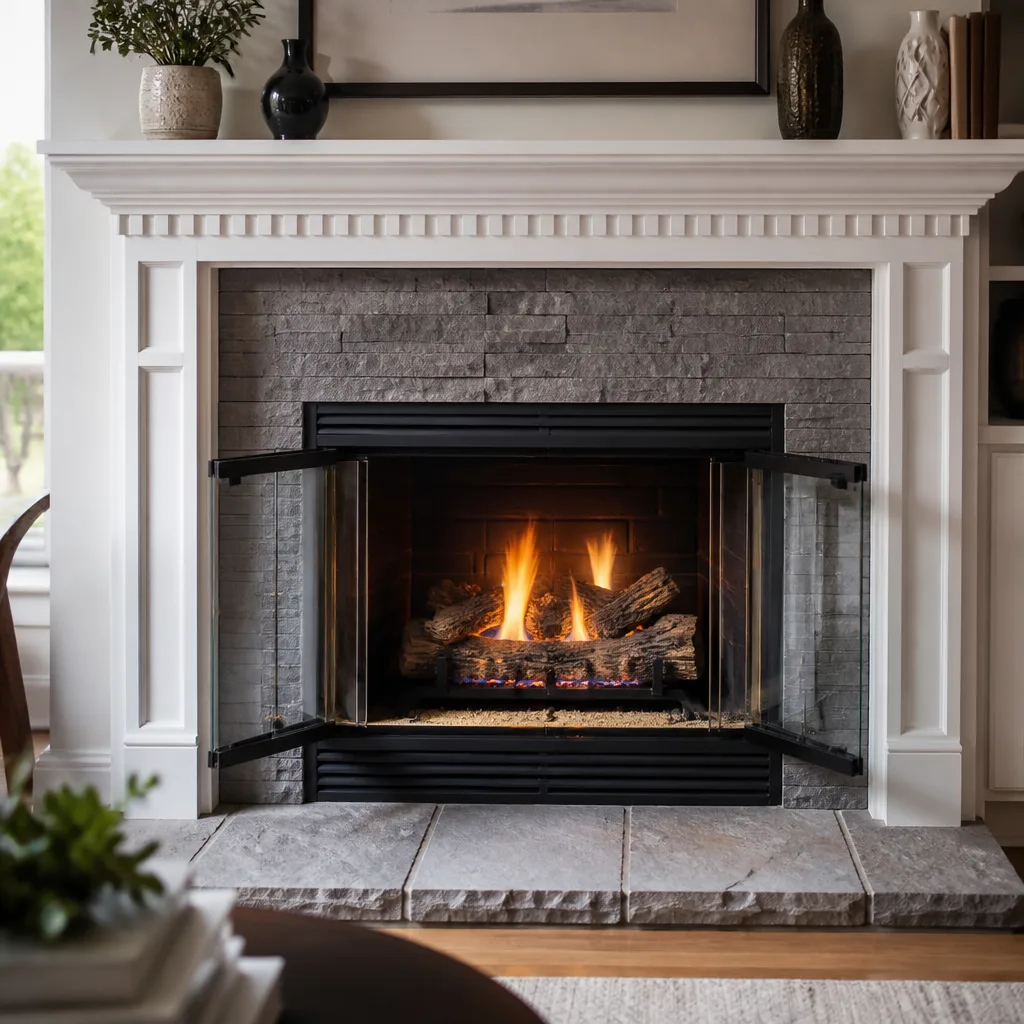
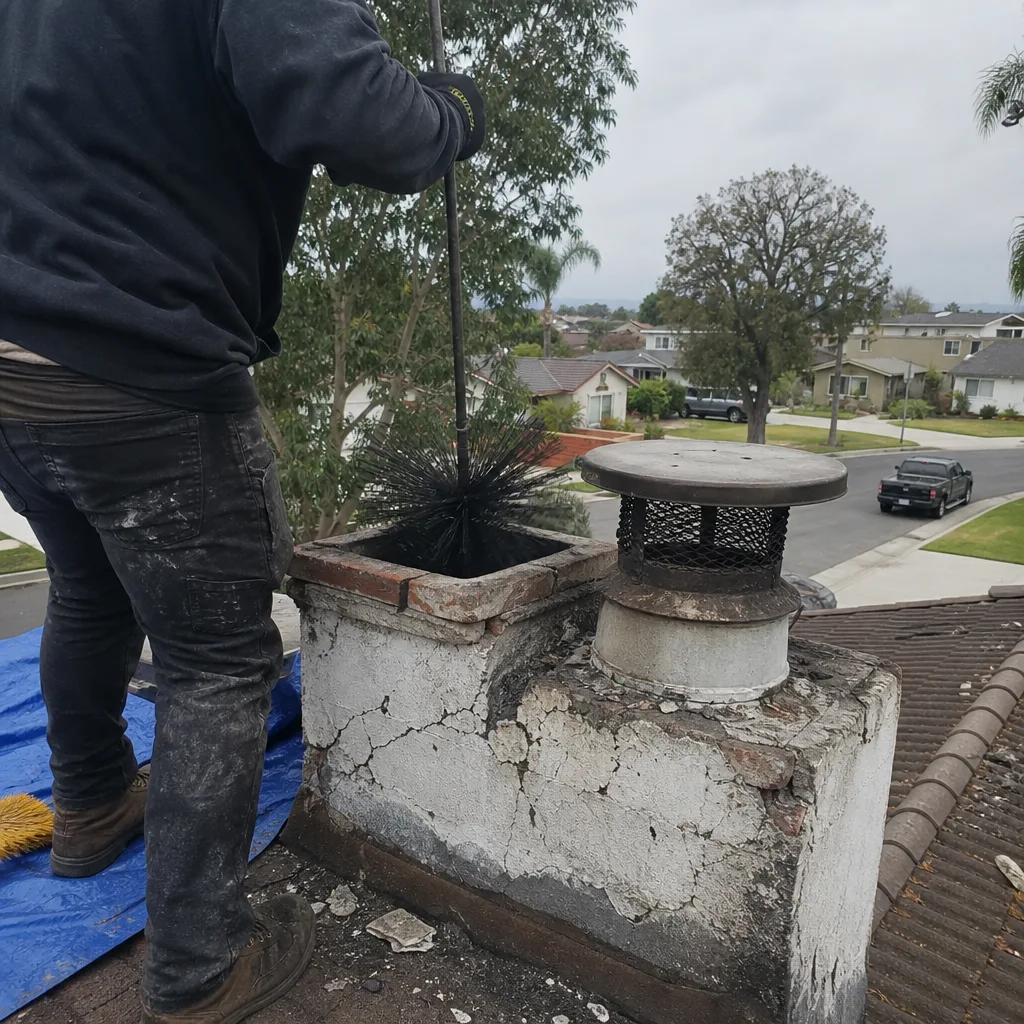 Before
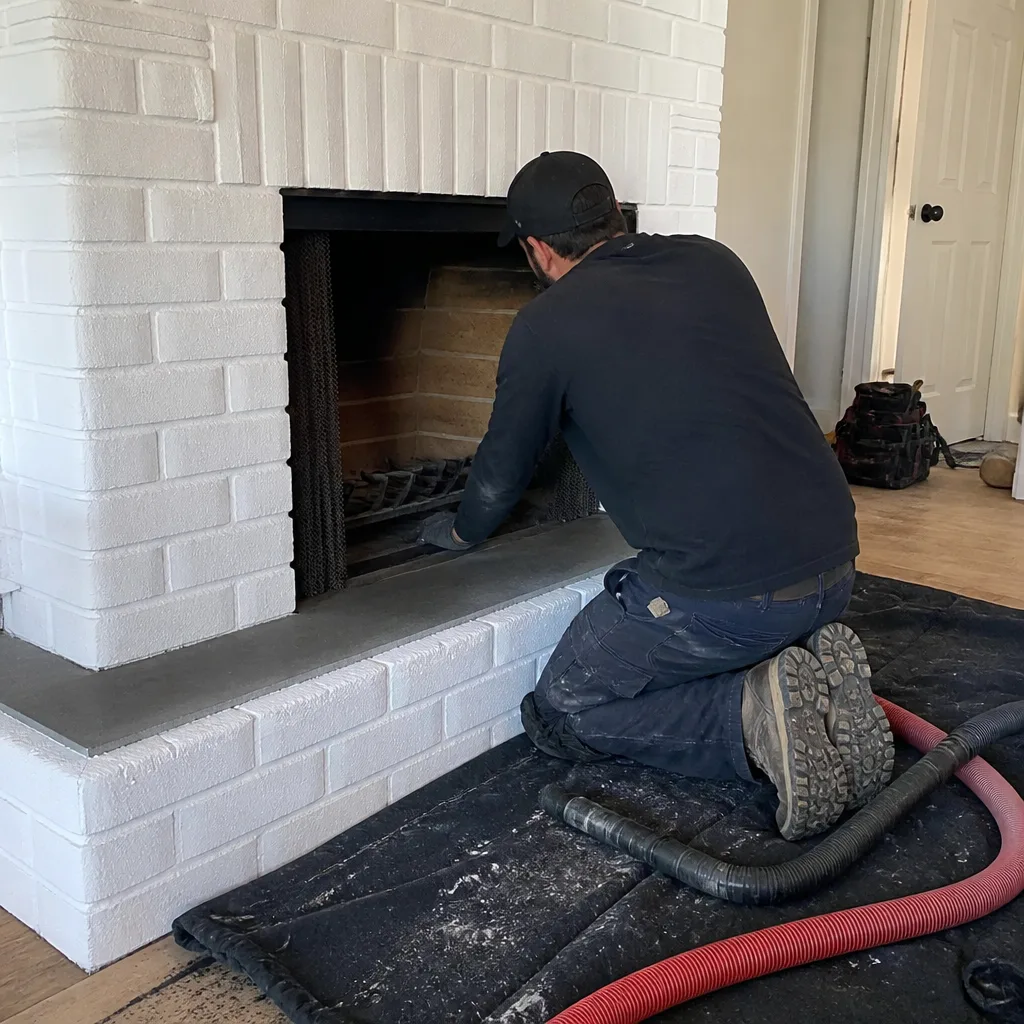 After
After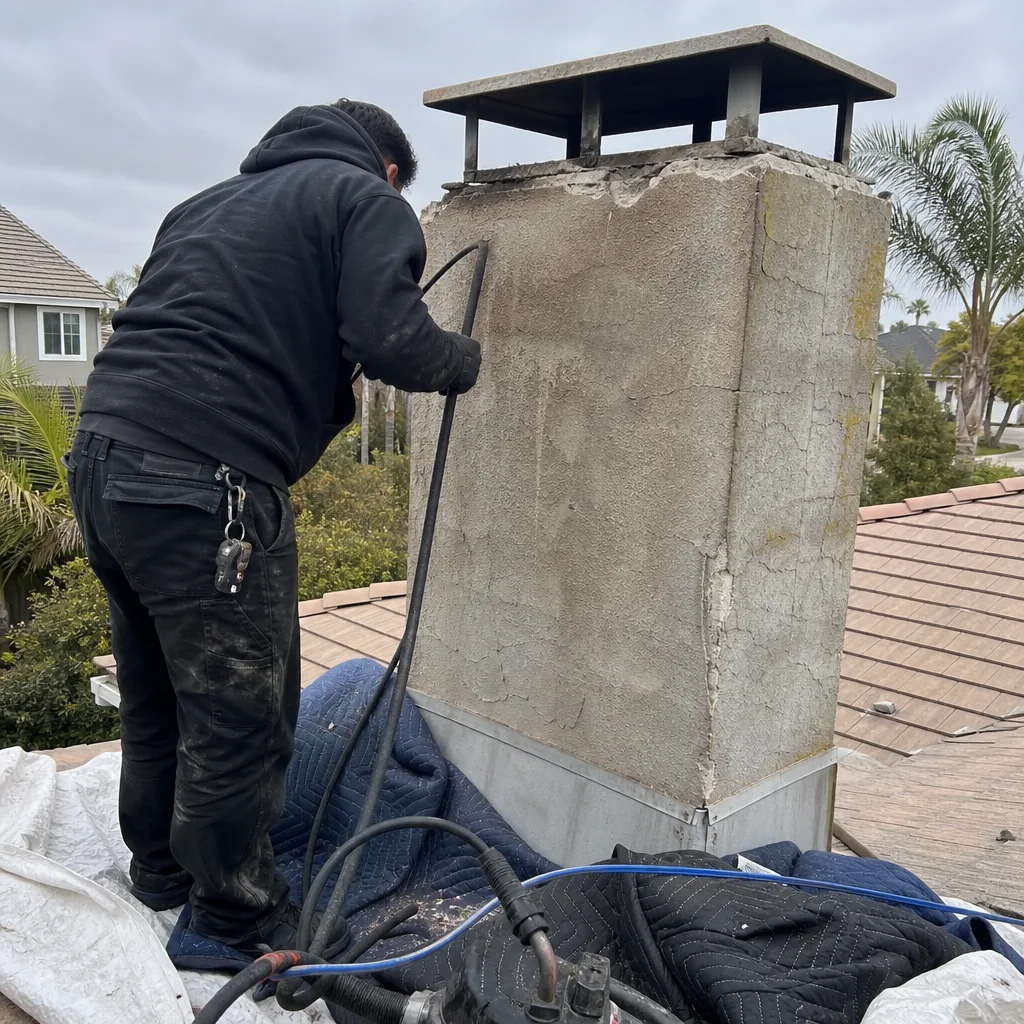 Before
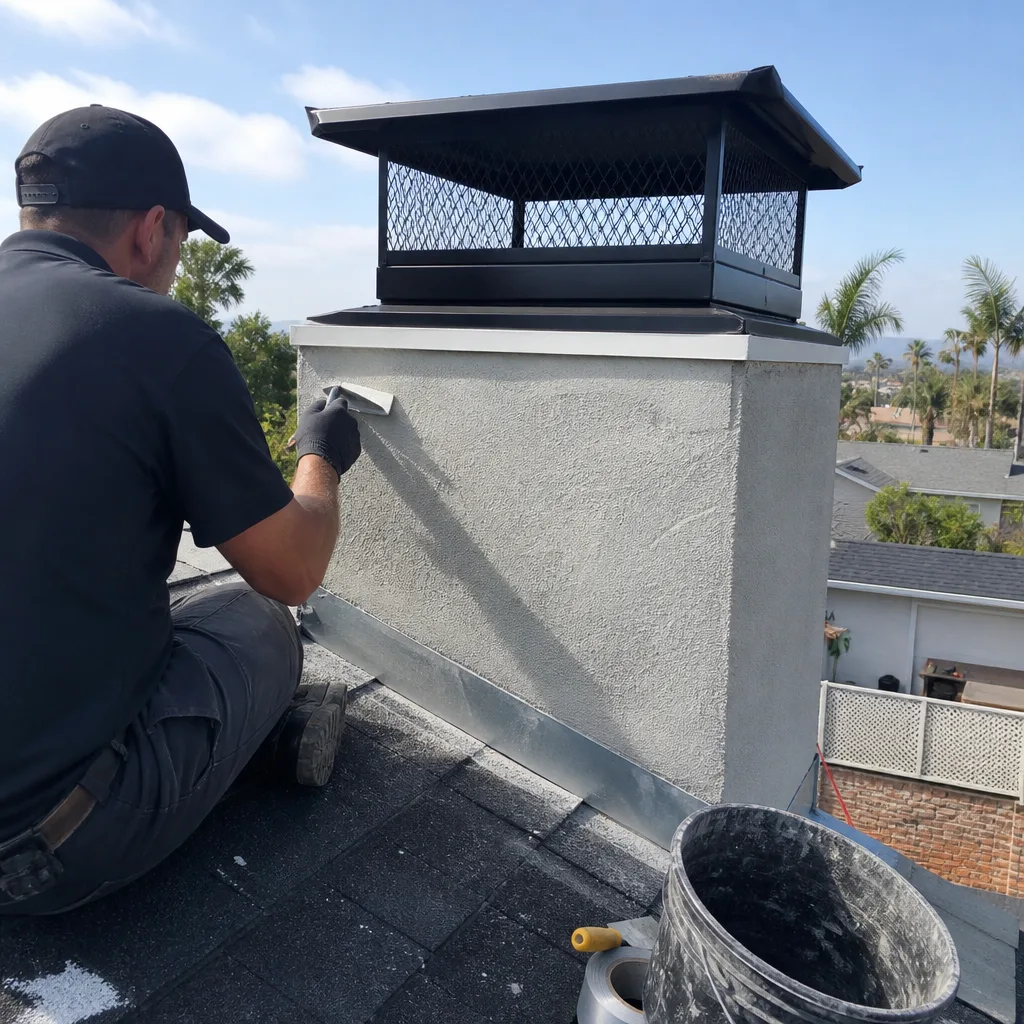 After
After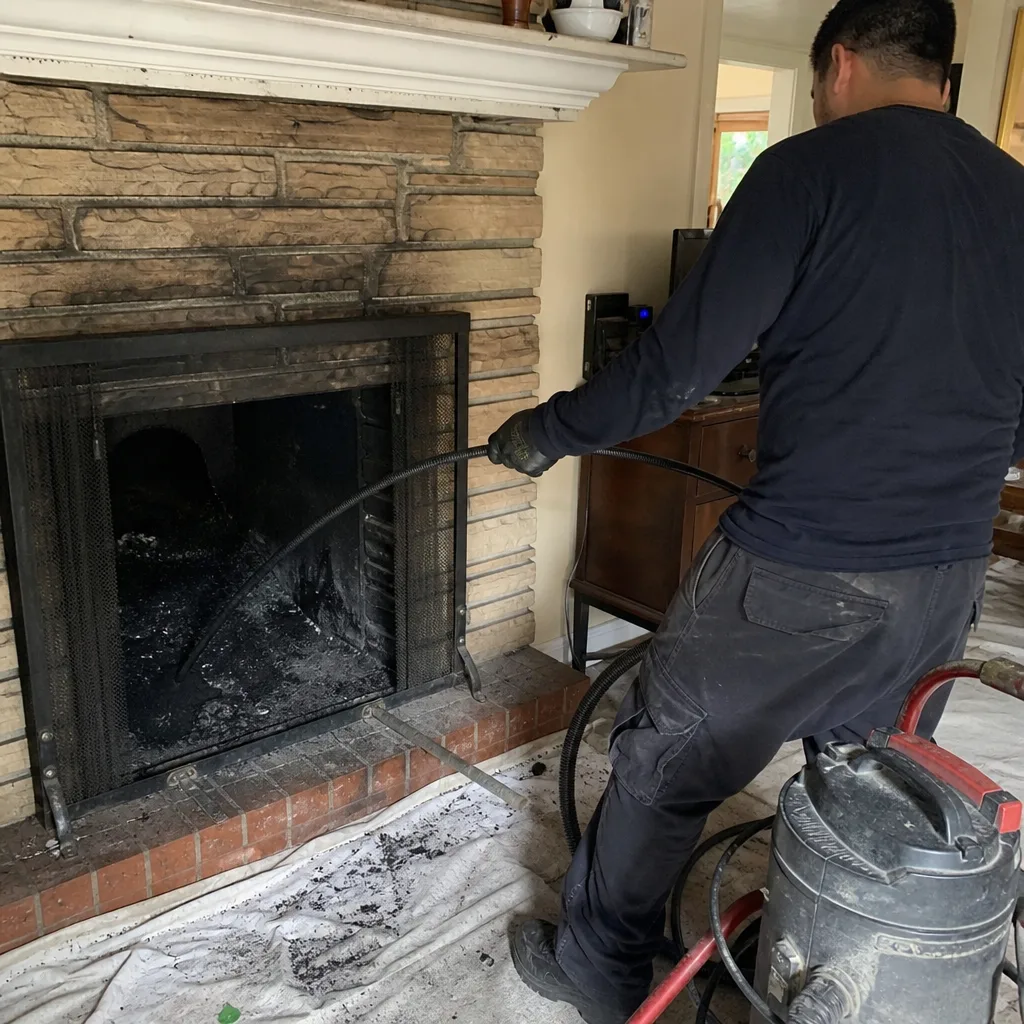 Before
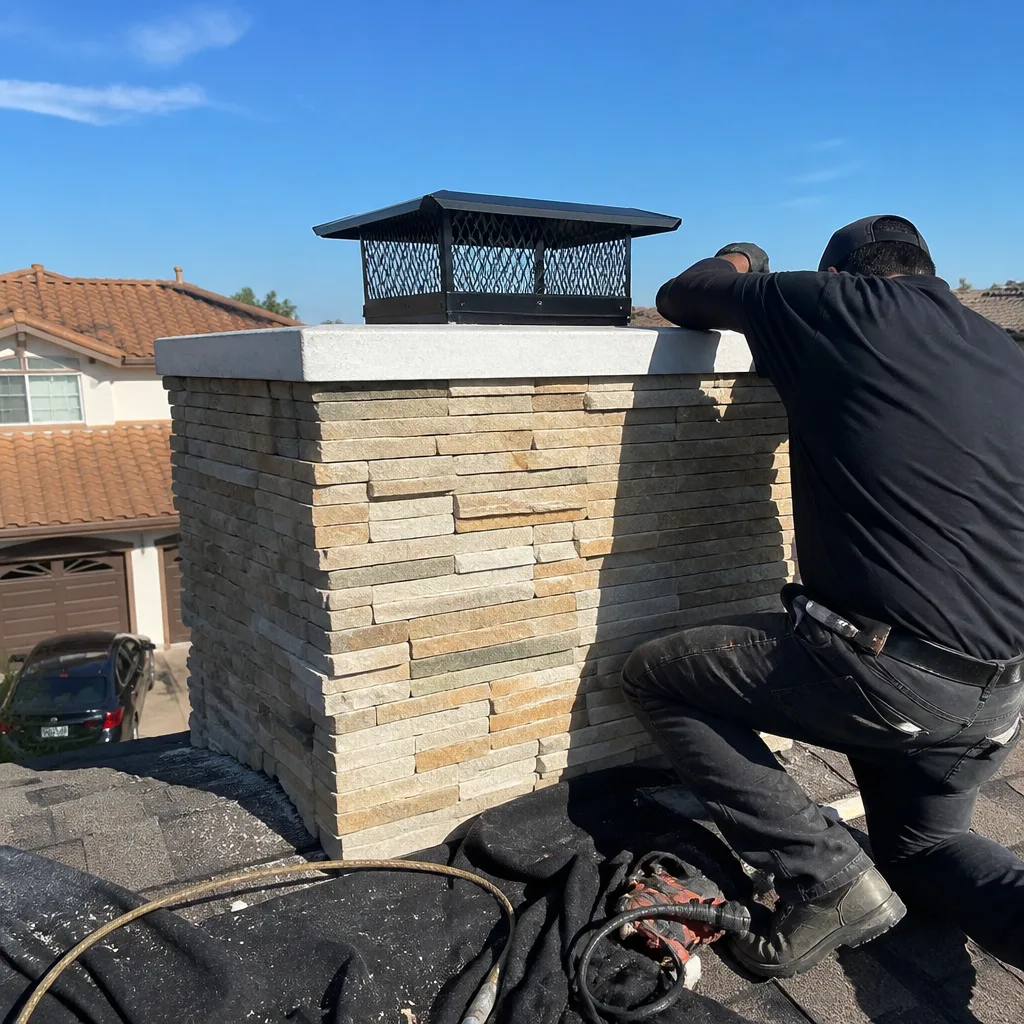 After
AfterSeasonal Chimney Cleaning Care for Huntington Beach: Year-Round Homeowner’s Guide
In Huntington Beach, the highest-risk chimney condition isn’t found in December before the first fire - it’s found in September, after a marine-layer summer has saturated uncleaned creosote deposits and oxidized the mortar joints on chimneys that sat unused for eight months. Most homeowners here follow advice written for Cleveland or Denver: clean before winter, burn, repeat. But coastal Orange County runs on a different damage calendar, one driven by salt air, moisture cycles, and Santa Ana wind events rather than freeze-thaw. In this guide, you’ll learn why post-season cleaning beats pre-season cleaning for Huntington Beach homes, how to build a month-by-month maintenance checklist around actual coastal conditions, and what documentation you’ll need ready before escrow opens.
Quick Answer
For Huntington Beach homeowners, the optimal chimney maintenance schedule inverts the national standard: schedule your professional sweep for March-April, after burn season ends, so creosote and debris don’t sit through the corrosive marine-layer summer. Supplement with a post-Santa Ana wind cap inspection in late fall and a pre-burn damper test before your first fire. This timing prevents the accelerated liner corrosion and mortar oxidation we’ve documented in coastal Orange County chimneys since 2009.
Table of Contents
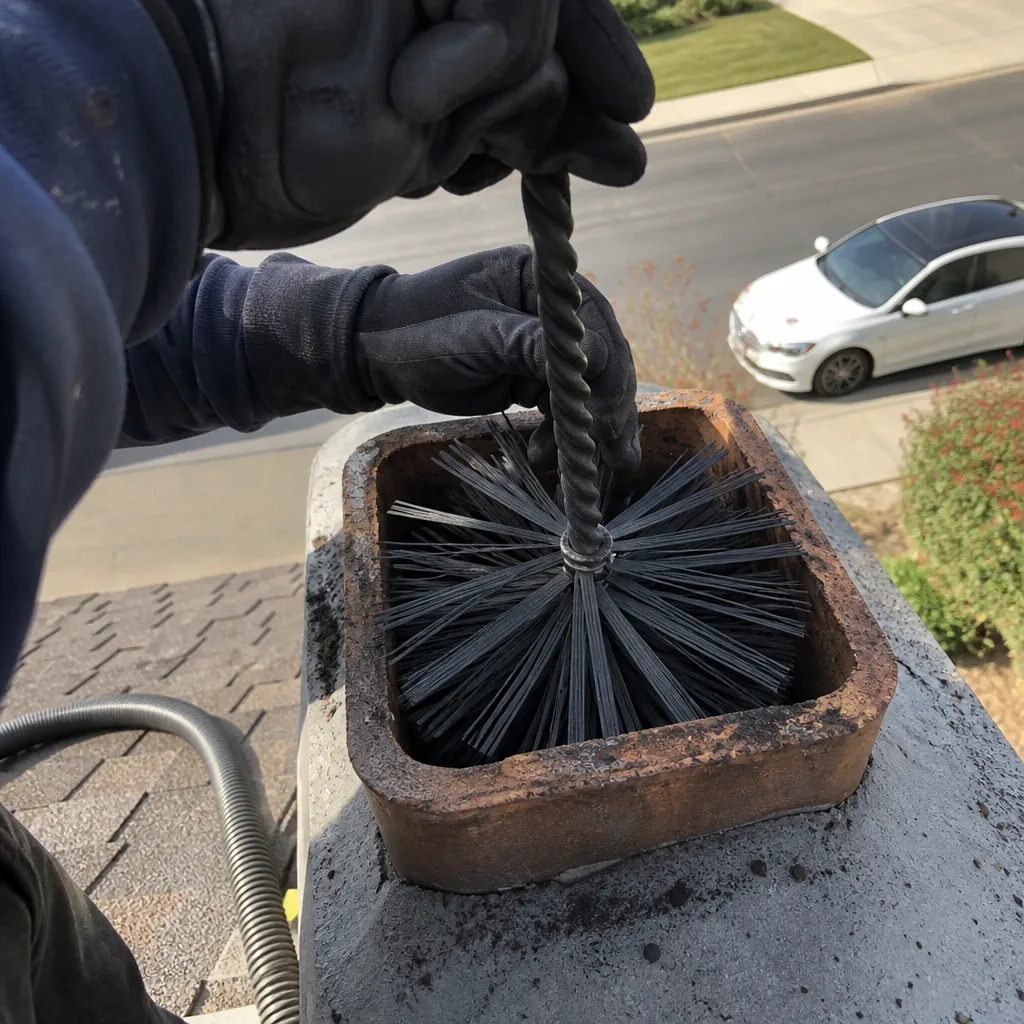
- Why Coastal Chimneys Need a Different Calendar
- The Huntington Beach Chimney Month-by-Month
- Why Post-Season Cleaning Beats Pre-Season Here
- Santa Ana Winds and Your Chimney Cap
- Off-Season Tasks You Can Handle Yourself
- Documentation and the Real Estate Calendar
- Common Mistakes to Avoid
- When to Call a Professional
- Frequently Asked Questions
- The Bottom Line
BeforeAfterWhy Coastal Chimneys Need a Different Calendar
National chimney advice assumes a continental climate: hard freeze, heavy burn season, spring thaw, idle summer. Huntington Beach doesn’t participate in that rhythm. Our burn season runs short - typically mid-November through February, with many homeowners lighting fewer than twenty fires per year. The rest of the year, the chimney sits exposed to a specific set of coastal stressors that change how and when damage accumulates.
The marine layer defines our summer. From May through August, moist Pacific air pushes inland overnight, condensing on cool flue surfaces. A chimney that contains Class II or III creosote - the tarry, hardened deposits that form from slow, low-temperature fires - provides a sponge for that moisture. We’ve pulled camera footage from Huntington Beach flues in September showing creosote deposits swollen with water weight, actively off-gassing acidic compounds against stainless steel liners. That’s not theoretical. In the Huntington Harbour and Sunset Beach areas, where homes sit closest to the water, we’ve measured liner pitting rates measurably higher than inland Orange County equivalents.
Salt aerosol compounds the problem. Ocean-facing winds carry chloride ions that deposit on exterior masonry. When the marine layer wets those deposits, you get electrolytic corrosion of metal components - caps, spark arrestors, damper hardware - and salt-crystal spalling of mortar joints. The damage doesn’t announce itself with a dramatic failure. It shows up as progressive degradation we document year over year in our photo records.
Santa Ana wind events add a mechanical stressor unknown to cold-climate sweeps. These hot, dry, high-velocity winds arrive October through January, often with gusts exceeding 50 mph. They test chimney cap attachment, dislodge spark arrestor mesh, and drive debris into flue openings. A cap that was secure in June can be tilted or missing after a November Santa Ana, leaving the flue exposed to rain and animal entry through the heart of burn season.
The standard “clean in October” advice fails Huntington Beach homeowners on two counts. First, it leaves summer-accumulated moisture and corrosion unchecked through the marine layer season. Second, it schedules the sweep when demand peaks nationally, meaning longer waits and less scheduling flexibility for the documentation tasks that matter locally.
Key coastal factors for Huntington Beach chimneys:
- Marine layer moisture (May-August): condenses in flues, activates acidic creosote compounds
- Salt aerosol deposition: year-round, concentrated within 2 miles of shore
- Santa Ana wind events (October-January): mechanical stress on caps, spark arrestors, flashing
- Short, irregular burn season: creosote builds slowly but sits long, increasing corrosion exposure
- June Gloom extended cycles: prolonged moisture periods without drying intervals
The Huntington Beach Chimney Month-by-Month
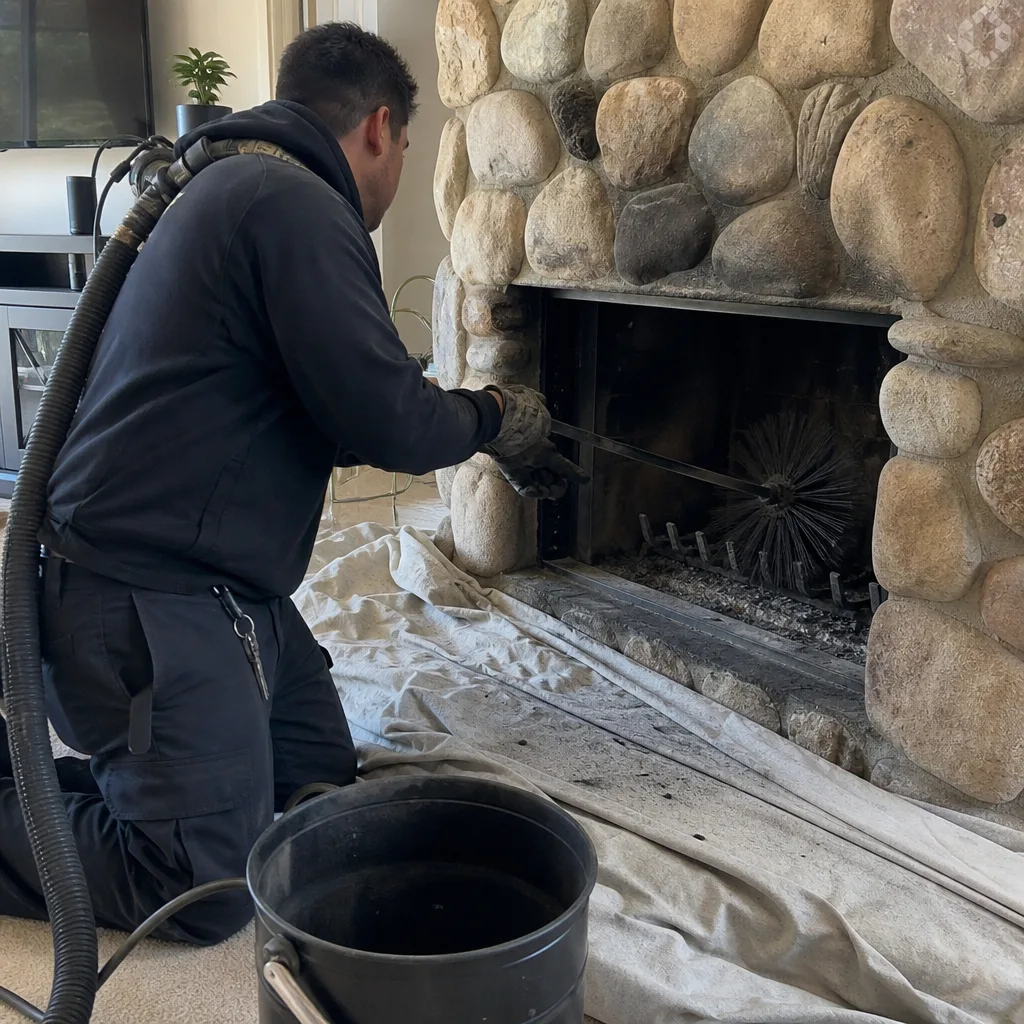
We’ve refined this calendar through 38,000 inspections since 2009, with particular attention to the coastal Orange County homes that represent our core service area. Each task aligns with actual local conditions, not imported seasonal clichés.
January-February: Active Burn Season, Passive Monitoring
You’re using the fireplace now. The task is observation, not intervention. Note draft quality: does smoke spill at startup? Does the fire establish quickly or smolder? Smoldering produces more creosote. Note fuel: seasoned hardwood (oak, almond, olive) burns cleaner than construction scrap or soft pine. If you detect persistent odors, visible smoke spillage, or difficulty establishing draft, schedule an inspection - but understand that mid-burn-season sweeping is rarely needed for low-use Huntington Beach fireplaces.
March-April: Post-Season Professional Sweep (Primary Annual Service)
This is your main event. Schedule Chimney Sweep in Huntington Beach now, after your last fire. The flue is warm, deposits are dry and accessible, and - critically - removing them before marine layer season prevents the moisture-acid corrosion cycle. Our technicians perform NFPA 211 Level 2 inspections: camera scan of the full flue length, smoke chamber, and firebox; photo documentation of liner condition, creosote class, and any defects; written scope and price before any work beyond the standard sweep. Materials from Olympia Chimney and Famco are specified if cap or spark arrestor replacement is needed.
What you receive: a stamped Haven Standard report with Clause 4 photo record, written condition assessment, and next-service recommendation. For Huntington Beach homes within two miles of the coast, we typically recommend annual inspection with sweep frequency determined by creosote accumulation rate - often every 2-3 years for low-use decorative fireplaces, annually for regular heaters.
May-June: Marine Layer Onset - Exterior Visual Check
June Gloom arrives. Walk the exterior. Is the cap still square and secure? Any visible rust streaks on the chimney face? Efflorescence (white powdery deposits) on brick indicates water migration through the masonry - common where salt-laden marine layer has penetrated compromised crown or mortar. Document with your phone. This is information-gathering, not repair. If you see changes from last year, note them for your fall inspection.
July-August: Peak Moisture - Interior Damper Check
The flue is at maximum moisture exposure. Open the damper fully. It should move freely, seat cleanly, and show no rust binding. Close it. No daylight should show around the seal. A compromised damper in summer means conditioned air escapes year-round, and in burn season it means draft control failure. If operation is sticky or the seal is incomplete, schedule repair before fall demand peaks. This is also when we recommend testing any gas log igniter if your fireplace is dual-fuel.
September: Pre-Santa Ana Assessment
The transition month. Marine layer persists but Santa Ana events become possible. This is your last comfortable window for exterior access before burn season. Check cap orientation (should align with prevailing wind, not fight it), spark arrestor mesh integrity (no gaps larger than 5/8 inch per California code), and crown condition (no ponding, no new cracks). In Huntington Beach’s older neighborhoods - the original 1920s-1950s core near downtown, and the 1960s-1970s tracts of Southeast Huntington Beach - crown deterioration from decades of salt exposure is the most common finding we document.
October-November: Santa Ana Window - Post-Event Inspection
When Santa Ana winds arrive, inspect within 48 hours if possible. Look for cap displacement, new flashing gaps, or debris accumulation. A cap tilted 15 degrees may still look “on” from ground level but creates a funnel for rain. If you missed the March-April sweep window, this becomes your fallback - but understand you’re scheduling at peak demand, and the flue has already endured a full marine layer season with deposits in place.
December: Pre-Burn Final Check
Before first fire: damper operation, firebox visual for debris or animal nesting material, and confirmation that your smoke and CO detectors are functional. If you swept in March-April and checked cap integrity post-Santa Ana, this takes ten minutes. If you skipped steps, this is when anxiety lives - and when emergency calls spike.
Quick-reference calendar:
| Month | Task | Who |
|---|---|---|
| Jan-Feb | Monitor burn quality, note draft issues | Homeowner |
| Mar-Apr | Professional sweep + Level 2 inspection | Emberly Chimney Cleaners |
| May-Jun | Exterior visual: cap, crown, efflorescence | Homeowner |
| Jul-Aug | Damper operation test, gas igniter check | Homeowner |
| Sep | Pre-Santa Ana cap and spark arrestor check | Homeowner |
| Oct-Nov | Post-Santa Ana inspection if winds occurred | Homeowner / Pro |
| Dec | Pre-burn safety check | Homeowner |
Why Post-Season Cleaning Beats Pre-Season Here
The national default - sweep in October, burn clean through winter - makes intuitive sense where chimneys accumulate heavy deposits during continuous heating season. Huntington Beach chimneys don’t work that way. Here’s why March-April timing produces better outcomes for coastal homes.
Creosote chemistry changes with moisture exposure. Fresh, dry creosote (Class I, flaky) is relatively inert. It brushes clean easily and doesn’t react aggressively with liner materials. But creosote that sits through a marine layer summer undergoes progressive changes: hygroscopic absorption of atmospheric moisture, then oxidative and acidic degradation of the tars. By September, we’ve documented Class II deposits that have swollen to 150% of their dry mass, with pH measurements in the acidic range. Stainless steel 316Ti liners - the industry standard from suppliers like Gelco and DuraFlex - resist this well when clean, but pitting accelerates when acidic deposits remain in contact for extended periods.
The practical effect: a flue swept in March, then used moderately through winter, enters the marine layer season clean. A flue swept in October, used through winter, then left dirty through summer, experiences six to eight months of active corrosion conditions. Over a ten-year ownership period, that’s the difference between a liner showing expected surface aging and one requiring premature replacement.
Mortar joint oxidation follows the same pattern. In Huntington Beach’s pre-1970s masonry chimneys - common in the downtown corridor, Old Downtown, and early tract neighborhoods - mortar is often original lime-based or early Portland cement formulations. Salt-moisture cycling without drying periods drives calcium leaching and joint recession. We’ve measured joint depth losses of 3-5mm in chimneys that sat uninspected through multiple marine layer seasons. Post-season cleaning includes inspection of these conditions while they’re developing, not after they’ve required Chimney Repair in Huntington Beach.
Scheduling reality matters. October sweeps compete with national demand, local real estate escrow deadlines, and weather-driven urgency in actual cold climates. March-April availability is broader, allowing appointment selection that works with your schedule. More importantly, it allows time for any indicated repairs - liner patching with HeatShield, crown sealing, cap replacement with Copperfield or Famco components - to be completed before the marine layer arrives, not rushed before first fire.
Documentation timing aligns with real estate cycles. Huntington Beach’s strongest listing months run February through June. A March sweep produces current-year documentation that satisfies buyer inspection contingencies without last-minute scheduling stress. We’ll return to this in detail below.
Santa Ana Winds and Your Chimney Cap
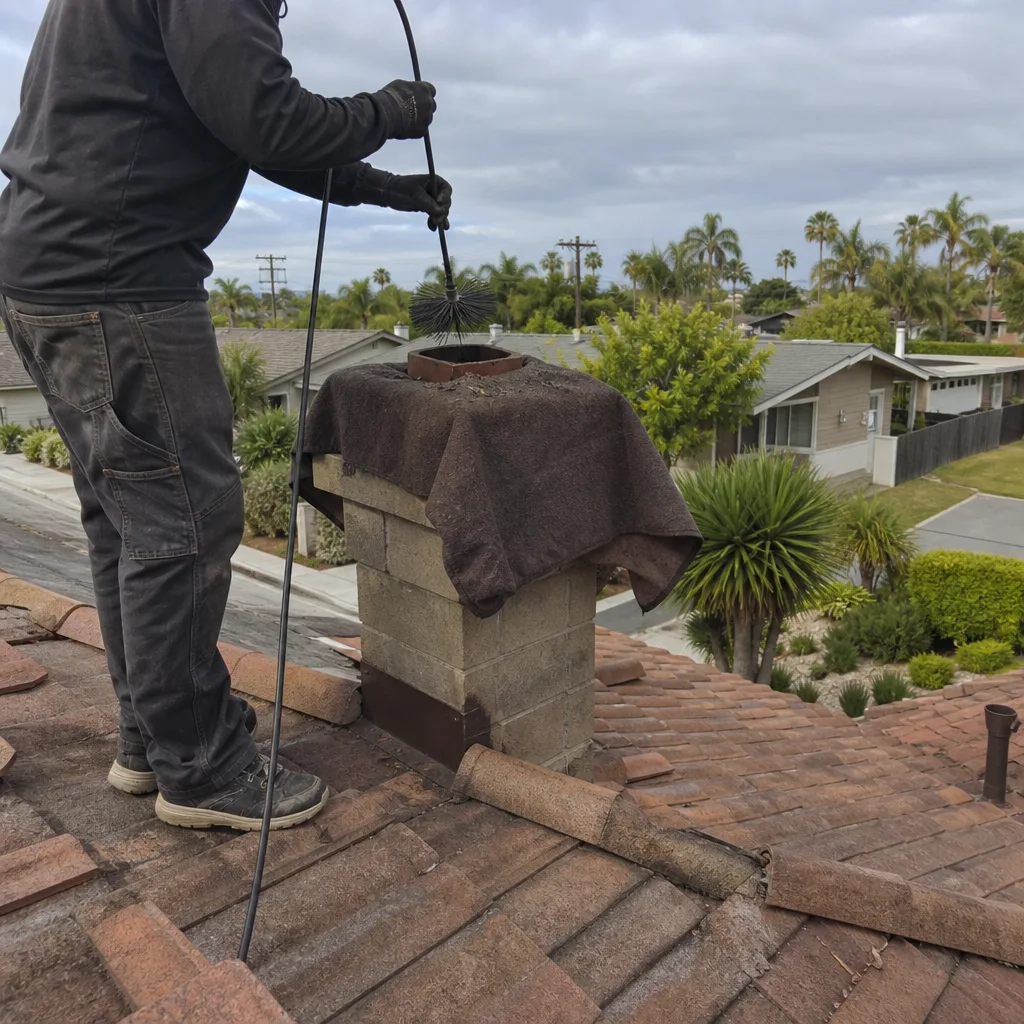
Santa Ana wind events are uniquely destructive to chimney components, yet they’re absent from standard maintenance advice written for other climates. Understanding their specific effects prevents the cap failures and water intrusion that drive our emergency call volume each November.
The mechanics: Santa Ana winds are katabatic, meaning they descend from high desert elevations, compressing and accelerating as they drop. By the time they reach coastal Orange County, they’re hot, extremely dry, and often gust above 50 mph with sustained speeds of 25-35 mph. The direction is typically northeasterly, hitting chimney caps from angles they weren’t necessarily designed for.
Failure modes we’ve documented in Huntington Beach:
- Cap displacement: The standard wind-directional cap rotates to align with prevailing wind. Santa Ana winds approach from the opposite quadrant, potentially jamming the mechanism or - on fixed caps - creating lift forces that loosen mounting screws. We’ve retrieved caps from roof valleys in the Bolsa Chica area after November events.
- Spark arrestor mesh failure: The woven stainless mesh below the cap lid vibrates in sustained wind. Fatigue fractures develop at attachment points, creating gaps that admit birds, roof rats, and debris. California code requires 5/8-inch mesh for solid-fuel appliances; compromised mesh is a code violation and fire hazard.
- Flashing lift: Where cap-to-flue attachment is deteriorated, wind can create negative pressure that lifts the entire cap assembly, exposing the flue opening directly to rain. This is catastrophic if undetected through a winter storm period.
- Debris driving: Fine Santa Ana dust, combined with autumn leaf drop, packs into spark arrestor mesh, reducing draft and creating back-pressure conditions that spill smoke at fire startup.
Post-event inspection protocol:
After any Santa Ana event with gusts above 40 mph, perform a ground-level visual. Is the cap square to the flue? Any visible gap between cap base and flue tile? New rust streaks on the chimney face suggesting lifted flashing? If you have safe roof access (and only if - steep pitches and height are genuine hazards), a closer look confirms mesh integrity. Otherwise, schedule a professional check. Our technicians carry replacement caps from Olympia Chimney and Famco on standard inventory; most replacements are completed same visit if indicated.
For homes in wind-exposed locations - the elevated areas near Seacliff, the bluff-top properties of Huntington Harbour, or any home with a two-story chimney run above roofline - we specify heavier-gauge caps with reinforced mounting and, in some cases, fixed directional design rather than rotating mechanisms that can jam.
Off-Season Tasks You Can Handle Yourself
Professional service is necessary for flue access, camera inspection, and any repair involving the chimney’s structural or venting function. But several maintenance tasks are appropriate for competent homeowners and provide valuable information between professional visits.
Monthly damper operation (year-round):
Open fully, close fully. The motion should be smooth, without grinding or binding. Listen: a scraping sound suggests rust or debris on the track. Feel: resistance that varies through the stroke indicates track damage or hinge corrosion. The closed position should show no visible gap when viewed from below with a flashlight. A leaking damper costs heating and cooling efficiency year-round and compromises draft control during use.
Quarterly firebox visual (burn season):
With the damper open and a flashlight, examine the firebrick or refractory panel surfaces. Look for spalling (surface flaking), through-cracks that penetrate to the steel or masonry backing, and efflorescence (white deposits) that indicates moisture migration from behind. Minor surface cracks in firebrick are normal; cracks that allow flame impingement on the firebox shell are not. Document changes with dated photos - this is the baseline for professional comparison.
Bi-annual exterior cap check (May and September):
From ground level with binoculars, or from roof edge if safely accessible: cap orientation, visible rust, crown condition, and any new vegetation or debris. In Huntington Beach’s tree-canopied neighborhoods - parts of Huntington Central Park East, certain Greenbrook streets - leaf accumulation on caps is common. Decomposed organic matter holds moisture against metal and masonry.
Annual smoke and CO detector test:
Not chimney-specific, but the critical safety layer. Test function, check expiration dates (CO detectors have finite sensor life, typically 5-7 years), and replace batteries or units as indicated. This is non-negotiable regardless of chimney condition.
What not to do:
- Do not attempt flue cleaning from the top - height and fall risk are genuine hazards, and without camera verification you cannot confirm complete deposit removal
- Do not apply sealants or “waterproofing” coatings to exterior masonry without professional assessment; improper products trap moisture and accelerate deterioration
- Do not operate a fireplace with any suspected cap or liner damage; carbon monoxide spillage from a blocked or compromised flue is a real and immediate hazard
Documentation and the Real Estate Calendar
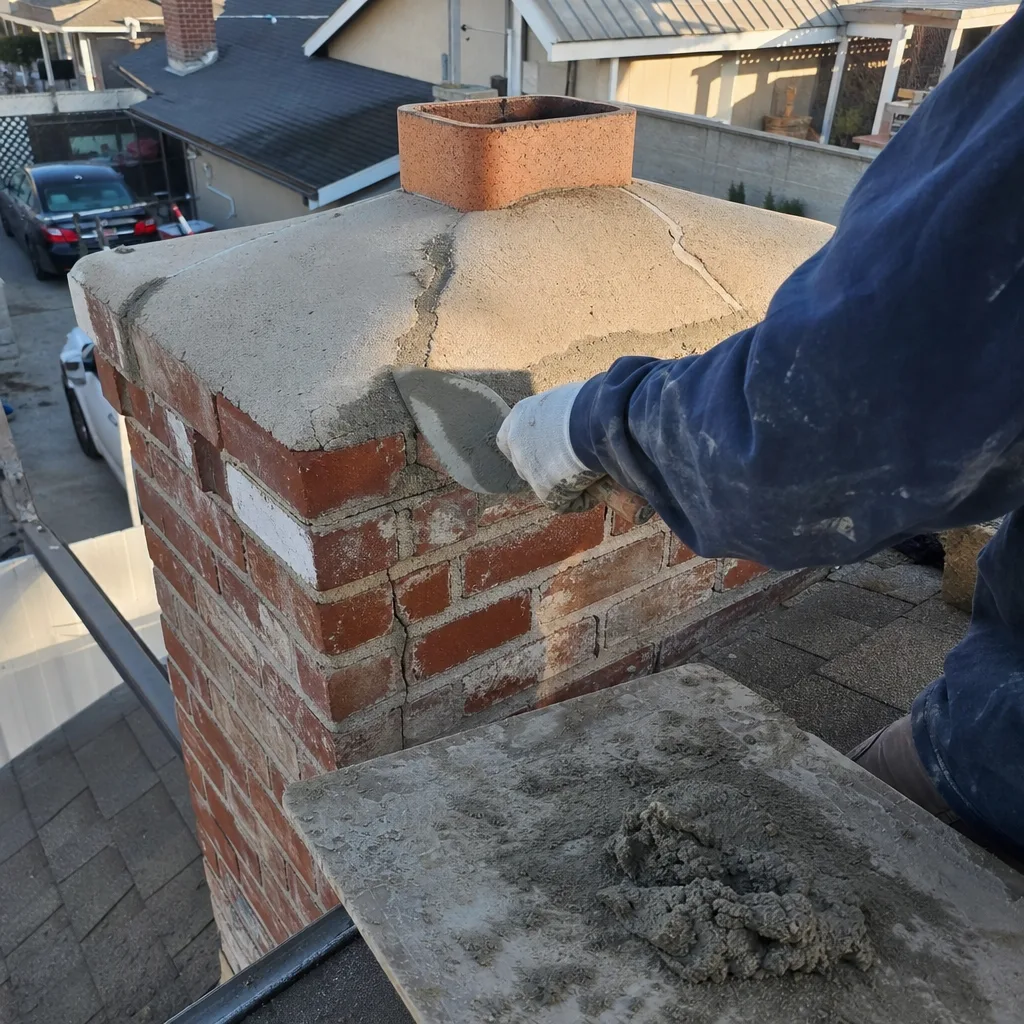
Huntington Beach’s real estate market runs on predictable cycles, and chimney condition documentation has become a standard buyer contingency item. Understanding this calendar prevents the last-minute scramble that produces rushed inspections, incomplete records, and transaction friction.
The listing window: February through June represents peak listing activity in Huntington Beach, with March and April typically strongest. Sellers who completed their March-April sweep have current-year documentation ready for disclosure packages. Those who didn’t face either pre-listing rush scheduling or buyer-requested inspection during escrow - a timing that disadvantages sellers if issues are found.
What buyers and inspectors request:
- Date of most recent professional sweep and inspection
- NFPA 211 Level 2 camera inspection report with photo documentation
- Written scope of any repairs performed, with warranty documentation
- Liner condition assessment and remaining service life estimate
- Clearance to combustibles verification for factory-built fireplaces
Clause 4 of the Haven Standard requires that we maintain our photo record archive indefinitely for returning customers. If we swept your Huntington Beach home in 2019, 2022, and 2024, we can produce the progression documentation that demonstrates maintenance continuity - a significant value in transaction contexts.
The pre-escrow advantage: A seller with current documentation can price confidently, disclose completely, and avoid the renegotiation that follows buyer-discovered defects. A buyer evaluating multiple properties can compare chimney condition directly, with photo evidence rather than vague assurances. In competitive Huntington Beach markets, this transparency distinguishes prepared sellers.
Investor and rental property considerations: Huntington Beach’s duplex, fourplex, and small multi-family inventory - concentrated near Beach Boulevard, the Oak View area, and certain Goldenwest corridor properties - often has shared chimney systems or multiple fireplaces per structure. Documentation requirements compound, and tenant coordination adds scheduling complexity. Annual March-April sweeps with Clause 4 records satisfy insurance requirements, reduce liability exposure, and streamline eventual sale.
For Fireplace Services in Huntington Beach that include transaction-specific documentation packages, we prepare bound reports with full photo record, written condition narrative, and repair recommendation timeline suitable for disclosure or buyer review.
Common Mistakes to Avoid
- Sweeping in October because “that’s when you do it.” For Huntington Beach homes, this leaves deposits in place through the most corrosive months and competes with peak scheduling demand. March-April timing prevents both problems.
- Ignoring the cap after Santa Ana events. A displaced cap is often invisible from ground level until water damage or animal intrusion announces it. Post-event visual checks take two minutes; remediation of a squirrel-nested, water-damaged flue takes hours.
- Assuming low use means low maintenance. The chimneys we replace most often in coastal Orange County served decorative fireplaces burned fewer than ten times yearly. Infrequent use with poor fuel (damp wood, gift-wrapped logs, construction scrap) produces the most corrosive creosote classes, and long idle periods allow moisture damage without the drying intervals that frequent use provides.
- Buying “chimney cleaning” from non-specialists. General handyman services and some HVAC contractors offer “chimney sweeping” without camera inspection, without NFPA 211 compliance, and without the documented record that insurance or escrow requires. The Haven Standard exists specifically because we documented this gap starting in 2009.
- Deferring indicated repairs based on “we don’t use it much.” A damaged liner or deteriorated crown doesn’t care about use frequency. Water intrusion, animal entry, and structural degradation proceed regardless. Deferred maintenance converts $400 crown sealing into $4,000 rebuilds.
- Failing to test dampers before burn season. A seized damper discovered on the first cold evening means no fire that night, emergency service rates, and potential carbon monoxide exposure if the fire is lit anyway with inadequate draft control.
- Using the wrong fuel for coastal conditions. Huntington Beach’s ready availability of construction scrap and pallet wood tempts cost-conscious homeowners. This material is often pressure-treated, painted, or resinous - all of which produce accelerated, highly corrosive creosote deposition. Seasoned hardwood only.
When to Call a Professional
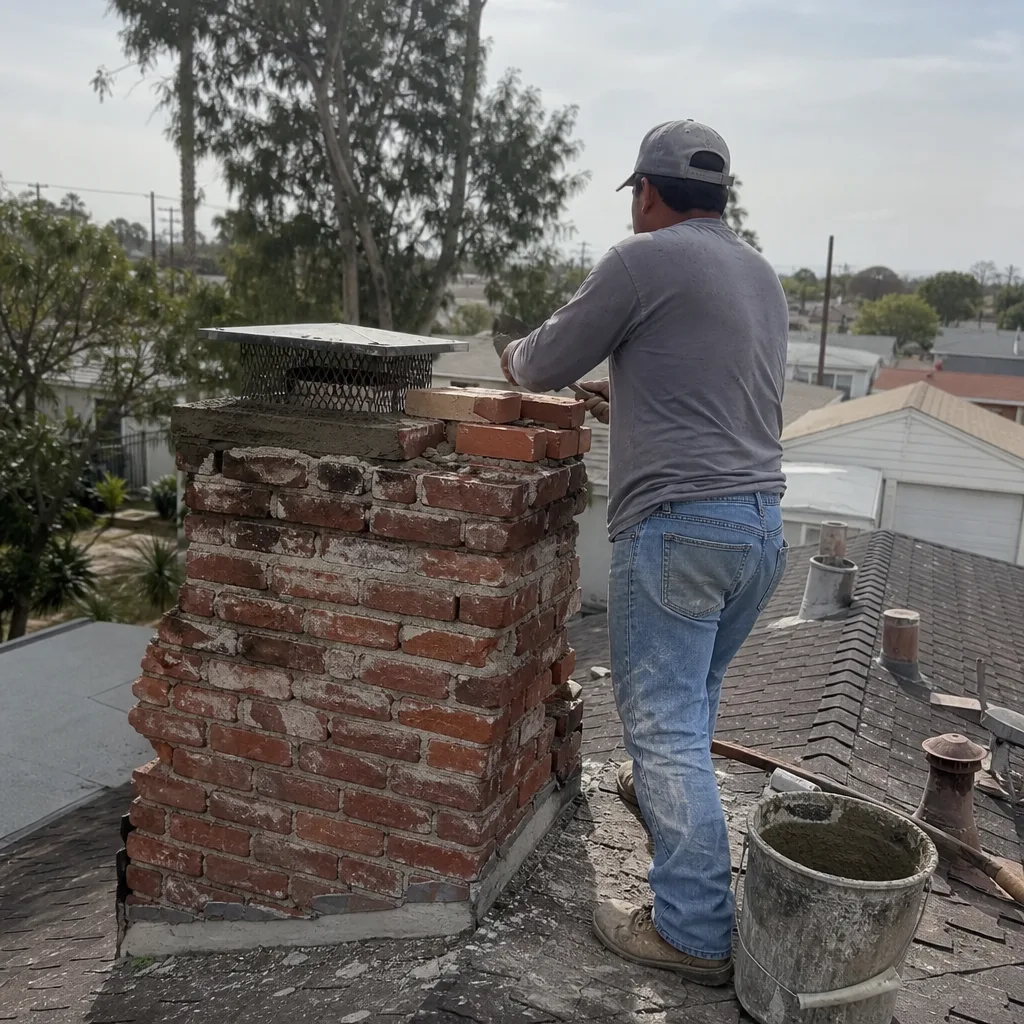
Some conditions require immediate professional assessment; others can wait for your scheduled service but shouldn’t be ignored. Call Emberly Chimney Cleaners Huntington Beach at (657) 427-5872 if you observe any of the following:
Immediate: smoke spillage into the room during operation; visible flame or glowing material outside the firebox; carbon monoxide detector alarm during or after fireplace use; animal sounds or odors from the flue; water dripping into the firebox or visible on adjacent walls.
Schedule soon: damper operation changes from previous season; new exterior efflorescence or rust streaks; cap displacement or damage after wind events; firebox spalling or crack progression documented in your own photos; any fireplace installation, modification, or chimney event (lightning strike, earthquake, significant wind) without subsequent inspection.
Routine: annual or bi-annual professional sweep and Level 2 inspection per the calendar above; pre-listing documentation package preparation; second opinion on any competitor’s written repair estimate - our Free Second Opinion service applies.
Every service includes NFPA 211 Level 2 camera inspection, Clause 4 photo documentation, written price before work starts, and the 365-Day Done Right Promise. Emberly Chimney Cleaners Huntington Beach home page has full service details and scheduling options.
Frequently Asked Questions
A standard chimney sweep with NFPA 211 Level 2 camera inspection in Huntington Beach typically runs $225-$375 for a single-flue masonry fireplace, depending on creosote class, accessibility, and whether the firebox is factory-built or site-constructed. For a detailed breakdown, see our Chimney Cleaning Cost Breakdown: The Huntington Beach Homeowner’s Reference for 2026. Multi-flue systems, insert removals for access, and heavy Class III creosote removal fall at the higher end. We deliver a written price before any work starts - Clause 1 of the Haven Standard - and that price includes the camera scan, photo record, and condition report. Call (657) 427-5872 for an exact quote; estimates are free.
For typical Huntington Beach decorative fireplace use (10-20 fires per season), every 2-3 years with annual inspection is usually sufficient. Homes with frequent use, poor fuel practices, or known creosote accumulation may need annual sweeping. The NFPA 211 standard specifies inspection annually and cleaning when deposits exceed 1/8 inch - we measure this during camera inspection and recommend based on what we find, not on calendar alone. For more guides & resources on coastal chimney care, visit our blog. Coastal proximity within two miles of the shore typically pushes us toward more frequent inspection due to accelerated corrosion conditions.
Not unless camera inspection demonstrates damage that compromises safety or function. We recommend liner replacement only when we can show you: cracks, gaps, or spalling visible in the photo record; deterioration that affects draft performance; or code non-compliance with current appliance installation. If a competitor has recommended liner replacement without providing dated, labeled camera footage you can review yourself, bring us their written estimate for a Free Second Opinion. We’ve found that a significant percentage of “required” liner replacements in Huntington Beach address cosmetic surface staining rather than structural compromise.
The most common consequences in Huntington Beach are progressive rather than catastrophic: liner pitting from acidic creosote-moisture contact, mortar joint recession from salt cycling, crown cracking from thermal stress on moisture-compromised concrete, and cap failure from corrosion. These convert $200-$800 maintenance items into $2,000-$8,000 repairs over 5-10 years. Fire risk from creosote ignition is real but lower here than in heavy-use cold climates; carbon monoxide risk from compromised venting is the more probable acute hazard. Documentation gaps also complicate real estate transactions and insurance claims.
Flue cleaning from the top involves genuine fall and height hazards; we don’t recommend it. Firebox debris removal, damper maintenance, and exterior visual checks are appropriate homeowner tasks with proper safety equipment. What you cannot do without professional equipment is camera-inspect the full flue length, classify creosote deposits, assess liner condition, or produce the documented record that insurance, code enforcement, and real estate transactions require. The sweep is only part of the service; the inspection and documentation are equally critical.
Level 1 is a visual inspection of accessible portions - what you can see with a flashlight from the firebox and roof. Level 2 adds camera scan of the full flue interior, smoke chamber, and accessible portions of the firebox and exterior, plus inspection of attics, crawl spaces, and other accessible areas where chimney components run. Level 2 is required by NFPA 211 for property transfers, new appliance installations, and after chimney events. Emberly Chimney Cleaners made Level 2 the default on every visit starting in 2009 - before regulators required it - and that practice became Clause 4 of the Haven Standard. Every customer receives the same documentation quality, regardless of visit reason.
Yes, measurably. We’ve documented accelerated liner pitting, mortar joint recession, and metal component corrosion in Huntington Beach coastal zones compared to inland Orange County equivalents with similar use patterns. The mechanism is moisture-activated salt corrosion: marine layer provides the electrolyte, salt aerosol provides the ions, and long idle periods allow sustained reaction without the drying intervals that frequent use would provide. It’s not dramatic damage - you won’t wake to a collapsed chimney - but it’s progressive degradation that shortens component life and converts maintenance into repair.
The Bottom Line
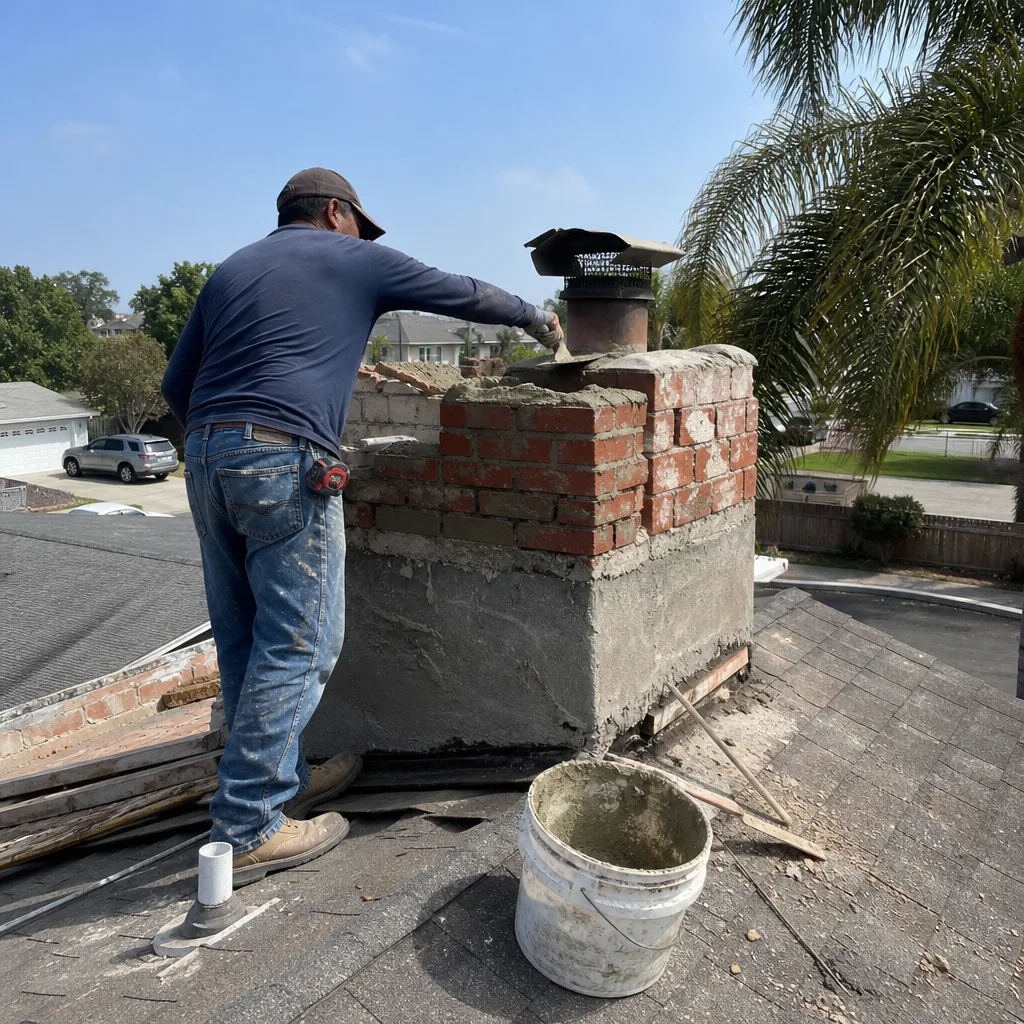
Huntington Beach chimneys live by coastal rules, not continental ones. The maintenance calendar that works in Denver or Detroit fails here because it ignores marine layer moisture, salt aerosol corrosion, and Santa Ana wind mechanics. Invert the standard advice: sweep in March-April after burn season, not October before it. Check your cap after every significant wind event. Handle the homeowner-appropriate tasks - damper tests, exterior visuals, detector checks - between professional visits. Keep documentation current for the real estate cycle that defines this market. And when you hire professional service, insist on camera inspection with photo record, written price before work starts, and warranty documentation - the practices we’ve maintained under the Haven Standard since 2009, on every one of 38,000 chimneys.
For a free estimate on chimney cleaning, inspection, or repair in Huntington Beach, call Emberly Chimney Cleaners Huntington Beach at (657) 427-5872. Calls are answered live, 24 hours a day. Written price before work starts. Camera inspection and photo record included. 365-Day Done Right Promise on every job.
Written by Corrine Halstead, Owner at Emberly Chimney Cleaners Huntington Beach, serving Huntington Beach since 2009.