
Level 1 sweep and inspection to the NFPA 211 annual standard - flue, crown, cap, and flashing checked and photographed
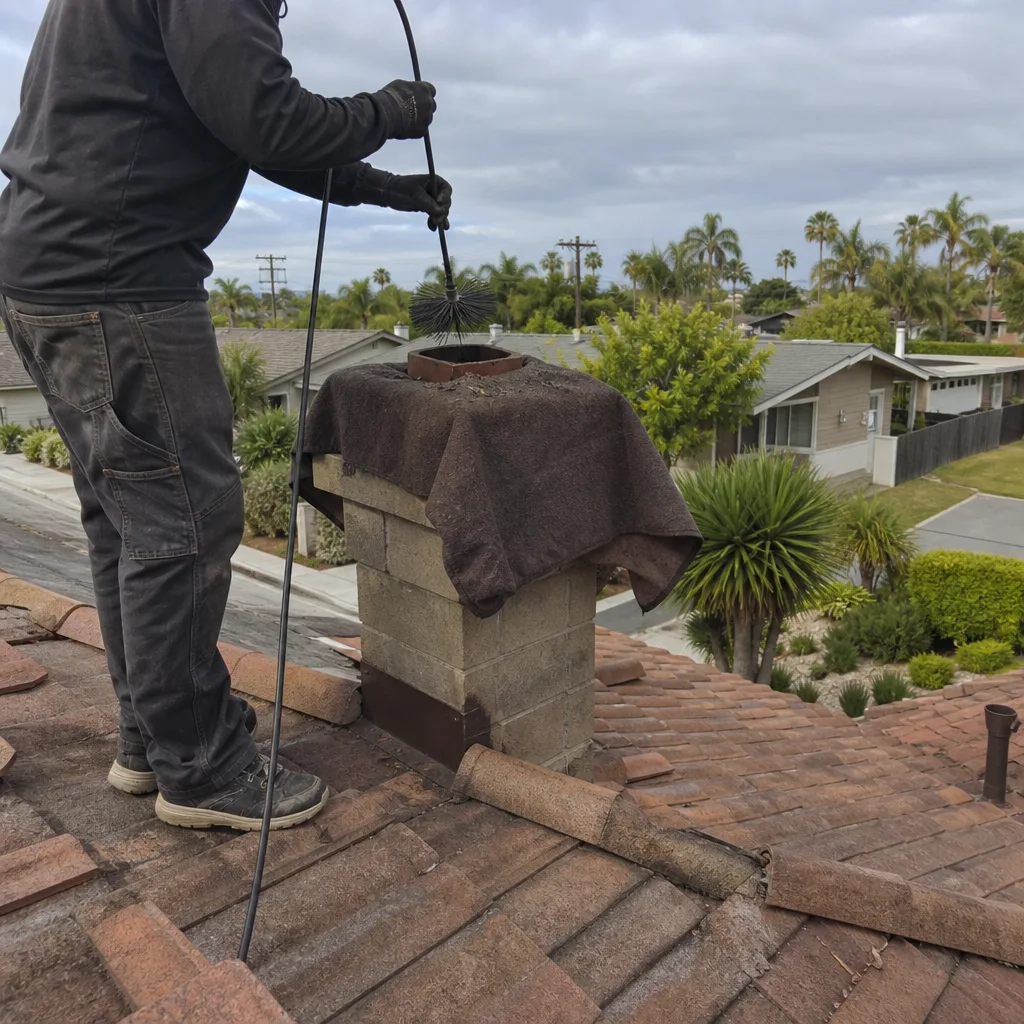
Chimney sweep logs do not sweep chimneys. They loosen some creosote - which then falls where a brush and vacuum still have to collect it.
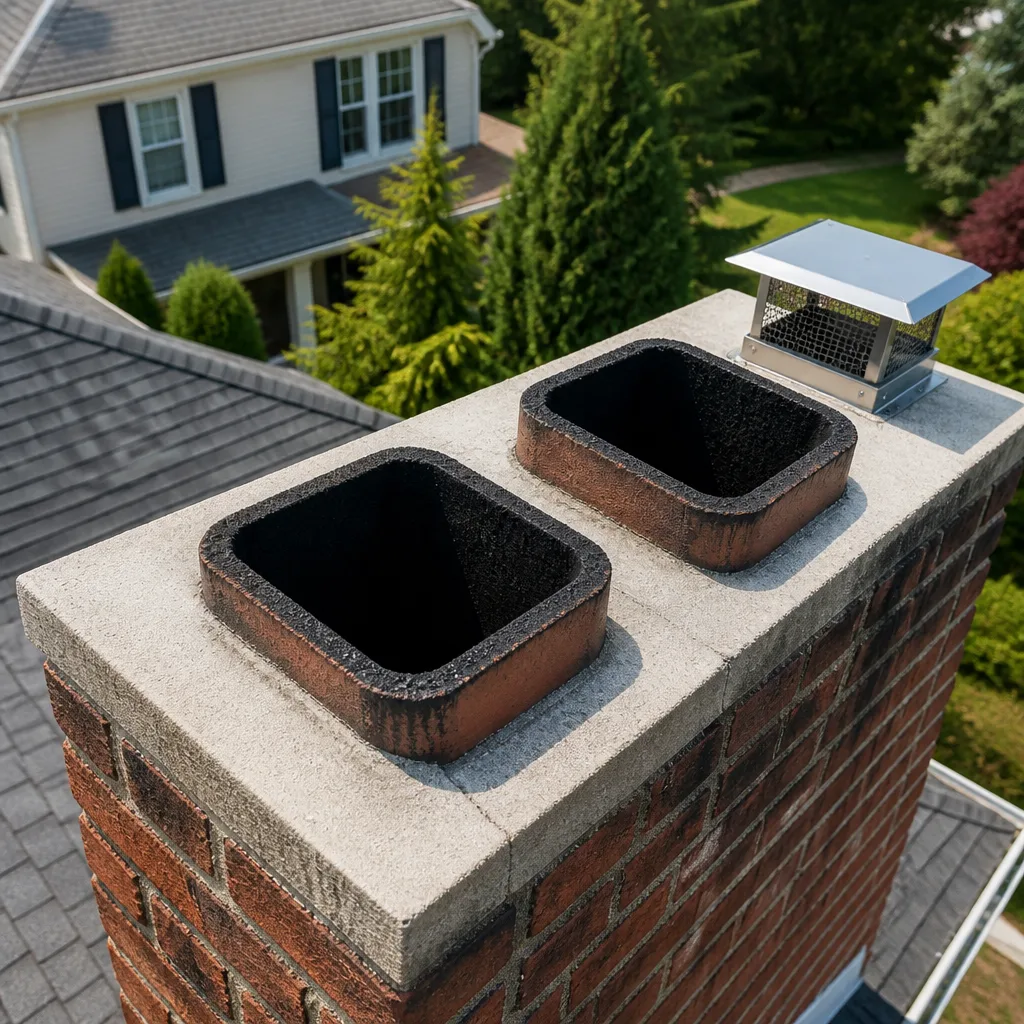
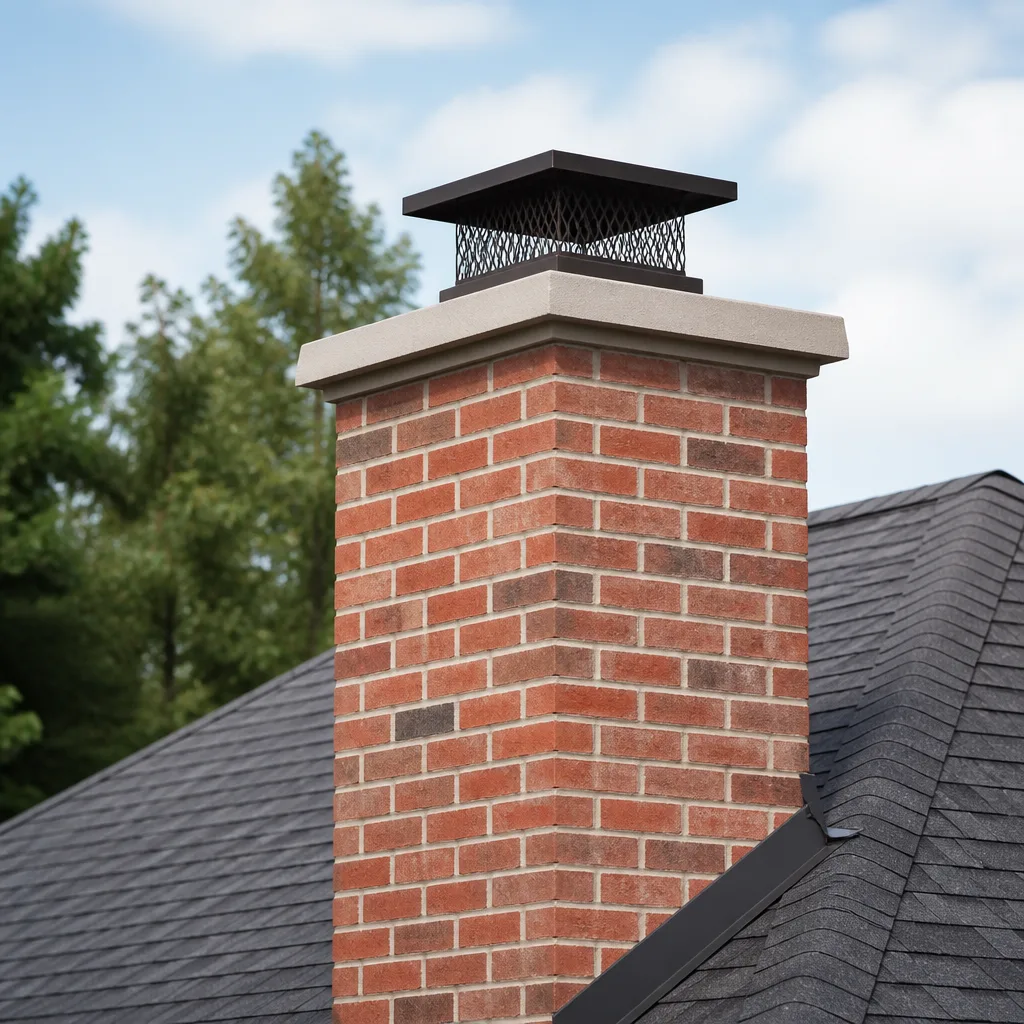
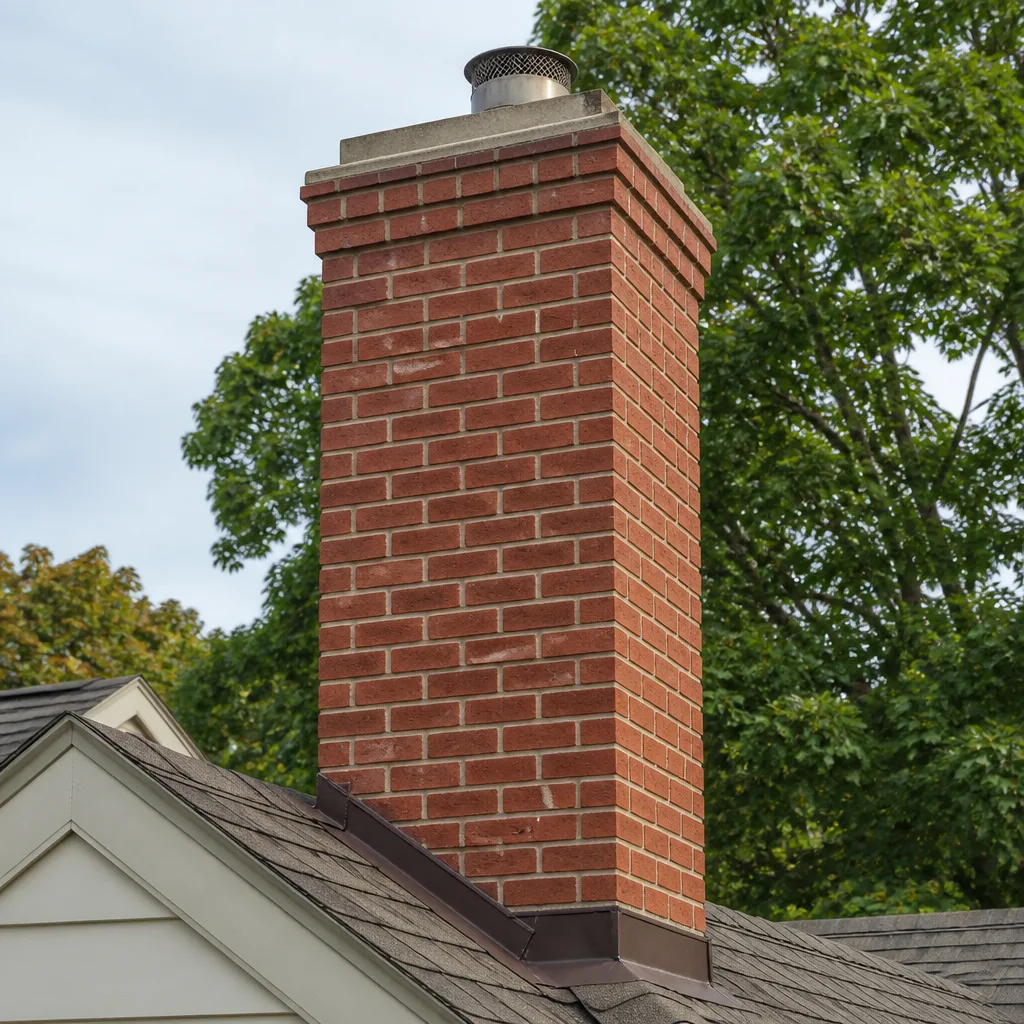
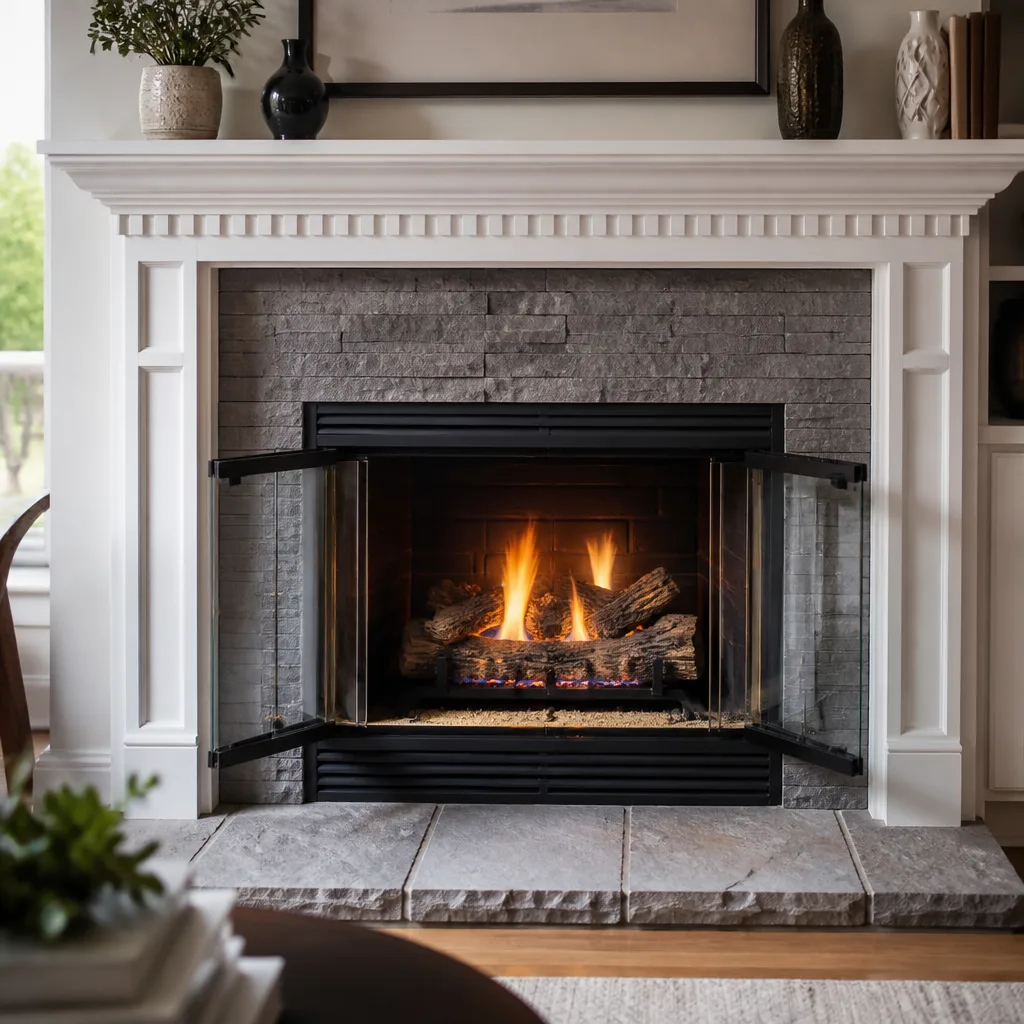
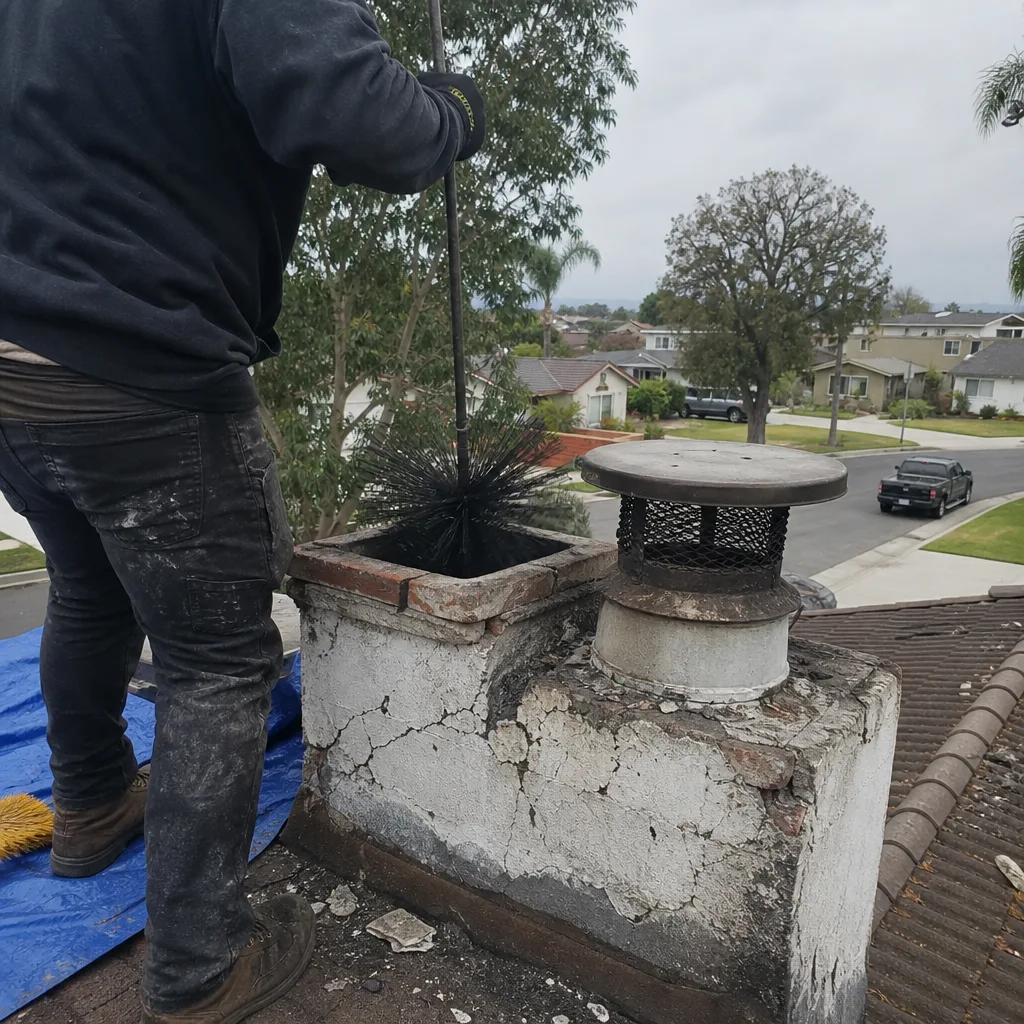 Before
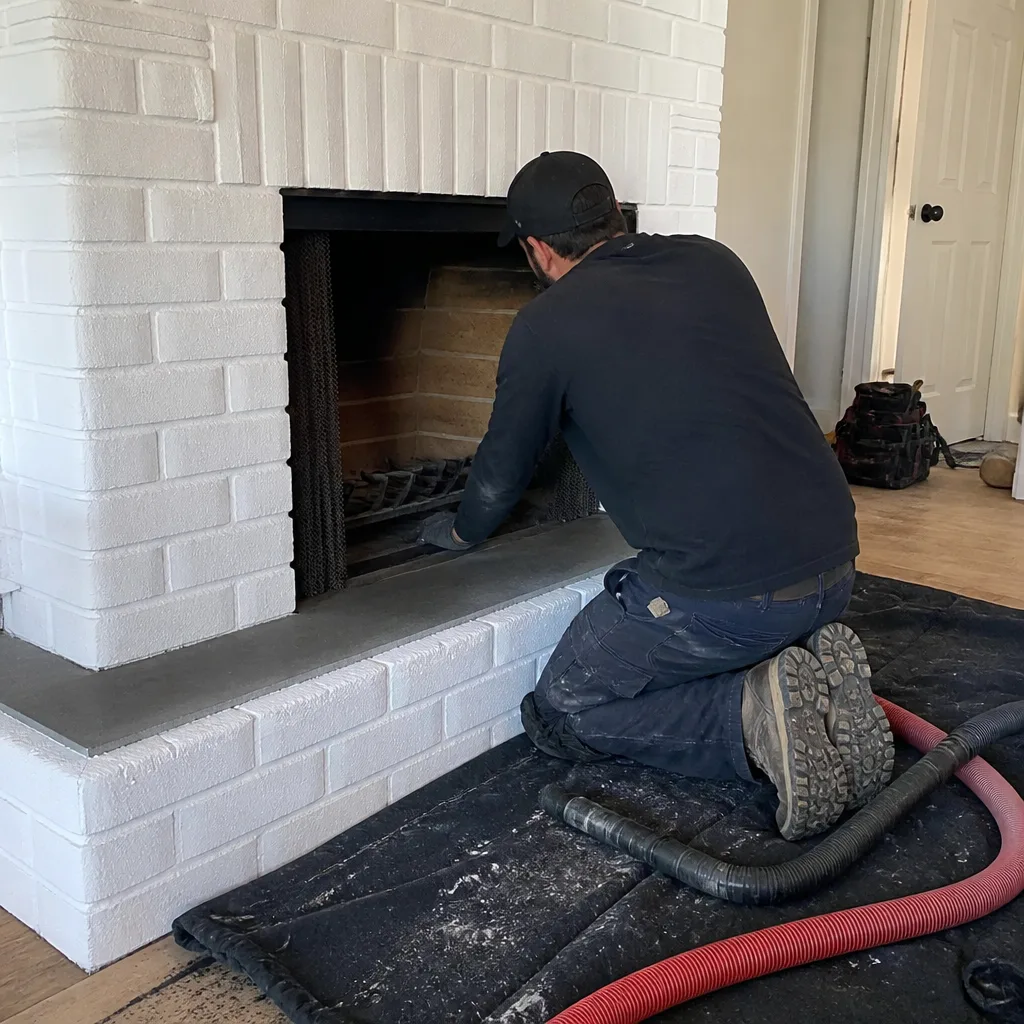 After
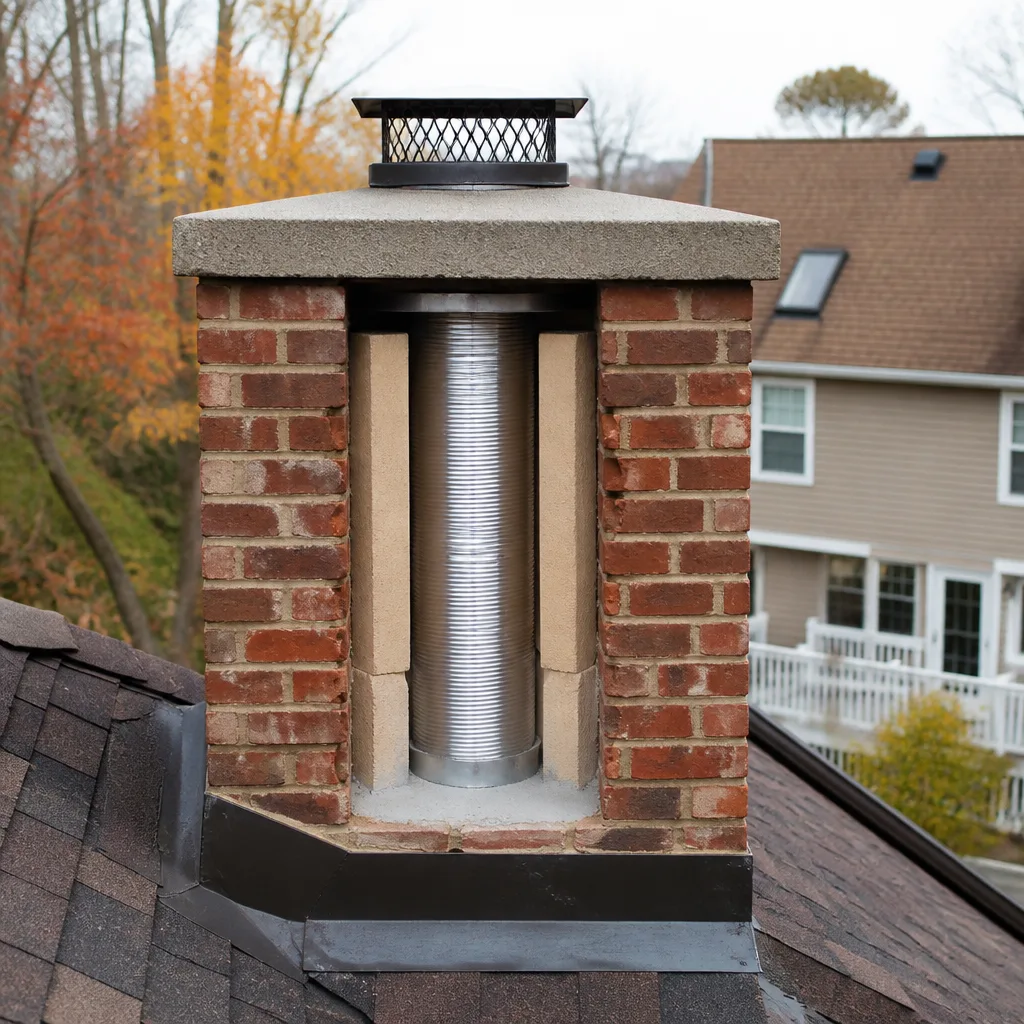
After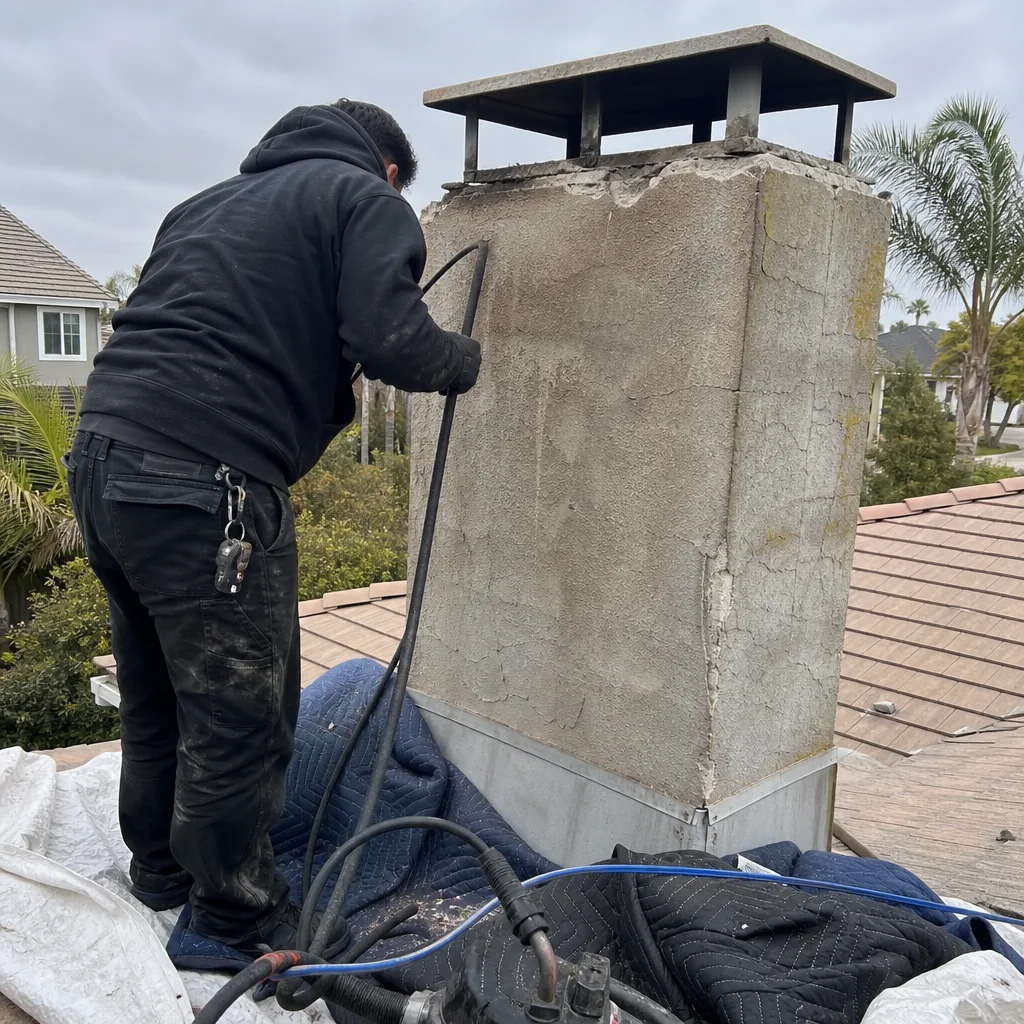 Before
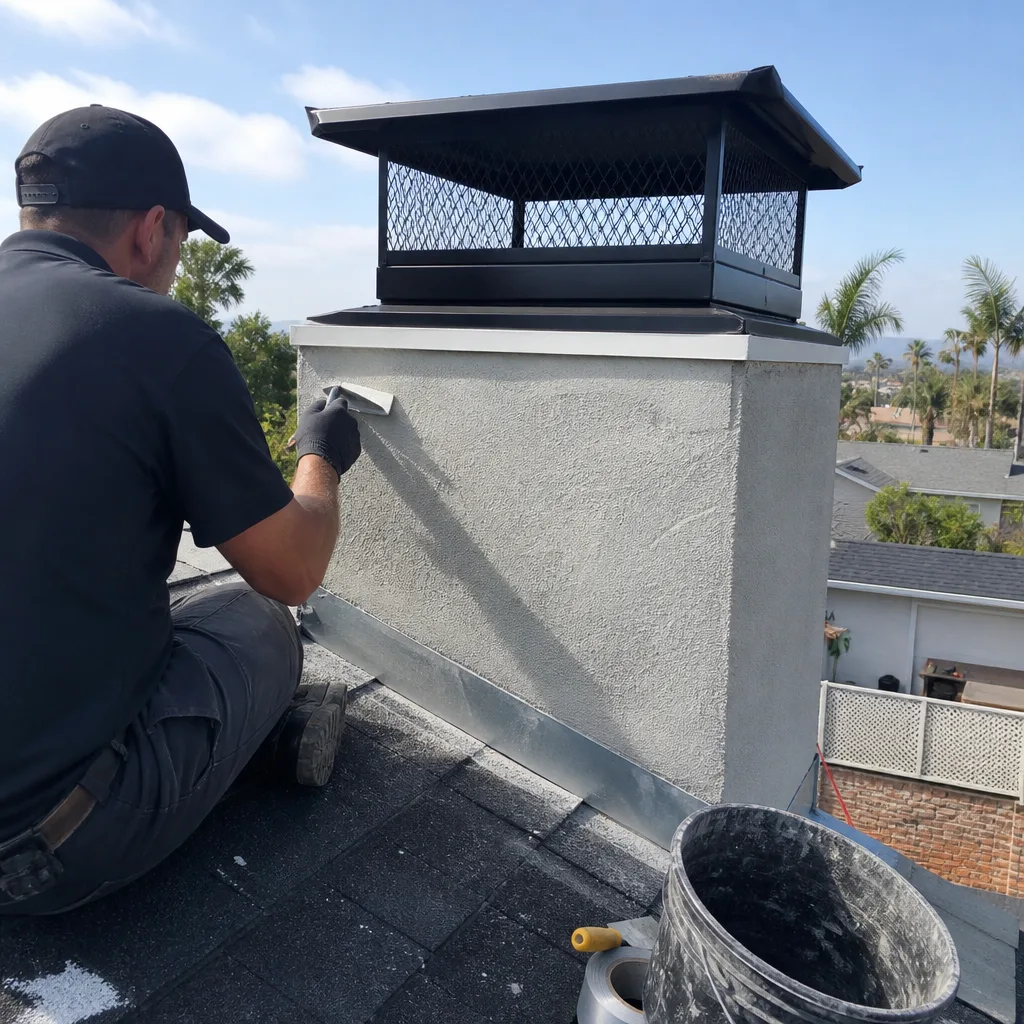 After
After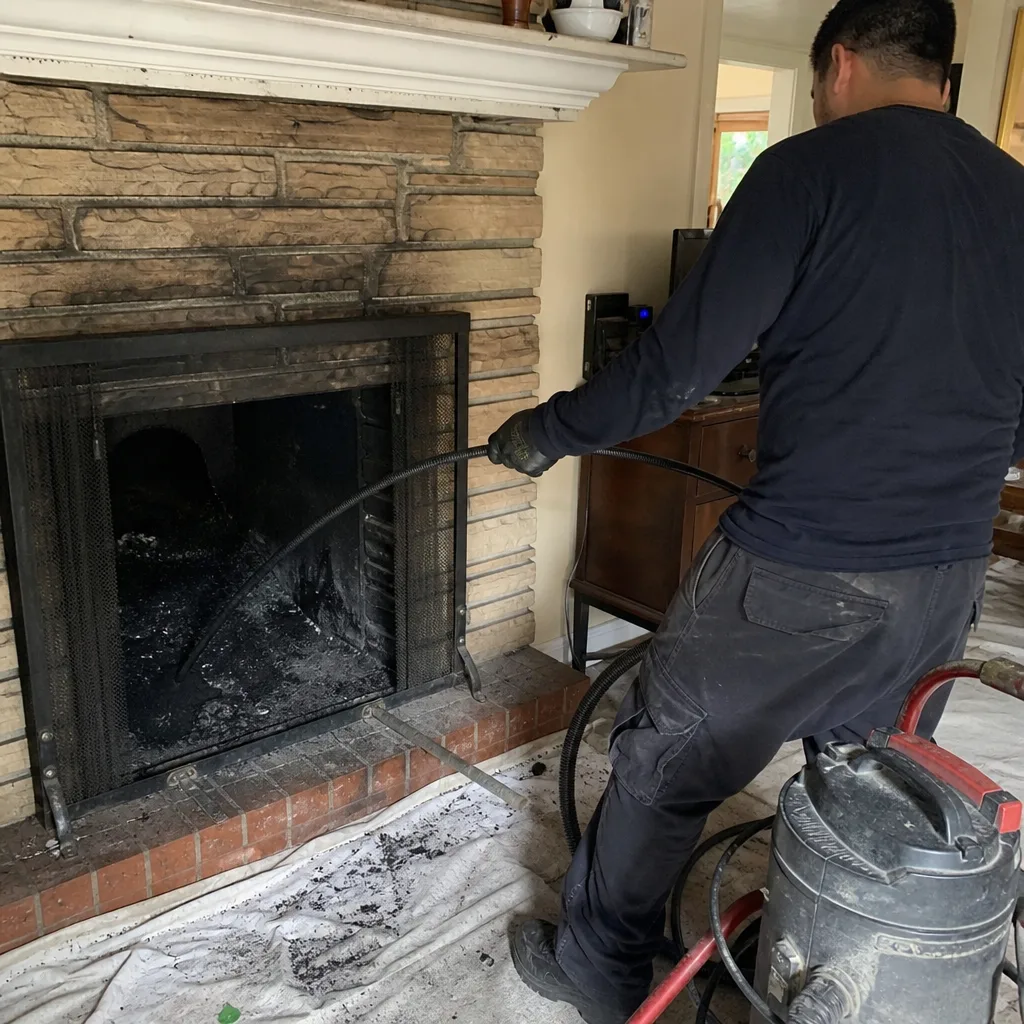 Before
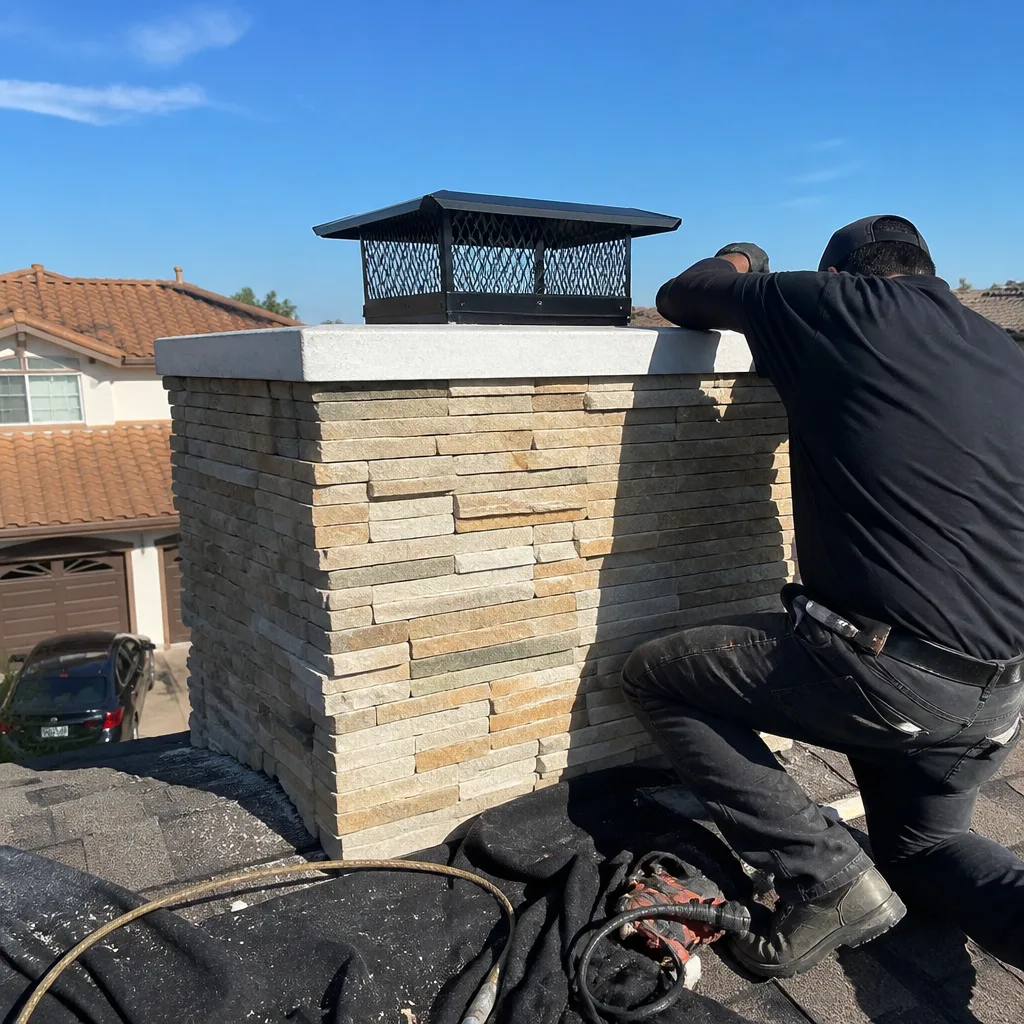 After
AfterFast, Reliable Chimney Sweep Across Long Beach
Chimney cleaning and sweep in Long Beach typically runs $189-$329 for a standard Level 1 sweep with inspection, and $279-$449 for a Level 2 camera inspection with documented photo record. Most Long Beach appointments are scheduled within 3-5 business days, with dispatch coordinated from our Los Angeles office and crews serving neighborhoods from California Heights to Bixby Knolls to Wrigley. Call (657) 427-5872 for a written estimate before any work starts.
We’ve been in enough Long Beach homes to know the pattern: a 1940s brick chimney that looks fine from the street, but the crown is cracked, the flue is unlined clay tile, and harbor moisture has been working on the mortar joints for decades. Our Chimney Sweep team documents everything with a camera before recommending anything. That’s Clause 4 of the Haven Standard, and we’ve done it on every job since 2009.
Why Emberly Chimney Cleaners Huntington Beach Is Long Beach’s Preferred Chimney Sweep Company
We’ve completed more than 38,000 chimney inspections and cleanings since 2009, and a significant share of those have been in Long Beach’s older neighborhoods. Homeowners in California Heights, Bixby Knolls, and Wrigley call us back because we show them what we found - photos, camera footage, written scope - before we ask them to buy anything.
Our reviews from Long Beach customers consistently mention the same things: the technician named who was coming, the text when they were on the way, and the moment the camera went down the flue and the problem was visible on a screen instead of being described in vague terms. Background-checked, uniformed crews with license information displayed on every page. Live phone support, 24 hours a day, 7 days a week. Not a voicemail. Not a web form.
Response time to Long Beach is typically 3-5 business days for standard sweeps, with scheduling coordinated from our Los Angeles office. Emergency calls for suspected blockages or post-earthquake damage get priority dispatch. We know the local conditions: salt-laden marine air off San Pedro Bay, the Newport-Inglewood fault zone running beneath the city, and the specific failure modes of post-1933 rebuilt masonry. That local knowledge changes what we look for and what we find.
Our Chimney Sweep Services in Long Beach
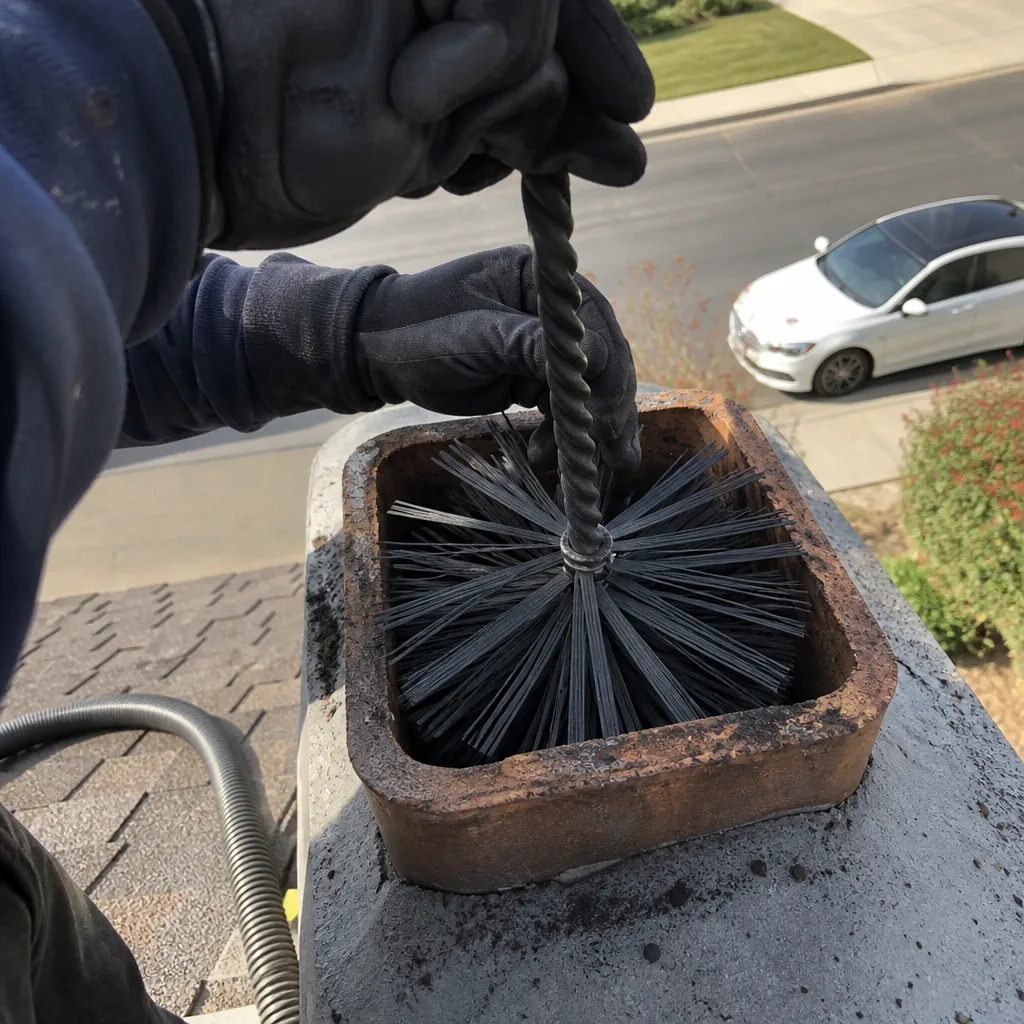
Level 1 Inspection
A Level 1 inspection is a visual examination of readily accessible portions of the chimney exterior, interior, and connecting appliances. In Long Beach, we perform these during every routine sweep. For newer homes in east Long Beach’s 1950s-1960s tracts, a Level 1 often suffices if there’s no known damage or change in appliance. But for California Heights or Bixby Knolls homes with 80-90 year old post-1933 rebuilds, we flag when a Level 2 camera inspection is warranted - and we explain why in plain terms, with specific observations about crown condition, mortar erosion, or visible cracking.
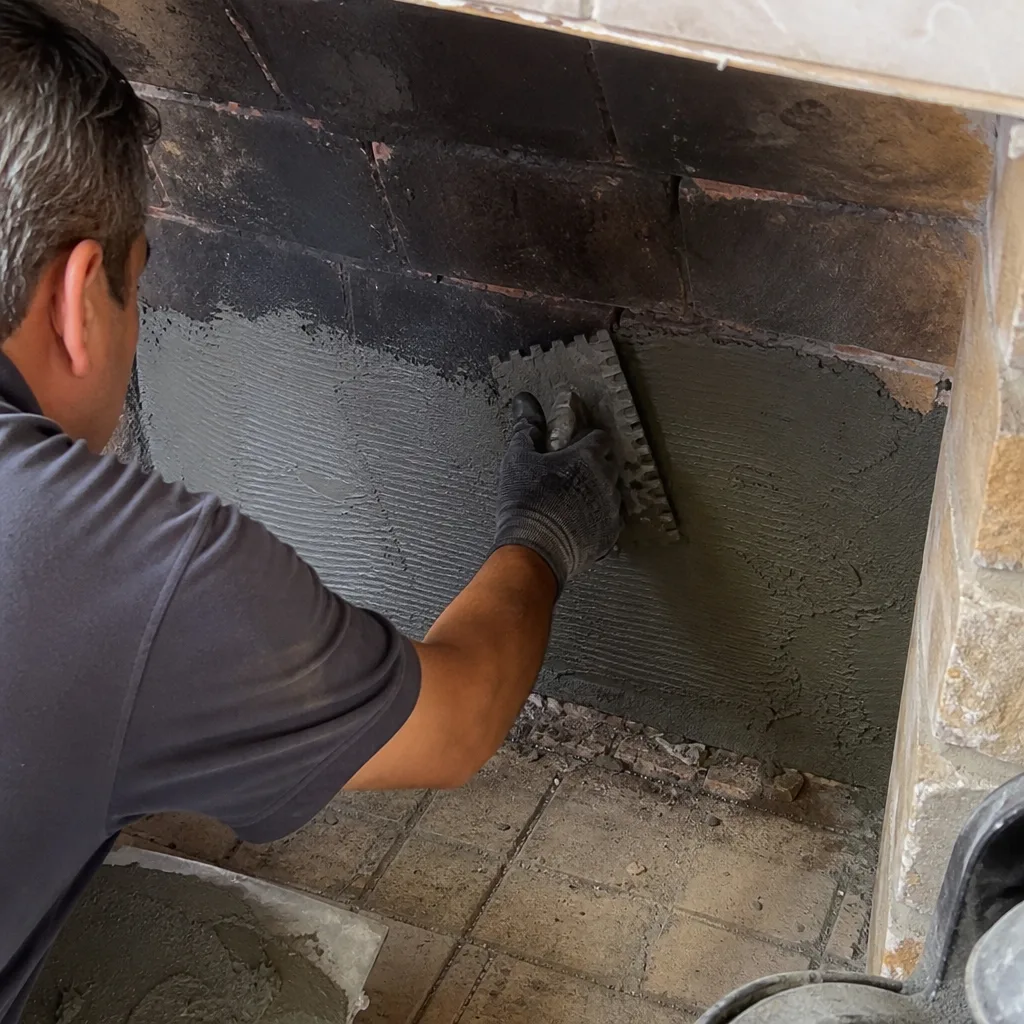
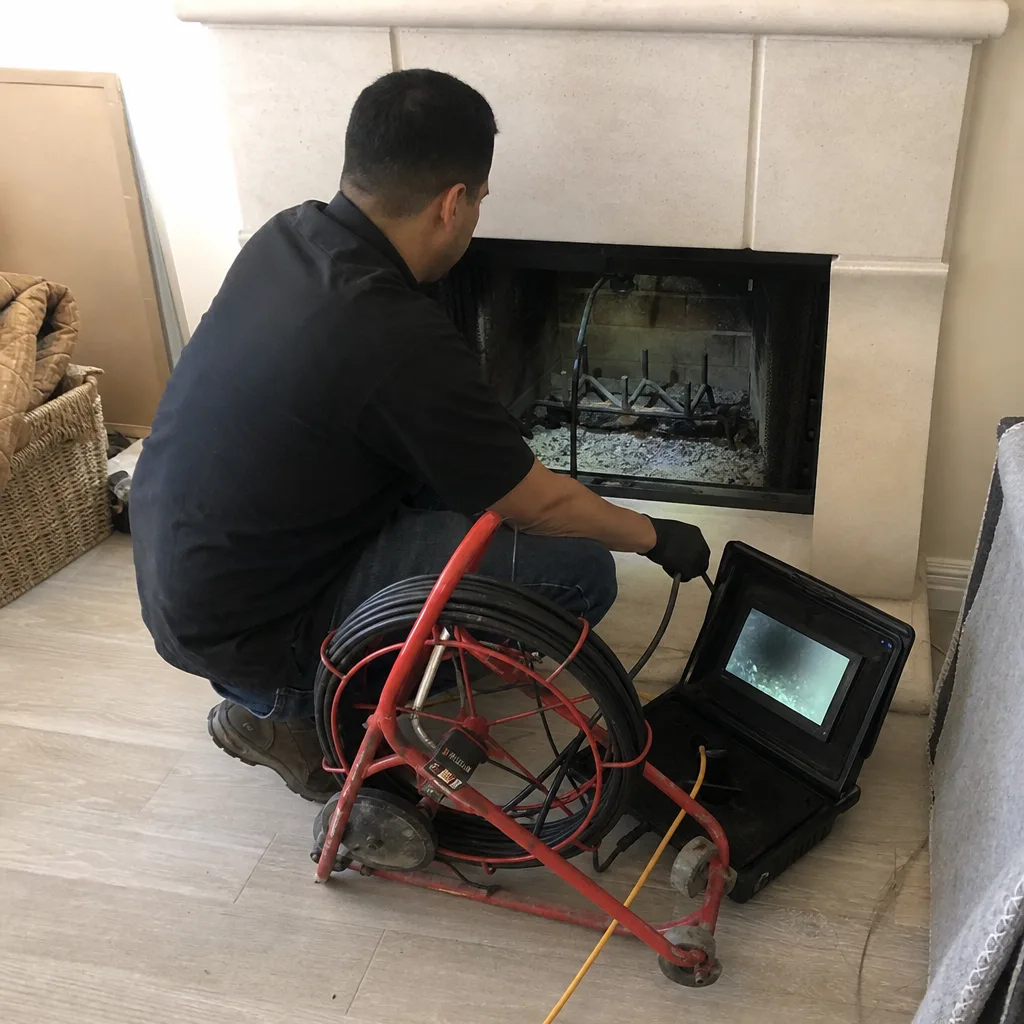
Level 2 Inspection
Level 2 is the inspection standard we built our name on. NFPA 211 Level 2 requires a camera scan of the entire flue interior, plus accessible portions of attics, crawl spaces, and basements. In Long Beach, this matters enormously. The combination of post-1933 earthquake-era chimneys, salt-laden marine air, and the Newport-Inglewood fault zone creates specific corrosion and cracking patterns that a flashlight glance will miss. Our camera finds spalling mortar joints, deteriorated clay tile, condensation damage from appliances vented into flues never designed for them, and the telltale cracking of “earthquake-era crowns” - mortar feathered flat with no proper form, trapping harbor moisture until it delaminates. Every Level 2 includes a documented photo record under Haven Standard Clause 4. Written price before work starts, always.
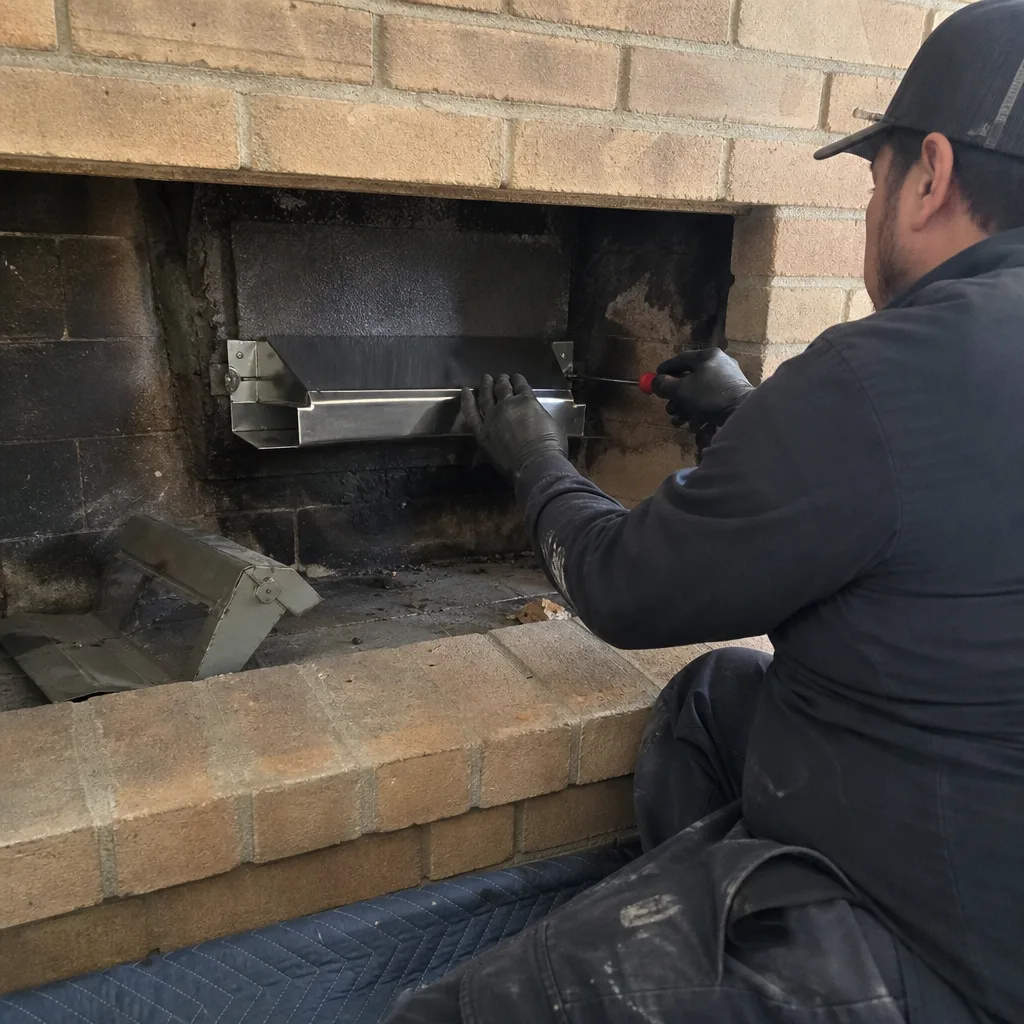
Creosote Removal
Long Beach’s mild coastal climate means most homeowners burn wood only a handful of times per year, so first-degree creosote - light soot, easily brushed - is common. But we’ve also found third-degree creosote, or “glaze,” in chimneys where homeowners burned improperly seasoned wood during cold snaps or used their fireplace as an occasional heat source during Pacific storms. Third-degree creosote is a hardened, tar-like deposit that can’t be removed with standard brushing. It requires rotary cleaning with specialized chains or chemical treatment, and it’s a significant fire hazard regardless of how often you burn. We classify what we find, show you on camera, and quote the removal method in writing.
Soot Removal
Soot accumulation in Long Beach chimneys often comes with a companion problem: moisture. The near-constant marine layer rolling in off the harbor keeps chimney masonry chronically damp, which means soot mixes with condensation and can adhere more stubbornly than in dry inland climates. Our sweeps use HEPA-contained vacuums and rotary brushing systems sized to your flue diameter. We clean the firebox, smoke chamber, damper assembly, and accessible flue length. For fireplaces in 1920s Craftsman bungalows - common in Long Beach’s older inland neighborhoods - we pay particular attention to smoke chamber parging, the mortar coating that helps funnel smoke into the flue. Deteriorated parging in a damp climate creates turbulence that deposits creosote and soot where it shouldn’t be.
Annual Sweep
NFPA 211 recommends annual inspection, with sweeping as needed. In Long Beach, “as needed” depends on your burning habits and your chimney’s condition. A homeowner in Naples who burns gas logs may need only inspection. A family in Belmont Shore burning cordwood through winter storms needs annual sweep and inspection without exception. We don’t sell you what you don’t need. We inspect, document, and tell you what the camera showed.
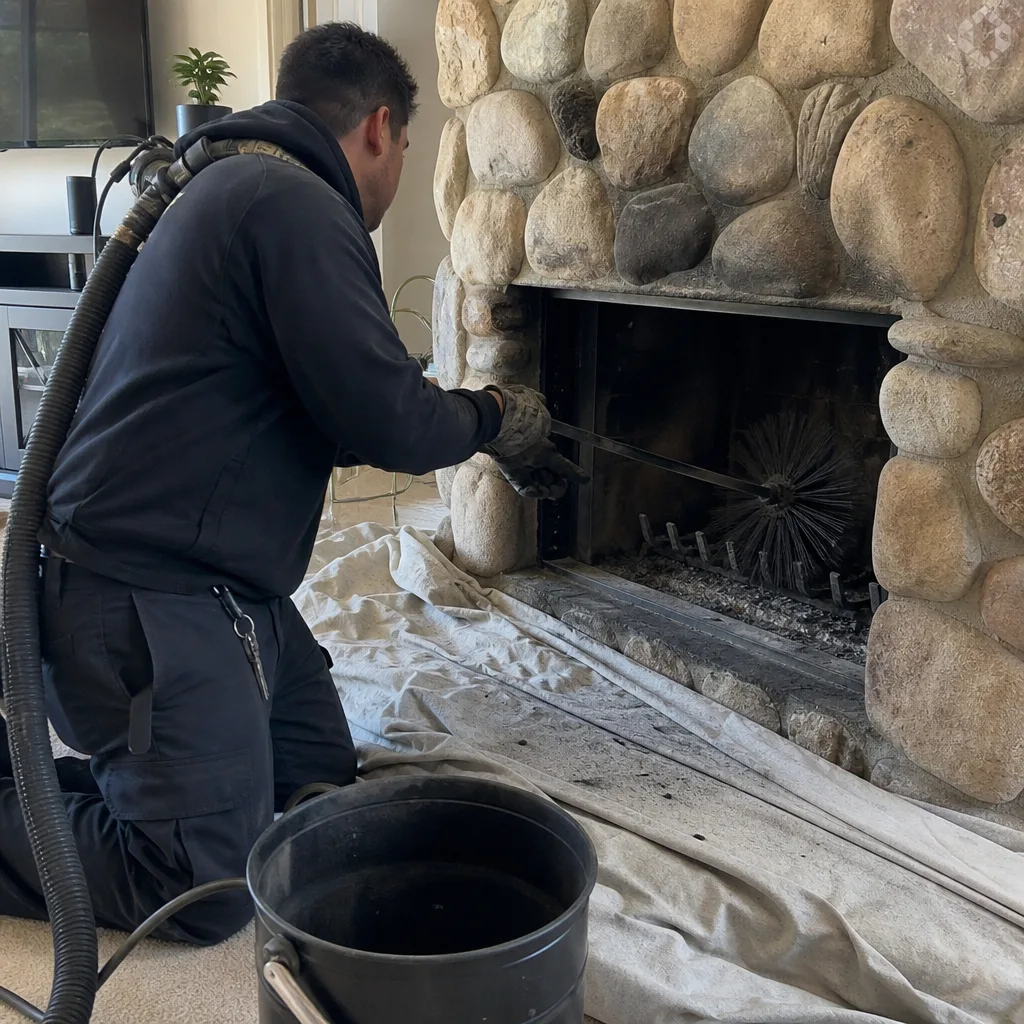
Fireplace Cleaning
Fireplace cleaning in Long Beach addresses the full system: firebox, grate, ash dump, damper, smoke shelf, and visible flue. We remove ash and debris, check for deteriorated firebrick or refractory panels, and inspect for water staining that indicates crown or flashing failure. Harbor moisture finds its way in through cracks invisible from the hearth. The camera shows what the eye can’t.
What happens when you call
- 1
A real person answersNo phone trees - you reach a local pro.
- 2
You get an upfront price rangeHonest numbers before anyone is dispatched.
- 3
A background-checked tech heads outLicensed & insured, dispatched right away.
- 4
You approve before work beginsNothing starts until you say go.
BeforeAfterTrusted Brands We Service in Long Beach
We source materials through Haven’s buying network to keep customer prices honest: DuraFlex stainless steel liners for relining damaged flues, HeatShield cerfractory coating for resurfacing deteriorated clay tile, and Gelco chimney caps with proper mesh screening to keep coastal damp air and marine debris out. For Long Beach homeowners, this means fast turnaround on parts - no waiting weeks for a cap or liner to ship from a distant warehouse. We stock common sizes and configurations locally, and our crews arrive with the materials needed to complete most jobs in a single visit. Every component carries a written warranty under Haven Standard Clause 1.
Common Chimney Sweep Problems We See in Long Beach Homes
- “Earthquake-era crowns” in California Heights and Bixby Knolls. Post-1933 rebuilds often got mortar simply feathered to a flat top with no proper form, overhang, or drip edge. Harbor moisture soaks in, freezes rarely but evaporates slowly, and the crown cracks and delaminates in a pattern homeowners mistake for cosmetic staining until water damage appears in the firebox.
- Unguarded flues letting marine air sit against clay tile. Missing chimney caps or deteriorated chase covers allow salt-laden damp air to condense inside unlined flues, accelerating spalling mortar joints and efflorescence - the white mineral deposits that signal water migration through masonry.
- Appliances vented into fireplace flues never designed for them. Water heaters or furnaces tied into old chimney stacks create acidic condensation and draft problems that crack masonry from the inside. In damp post-1933 rebuilds, this damage progresses faster than in dry climates.
- Seismic cracking from Newport-Inglewood fault zone activity. Even minor tremors stress aging mortar joints in 80-90 year old masonry. We document crack patterns with camera footage to distinguish stable historical cracking from active, widening damage that needs structural attention.
Pricing for Chimney Sweep in Long Beach, CA
| Service | Typical Range in Long Beach |
|---|---|
| Level 1 Sweep with Inspection | $189 - $329 |
| Level 2 Camera Inspection with Photo Record | $279 - $449 |
| Creosote Removal (first-degree, standard) | Included in sweep |
| Third-Degree Creosote Removal (rotary/chemical) | $389 - $649 |
| Fireplace Cleaning (firebox, damper, smoke chamber) | $149 - $249 |
| Annual Maintenance Plan (inspection + sweep) | $249 - $379/year |
What moves you within these ranges? Flue height and accessibility, the degree of creosote or soot buildup, whether the chimney has been maintained regularly or neglected for years, and any needed repairs found during inspection. We deliver a written price, written scope, and written warranty before anyone starts work - Haven Standard Clause 1, no exceptions. Free Second Opinion on any competitor’s written estimate. Call (657) 427-5872 for your exact quote; estimates are free.
We Also Serve Cities Near Long Beach
Our crews work throughout the metro area, with regular appointments in Long Beach and neighboring communities including Seal Beach, Lakewood, Los Alamitos, and Cypress. Scheduling is coordinated from our Los Angeles office with local dispatch to minimize drive time and keep appointment windows reliable.
Serving Long Beach, CA - Our Local Coverage Area
We’re based in the Long Beach area and know this community well. Use the map below to see our service coverage - if you’re nearby, we can almost certainly help.
FAQs - Chimney Sweep in Long Beach
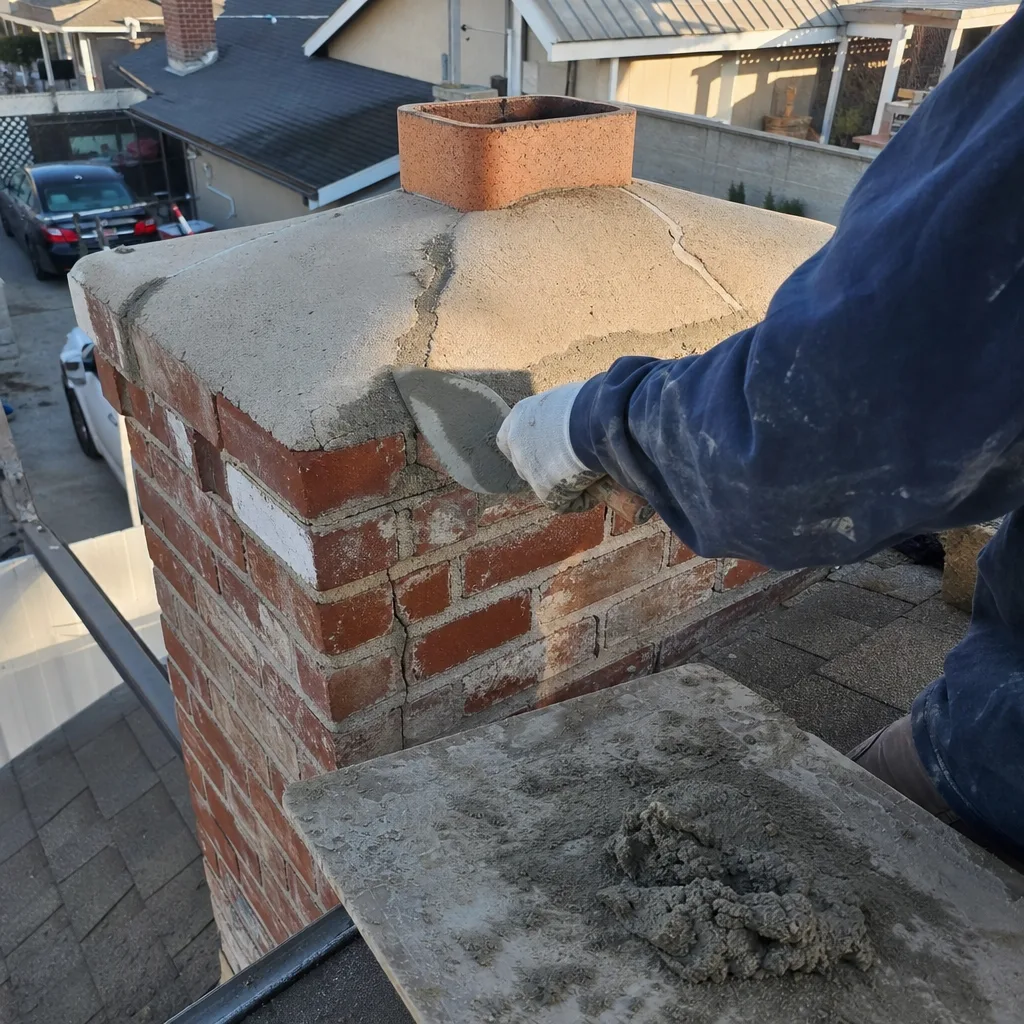
It’s not cosmetic. Those are “earthquake-era crowns” - mortar feathered flat with no proper form, overhang, or drip edge, common in post-1933 rebuilds. Harbor moisture soaks in, the crown cracks and delaminates, and water eventually reaches the firebox. In California Heights we opened a 1941 Spanish Colonial Revival flue with exactly this condition: the top had cracked and delaminated, letting harbor moisture run down onto unlined clay tile. Our tech ran a camera, showed the homeowner the spalling mortar joints and damp smoke chamber on the monitor, then swept first-degree creosote, installed a HeatShield liner, and rebuilt the crown with a proper overhang and drip edge so that bay moisture sheds instead of soaking. Call (657) 427-5872 if your crown looks stained or flaky - we’ll camera it and show you what’s actually happening.
Yes, you still need annual inspection; sweep frequency depends on what the inspection finds. Long Beach’s mild coastal climate does mean minimal creosote for infrequent burners, but the near-constant marine layer keeps chimney masonry chronically damp, accelerating mortar joint erosion, efflorescence, and spalling that purely dry inland climates never produce. The bigger risk for occasional burners is undetected moisture damage or animal nesting, not creosote buildup. A Level 1 inspection confirms your system is safe; we only sweep if the camera or visual exam shows it’s needed. Call (657) 427-5872 to schedule - estimates are free.
Camera documentation distinguishes stable historical cracking from active, widening damage. Long Beach sits on the Newport-Inglewood fault zone, so post-1933 rebuilt masonry can crack from later seismic activity. We document crack width, pattern, and location with photo record, then compare to previous inspections if available. Horizontal cracks, stair-step patterns in mortar joints, or cracks that widen from top to bottom typically need structural evaluation. Hairline vertical cracks in crown mortar may be monitoring-only. Nothing is recommended without camera evidence you can see yourself. Call (657) 427-5872 for a Level 2 inspection with documented record.
No. That’s upselling, and it’s why we wrote the Haven Standard. A liner recommendation without camera evidence of flue damage, deterioration, or code violation is a sales tactic, not an inspection finding. Clause 4 of the Haven Standard requires a photo record on every job - you see what we see, in real time, on a monitor, before any recommendation is made. We’ve found chimneys that genuinely need relining, and we’ve found many more that don’t. The difference is documentation. Bring us that competitor’s written estimate; our Free Second Opinion will tell you what the camera actually shows. Call (657) 427-5872.
Third-degree creosote is a hardened, tar-like deposit that forms when wood burns incompletely, and it’s a significant chimney fire hazard regardless of burn frequency. In Long Beach, we find it in chimneys where homeowners burned unseasoned wood during cold snaps, or where damp flue conditions from harbor moisture created incomplete combustion even with properly seasoned fuel. It can’t be removed with standard brushing; rotary chains or chemical treatment are required. The risk isn’t proportional to how often you burn - a single ignition of third-degree creosote can damage the flue or spread to the structure. We classify creosote degree during every sweep and show you on camera. Call (657) 427-5872 for inspection; estimates are free.
Written by Corrine Halstead, Owner at Emberly Chimney Cleaners Huntington Beach, serving Long Beach since 2009 under the Haven Standard.